Tennis bracelets return as the ultimate old-money jewelry staple
The tennis bracelet is back as inherited-looking luxury: diamonds, restraint, and a wrist line that reads rich without trying.
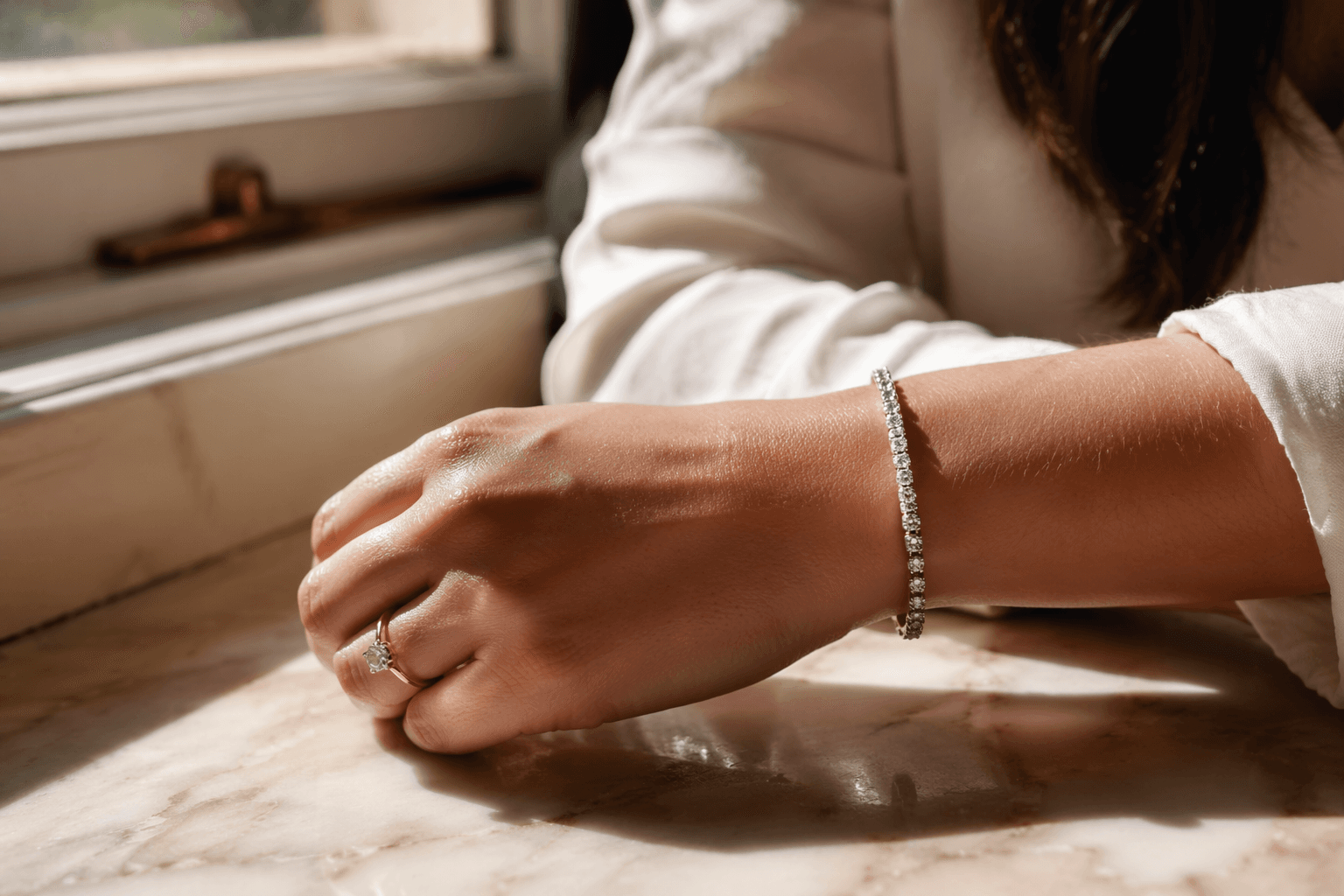
The tennis bracelet works now because it never really stopped working. It sits in that sweet old-money zone where jewelry looks inherited, not introduced, and the best versions do exactly that: skim the wrist in a clean line of light, then disappear back into cashmere, shirting, or a black dress with the confidence of a piece that has seen a few generations.
Chris Evert made the bracelet famous, but the appeal is bigger than the anecdote
The modern tennis bracelet story still starts with Chris Evert at the 1978 U.S. Open, when her diamond bracelet broke and she stopped play to find it. That courtside interruption is the origin story most often attached to the name, and it matters because it turned a simple line bracelet into a cultural object. What was once just a diamond bracelet became a wrist category with a name, a memory, and a little theater.
Why the term tennis bracelet stuck
The Gemological Institute of America ties the name to the interview that followed Evert’s missing bracelet, which helped cement the term in the public imagination. That is the difference between a jewelry term that survives and one that fades: it has a story people can retell without effort. The bracelet did not need reinvention, just a nickname sturdy enough to carry it through decades of changing taste.
A forever piece starts with the diamond, not the hype
If you want one that reads like heirloom dressing, look at the diamonds first. Stone quality is what separates a bracelet you wear for years from one that flashes for a season and then gets ignored in a tray. The clear, well-matched stones should look steady across the whole line, not choppy or overly icy in a way that feels bought for the moment rather than built for life.
The setting is the quiet detail that gives away the good stuff
The best tennis bracelets are all about how the stones sit together. A secure, refined setting keeps the bracelet fluid on the wrist while preserving that neat, uninterrupted line of sparkle. If the setting looks bulky, fussy, or overworked, the piece starts to lose the calm polish that makes it feel inherited rather than flashy.
Proportion is where taste shows up
This style lives or dies on proportion. Too skinny and it can vanish; too heavy and it starts to look like costume wealth, not real wealth. The right bracelet sits close to the skin and follows the wrist with enough presence to register, but not so much metal and stone that it overwhelms the hand.
Cashmere is its best daylight companion
The easiest way to wear a tennis bracelet is with cashmere, where the contrast does the work for you. Soft knitwear gives the diamonds a sharper edge, and the bracelet reads like the kind of thing you would have slipped on without thinking because it has always been there. It looks especially good peeking from a sleeve that is just long enough to make the wrist feel intentional.
Shirting makes it feel inherited, not styled
With shirting, the bracelet shifts from precious to personal. A crisp button-down, especially in white or pale blue, gives the diamonds a clean frame and keeps the look from tipping into evening too early. The effect is very old money: precise, quiet, and slightly nonchalant, as if the jewelry belongs to the shirt rather than the outfit.
Eveningwear gives the bracelet its original voltage
At night, the tennis bracelet finally gets to do the thing it was built to do. Against satin, velvet, or a simple black dress, that single line of diamonds is enough, which is exactly why it remains so powerful. You do not need a stack or a heavy hand with other jewelry; the bracelet works best when the rest of the look leaves it room to breathe.
Tiffany still treats it like a staple, not a novelty
Tiffany & Co. describes the tennis bracelet as an iconic design that moved from court-sported style into an elegant staple, and that tracks with how the strongest versions are being worn now. The house also frames it as versatile and enduring, defined by craftsmanship and radiant diamonds, which is the right language for a piece that should outlast whatever trend cycle is raging around it. This is not the place for gimmicks. It is the place for restraint.
De Beers shows how wide the market has become
De Beers is still selling diamond line bracelets across a broad range of prices, with tennis-style pieces running from about $3,750 to $31,800. That spread says a lot about where the category sits now: part access point, part serious fine jewelry purchase. The range also makes the case for being picky, because at that level the difference between an ordinary bracelet and a truly polished one becomes all about craftsmanship and stone quality.
The bracelet has moved from sport story to luxury shorthand
What keeps this piece alive is that it can carry both nostalgia and precision. It began as a court-side accident, but it endures because luxury jewelers keep returning to the same simple formula: a disciplined line of diamonds, a clean setting, and a shape that works with real wardrobes instead of fantasy ones. That is why it feels so old-money now, because the bracelet does not announce itself. It just sits there, composed, expensive, and already familiar.
GIA gives the category its credibility
The Gemological Institute of America, established in 1931 as an independent nonprofit focused on gem research, education, and laboratory services, anchors the tennis bracelet story in the language of gemology rather than trend commentary. That matters for a category like this, where the difference between a forever piece and a disposable one lives in details that are easy to miss from across a boutique floor. The bracelet may travel through fashion, but its staying power comes from standards, and those standards are exactly what make it worth keeping close.
This article was produced by Prism’s automated news system from verified source data, official records, and press releases, then run through automated quality and moderation checks before publishing. The system is built and supervised by the people who set the standards it runs under. Read our full AI policy.
Did this article answer your question?