Ulla Johnson expands resort luxury with craft, travel-ready polish
Ulla Johnson is turning resort into a full luxury wardrobe, where craft, accessories and travel polish matter as much as the clothes.
Ulla Johnson’s resort 2027 collection is less a seasonal reset than a strategic expansion. The designer is still fluent in the polished bohemian language that built her name, but here she stretches it toward something bigger: a luxury wardrobe that can move from heat to cold, from city to escape, from clothing to accessories. In a market where quiet luxury has become shorthand for restraint, Johnson is making a sharper case for legacy, texture and craft as the new status markers.
A resort collection that behaves like a brand statement
The strongest idea in the collection is not a single silhouette but the range. Johnson said the season was designed to cover “high summer, deep winter,” with pieces intended for “every occasion, temperature and destination,” and that breadth tells you exactly where the brand wants to go. Resort is no longer just about vacation clothes in a narrow, sun-drenched lane; it is becoming the most commercially useful proof that a brand can dress a woman’s whole life.
That matters because Ulla Johnson is no longer behaving like a niche label defined only by easy romance and artisanal prettiness. WWD noted that the brand has recently launched fragrance, is building out shoes and handbags, and is gaining wholesale traction in those categories. Add a forthcoming London store, and the message is clear: the house is chasing the client who wants a head-to-toe world, not a single dress.
Johnson made that ambition explicit when she described the London opening as one that would bring “a whole new woman into the fold.” The phrasing is telling. She is not simply opening another store; she is widening the social and aesthetic address of the brand. For an old-money audience, that is the real story. Status is shifting from quiet uniformity to a more textured kind of discernment, where craftsmanship, provenance and a strong accessories arm signal the same thing a crest once did.
Craft becomes a luxury code, not a decorative flourish
The collection’s most persuasive pieces are the ones that make craftsmanship feel mobile. Sequined ombré knits and evening silvers were designed to stay easy, movable and not overly fussy, which is exactly the point. The old resort fantasy used to lean on prettiness alone. This one wants utility, but luxe utility, the kind that looks just as appropriate on a terrace as it does in transit.
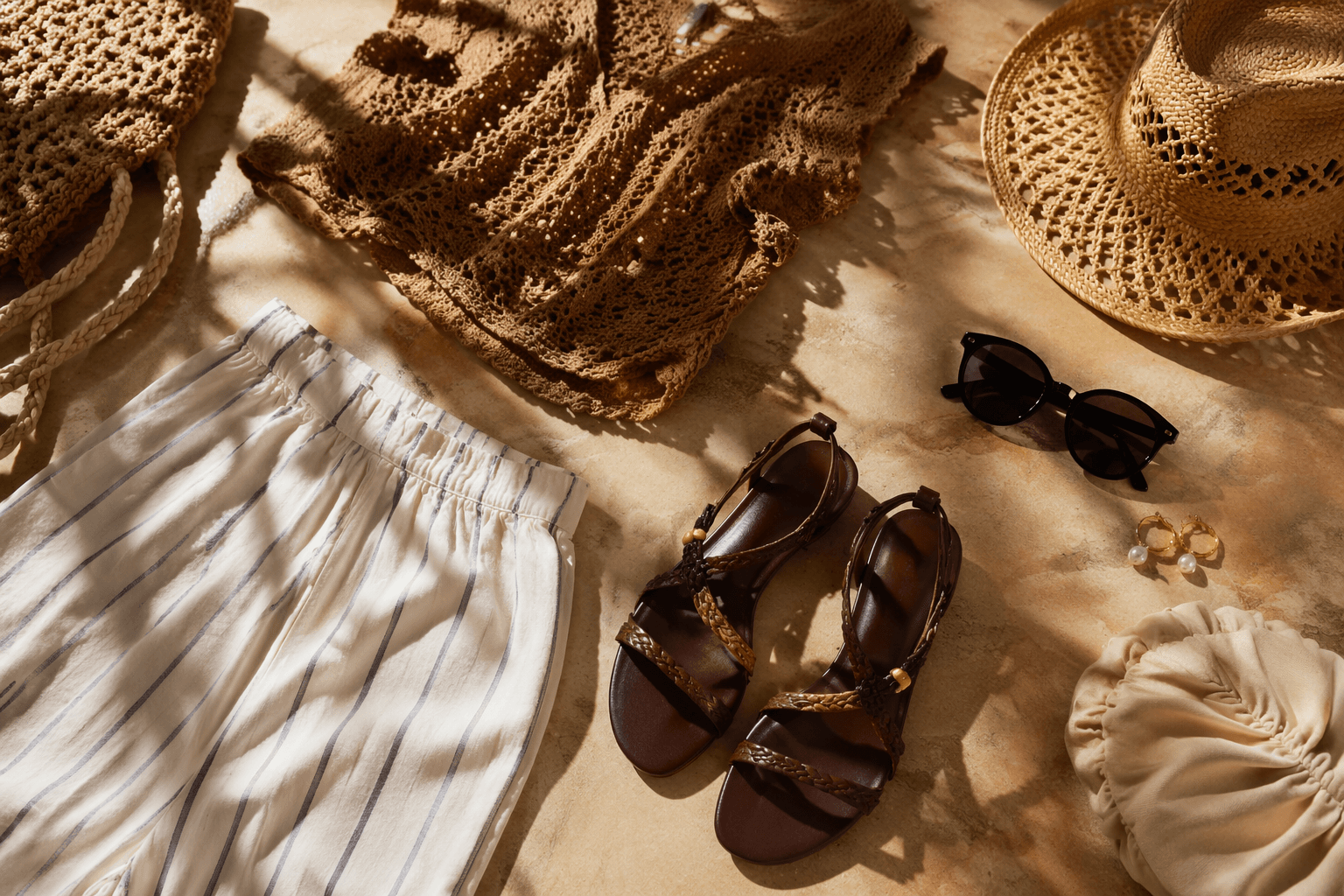
Hand-crocheted sets made by artisans in Peru gave the lineup its most convincing sense of touch. Crochet can easily read precious or overly nostalgic, but here it functions as evidence of labor, and therefore of value. That same logic appears in the more technical raincoat, which widens the collection beyond the usual sun-and-sand formula and gives the brand a practical register that feels more modern than decorative resort dressing.
The clothes also track a broader shift in old-money fashion itself. Texture is doing the work that logos once did. Sequins, crochet, leather and treated denim are not just surface effects here; they are signals of discernment, of a client who wants clothes that look considered without seeming overworked. That balance is central to Johnson’s appeal, and this season she pushes it toward a more complete luxury proposition.
Cassi Namoda gives the palette a cultured, painterly charge
The print story deepens the collection’s sense of taste. Johnson used three paintings by Cassi Namoda as the basis for the color palette, and DesignScene noted that she selected four works as references, including “Arafah Gaza’s Appearance,” “An Ode to a Tropics Rose,” and “Florist of Nostalgia Playground.” That kind of reference point matters because it moves the conversation away from trend chasing and into the territory of cultivated collaboration.

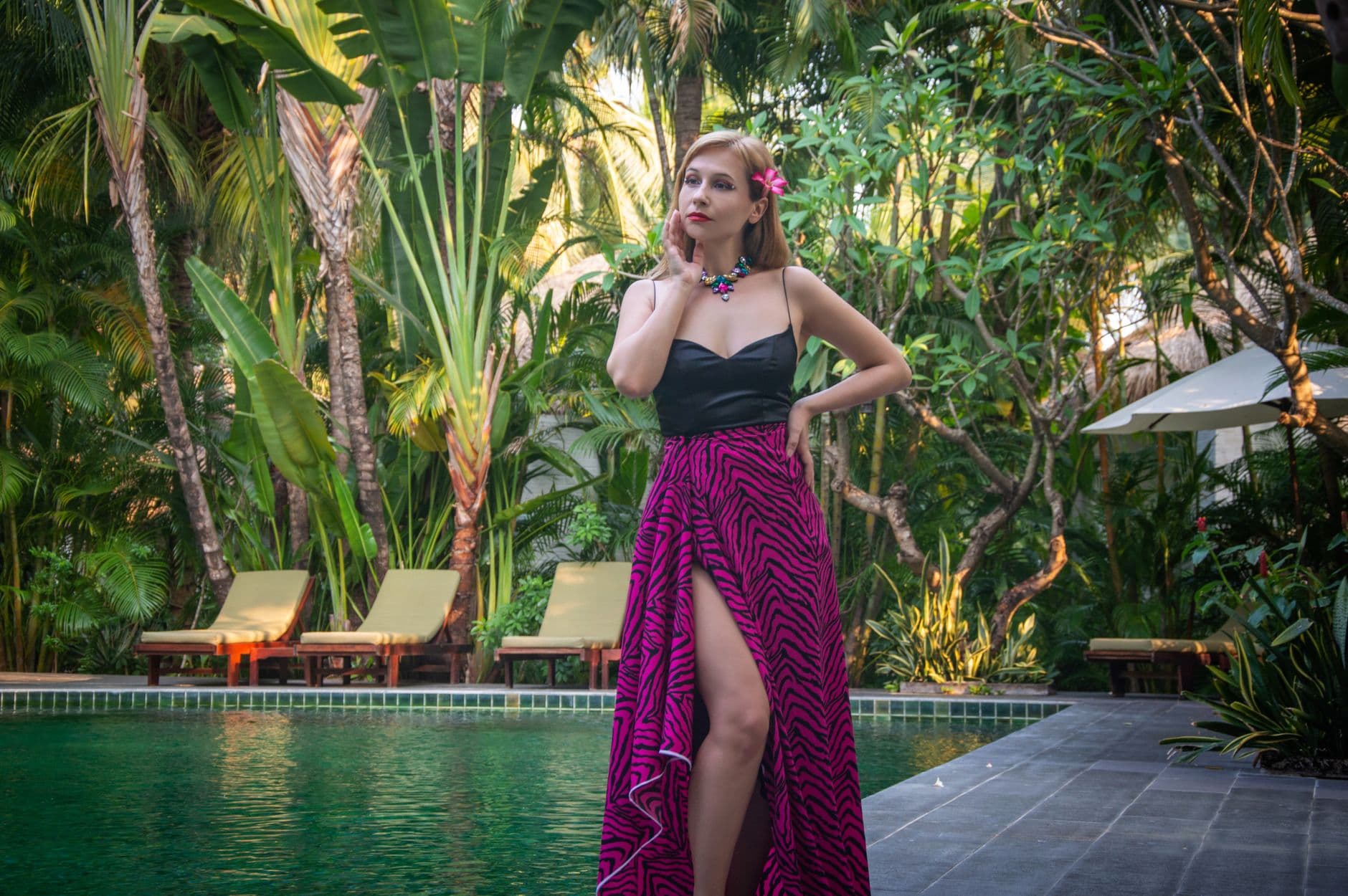
The translation was broad. Alongside the paintings’ influence, the collection extended into silk twill, Italian jacquards, chiffon, fringe and treated denim. Hypebae added further texture to the picture, noting matte jersey styles with three-dimensional floral motifs, organza strips applied by hand to mimic petals, and a petal-pink denim set with a structured bustier jacket and barrel-leg jeans. Elsewhere, Italian mélange wool suiting, buttery nappa leather and color-blocked faux fur broadened the season far beyond the standard resort vocabulary.
That mix is important because it shows Johnson thinking like a brand builder, not just a dress designer. She is assembling a wardrobe in which a hand-crocheted set, a bustier denim look, a wool suit and a nappa leather piece all belong to the same universe. For the client, that creates repeat purchase logic. For the brand, it creates the architecture of a luxury lifestyle house.
Why the accessories push changes the conversation
The expanded accessories business is what makes this feel like a real pivot rather than a one-off collection with strong styling. Shoes, handbags and fragrance are where a fashion house starts to control the entire mood of a customer’s life. They also tend to be the categories that carry the most social signaling, especially in resort, where travel-ready polish can read as more expensive than spectacle.
Johnson’s own brand story helps explain why this move feels credible. She founded the label in 1999 after graduating from university, and the company says she was born and raised in Manhattan, the daughter of archaeologists. That background has long informed the label’s balance of natural fibers, beautiful finishing and ease of fit and form. It is a precise formula, and it has always given her work a kind of cultured softness rather than outright extravagance.
The brand first gained traction with Barneys New York, showed its first seasonal presentation at New York Fashion Week in 2014, and moved to runway shows in February 2017. Those milestones matter because they map a steady ascent from cult favorite to established player. Now the business is extending into the kinds of categories that can keep a label relevant far beyond the season’s hemlines.
London, the U.K. and the next phase of the brand
The London store is more than a retail plot point. WWD previously reported that the U.K. is Ulla Johnson’s number-one international market and second-biggest growing market after the United States, which makes the expansion feel less speculative than strategic. If the brand already has deep traction there, a physical outpost is a way to consolidate a clientele that likely already understands the codes: craft, ease, polish, and a touch of romance.
That international lens also fits the Lisbon look book, which gives the collection a sense of movement and place without pinning it to any one climate or occasion. Resort 2027 is clearly designed for a woman who travels, but more importantly, for one who expects her wardrobe to travel with her. The clothes carry the designer’s old signatures, yet the business logic beneath them is newer and more ambitious.
Johnson has built a label around softness, but this season is about breadth. In a market increasingly driven by status-conscious resort dressing, that may be the smartest luxury message of all.
This article was produced by Prism’s automated news system from verified source data, official records, and press releases, then run through automated quality and moderation checks before publishing. The system is built and supervised by the people who set the standards it runs under. Read our full AI policy.
Did this article answer your question?