Vinted Math drives old money shoppers to buy resale first
Old-money shoppers are learning the resale equation first, with Vinted saying 88% check the platform before buying new and average savings hit 72% off retail.
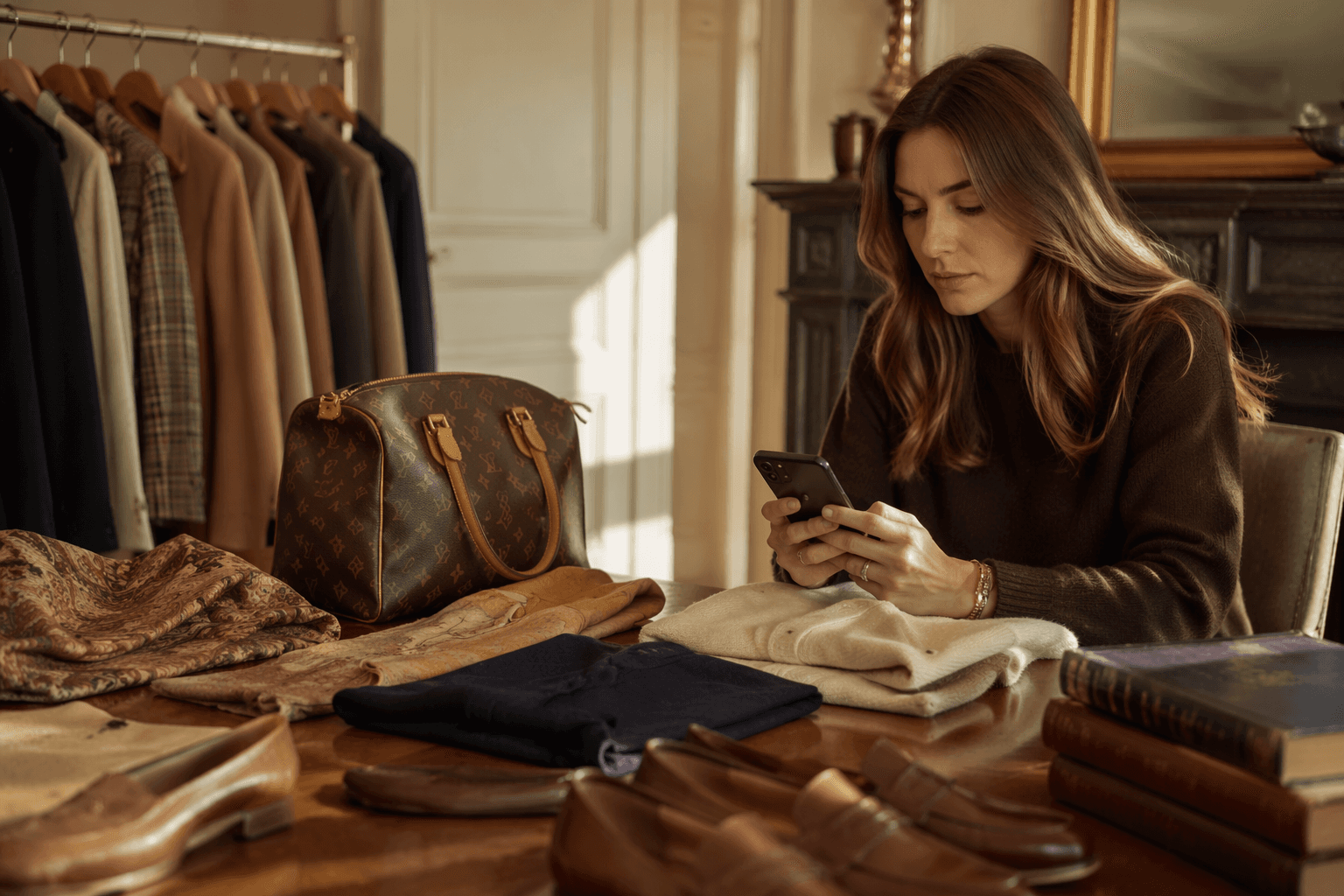
The smartest old-money purchase in 2026 is no longer the one that feels restrained at the checkout. It is the one that can be resold cleanly, confidently and without apology. Vinted has put a name to that calculation, “Vinted Math,” and the numbers show how quickly it has moved from a niche habit to a new shopping code.
Vinted said 88% of surveyed UK buyers check the platform before buying fashion items new, while 35% now think about resale value before they commit to a purchase. On Vinted, shoppers paid on average 72% less than original retail prices, and the platform’s 2025 Impact Report said buyers collectively saved €21.6 billion on adult fashion items alone last year. That is not just thrift. It is wardrobe economics, with heritage coats, leather loafers, classic bags, cashmere and watches suddenly judged not only for cost per wear, but for what they might bring back later.

The shift matters because it is changing what counts as “smart” in the old-money wardrobe. A trophy bag that holds its value, a cashmere knit that survives seasons of wear, a pair of loafers that can be polished back to life: these are increasingly the pieces that justify themselves twice, once on purchase and again on resale. Disposable trend dressing, by contrast, looks expensive on the front end and weak on the secondary market. In that sense, Vinted Math is pushing shoppers toward clothes that are built to last, and built to circulate.
The broader market data backs up the change. Barclays said 38% of UK consumers bought from a resale platform in the past year, and Vinted now reaches more than 17 million UK users. Resale is strongest among younger buyers, with one in four 16-to-24-year-olds using these platforms to save money, compared with 9% of over-55s. Barclays also valued the global second-hand market at about $210 billion to $220 billion and said it was growing roughly three times faster than the firsthand market.
That momentum helps explain why resale now sits closer to the centre of luxury thinking than the edges. BCG and Vestiaire Collective put the secondhand fashion and luxury market on track to reach as much as $360 billion by 2030. Vinted’s earlier Impact Report added another reason buyers feel comfortable moving this way: 84% said second-hand quality was as good as or better than new, and 2023 members helped avoid 679 kilotonnes of CO2e by buying second-hand instead of new. The old-money code is not disappearing. It is being audited, item by item, for value that survives the first owner.
This article was produced by Prism’s automated news system from verified source data, official records, and press releases, then run through automated quality and moderation checks before publishing. The system is built and supervised by the people who set the standards it runs under. Read our full AI policy.
Did this article answer your question?