Wedding guest style shifts from black to bold color and prints
Black is no longer the safest wedding guest move. The new polish is color, print, and texture, but only when the look stays disciplined, not costume-y.
The black dress has lost its monopoly
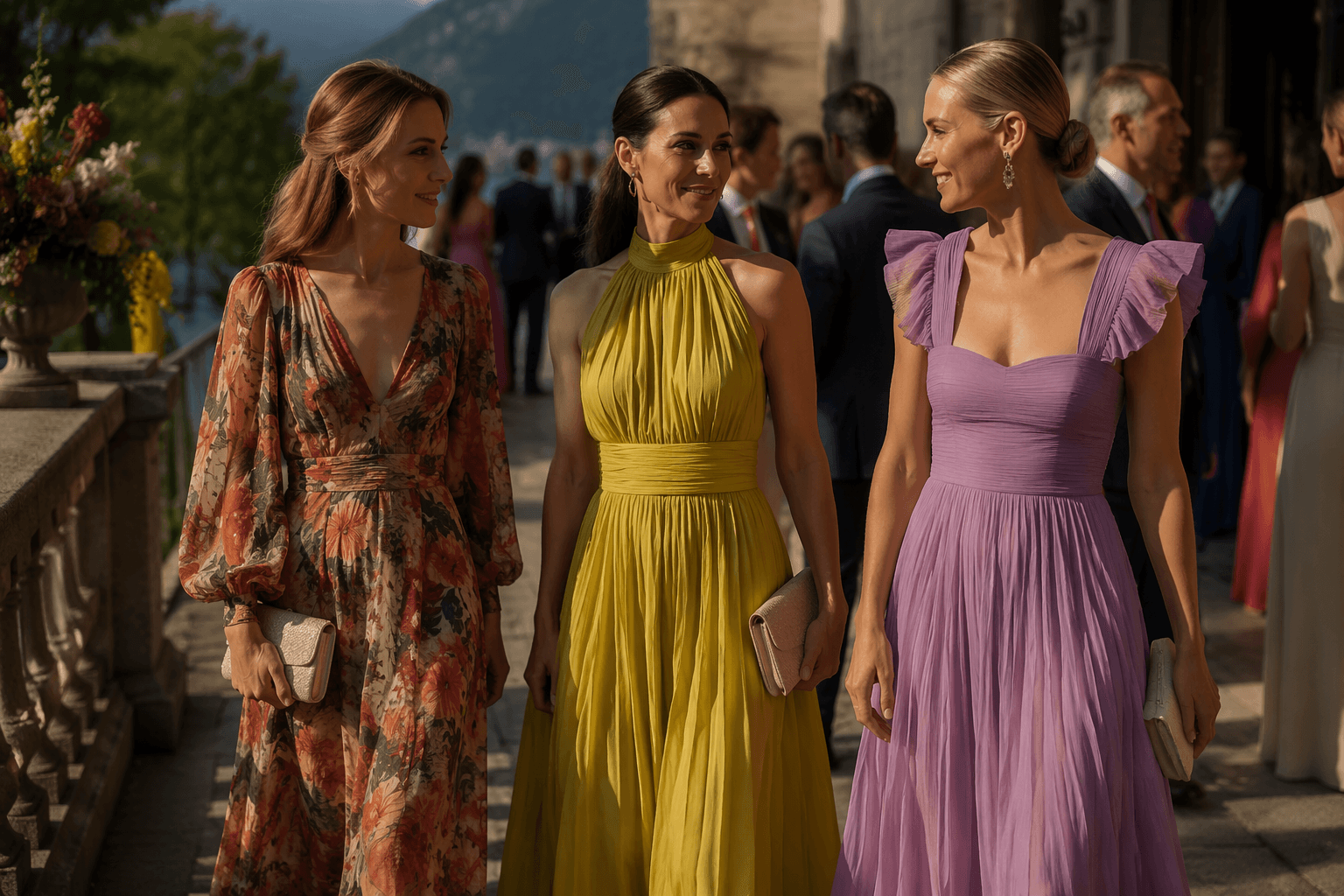
The smartest wedding guest move right now is not disappearing into black. It is showing up in color with enough restraint to feel inherited, not announced: a deep garnet slip, a moss silk column, a floral print that looks lifted from an archive, not a resort rack. That is the new tension in occasionwear, and it is exactly why the shift away from the little black dress feels bigger than a trend cycle.
WWD’s May 28 report makes the direction plain: wedding guest dressing is turning maximalist, with bold prints, vibrant color, and dramatic silhouettes replacing the classic little black dress. The old shortcut to looking refined is losing ground to something more expressive, and fashion editors are treating that as a real change in taste, not a one-off mood swing.
Why black stopped feeling like the only polished answer
The little black dress has always carried more baggage than its reputation suggests. National Museums Scotland says the LBD first captured fashionable attention in the 1920s, while the Metropolitan Museum of Art dates Coco Chanel’s version to 1926 and notes that black was already being used for formal and semi-formal occasions in the decades before. In other words, the dress was never as simple as its modern myth.
The old social discomfort around black at weddings also has roots in mourning etiquette. New York Historical Society notes that in the 19th century, a woman in the West who lost a loved one was expected to wear all-black clothing for an extended period. That history is why black at a celebration has long carried a whisper of contradiction: elegant, yes, but also a little severe. National Museums Scotland’s 2023 exhibition, Beyond the Little Black Dress, pulled together 65 looks from museums and designers and captured that tension perfectly, framing black as something that can signal “piety and perversion, respect and rebellion.” That is exactly why the garment keeps getting reinvented instead of retired.
What the new wedding guest look actually looks like
The new guest wardrobe is not just “more color.” It is more texture, more movement, more finish. WWD points to sweeping capes, matching scarves, feathered trims, and metallic lamé corsetry as part of the updated look, and those details matter because they change the entire mood of a dress. A cape can look aristocratic if it floats; it can look theatrical if it drags. A feather trim can read festive if it is placed with a light hand; it can tip into nightlife if it takes over the whole hem.
Who What Wear is also tracking the same shift, calling out bright color and chic matching sets as major 2026 wedding guest trends. That is the clue for old-money dressing: the new look is not about piling on every flourish at once. It is about choosing one confident gesture, then keeping everything else composed. The guest who looks rich does not look busy.
How to do restrained maximalism without slipping into excess
This is where taste becomes the whole game. The goal is not loudness. It is richness with discipline. If you want the new wedding-guest energy without drifting into nouveau-riche territory, start with a strong material and let the color or print do the talking.
- Choose jewel tones first. Emerald, sapphire, garnet, amethyst, and inky teal all carry depth without screaming for attention. They photograph beautifully and feel expensive even when the silhouette is simple.
- Use archival-feeling florals, not novelty prints. A painterly bloom, a faded damask, or a motif that looks borrowed from a heritage scarf reads far more polished than a high-contrast tropical print.
- Favor silk, satin, crepe, and other fabrics that move cleanly. The fabric should drape, not fight you. Shine is fine if it looks liquid, not plastic.
- Keep accessories heirloom-coded. Pearl drops, a structured minaudière, a slim jewelled hair comb, or a vintage-inspired pump will do more for the look than oversized logo jewelry ever will.
- Treat matching sets carefully. A coordinated top and skirt can look immaculate if the cut is elegant and the fabric is rich. It starts to feel too engineered when the set is overstyled with extra sparkle, heavy makeup, and stacked accessories.
The point is to let one element carry the drama. If the print is loud, the silhouette should be calm. If the silhouette is sweeping, the fabric should be sober. If the accessories have sparkle, the dress should stay tailored.
What still makes it wedding-appropriate
Wedding guest style can get expressive without losing manners. The line is simpler than people pretend: keep the look celebratory, polished, and deferential to the couple, not to a fantasy of being the best-dressed person in the room. That means no white, obviously, but it also means no outfit that looks like it is trying to dominate the room with volume, shine, or nightclub energy.
The best restrained maximalism still leaves room for the event itself. A long silk dress in a saturated tone, a floral set with a clean neckline, or a softly structured gown with one sculptural detail all feel right because they respect the setting. The styling should look finished but not overworked. Hair can be glossy and neat. Makeup can be luminous and precise. Jewelry can be present, but it should look chosen, not piled on.
That is the old-money filter: nothing should look newly bought just to prove a point. Even when the color gets bolder and the print gets louder, the effect should still be socially fluent. You want to look like you know the room, not like you arrived to conquer it.
Why this matters beyond the invite
Wedding dressing sits inside a serious business. The Knot’s 2025 Real Weddings Study says it surveyed 2,021 couples, and U.S. wedding spending is widely estimated in the tens of billions of dollars each year. That means guestwear is not fringe fashion. It is part of a huge occasionwear economy, and the signal coming through now is clear: guests are being nudged toward brighter color, more visible styling, and silhouettes with a little more attitude.
This is why the black dress is not so much disappearing as losing its default status. The modern polished guest does not need to mute herself to look expensive. She needs editorship. She needs texture that feels expensive at arm’s length, color that has depth, and embellishment that looks inherited from better taste, not purchased from a feed. The new wedding guest uniform is louder, but the smartest version of it is still about restraint, and that is what keeps it old-money rather than overdone.
This article was produced by Prism’s automated news system from verified source data, official records, and press releases, then run through automated quality and moderation checks before publishing. The system is built and supervised by the people who set the standards it runs under. Read our full AI policy.
Did this article answer your question?