Who What Wear’s June edit leans into quiet luxury summer staples
Who What Wear’s June edit trades loud novelty for polished summer staples, from contrast-trim swimwear to linen, khaki, and taffeta with old-money ease.
Contrast-trim swimsuit
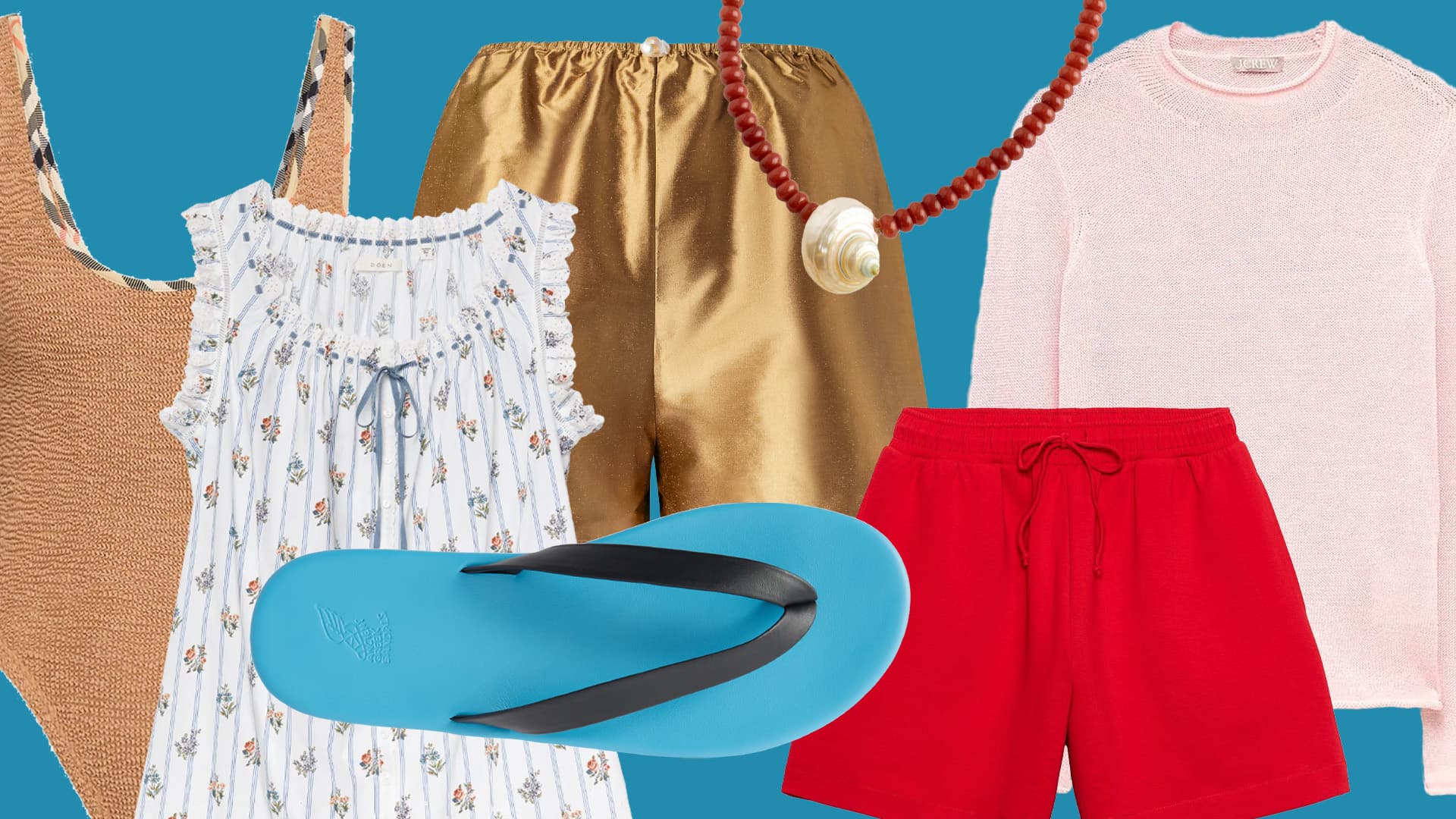
Quiet luxury is not disappearing for summer; it is getting cleaner, sharper, and far more wearable. Who What Wear’s monthly 10 Things to Buy series is built to help readers shop smarter by focusing on 10 key items each month, and the contrast-trim swimsuit is the most immediate proof of that logic. A crisp border at the neckline or straps gives swimwear enough definition to look intentional, without tipping into print-heavy trendiness, which is exactly why it earns a place in a polished warm-weather rotation.
The appeal is in the restraint. This is the sort of suit that can sit under linen trousers after the beach and still look deliberate, especially in a palette that stays close to cream, black, navy, or brown. The imagery across the edit, drawn from retailers including Neiman Marcus, also signals that this is not about novelty for novelty’s sake, but about buying one swimsuit that can carry the whole season.
Taffeta pants and shorts
Taffeta is the surprise fabric that gives this June list its subtle edge. In pants and shorts, it brings a faint sheen and a bit of structure, which makes even simple silhouettes feel dressed up enough for dinner, terrace drinks, or a resort weekend. That polished stiffness is useful because it keeps the look from sliding into casual territory, even when the cut is relaxed.
Old-money dressing has always depended on the right fabric doing half the work, and taffeta does exactly that here. It reads more considered than cotton poplin, more evening-ready than denim, and more modern than anything overly embellished. In this edit, the point is not drama; it is crispness, and the result feels like summer clothes for people who prefer a quiet entrance.
Open-weave summer sweater
The open-weave sweater is the piece that makes the whole edit feel current without losing its composure. A loose, airy knit gives texture to an otherwise pared-back wardrobe, and that texture matters because old-money style increasingly leans on touchable fabrics rather than obvious branding. It is the kind of layer that can sit over a swimsuit, a sleep dress, or crisp shorts and still look polished.
This is also where the aesthetic’s shift becomes clear. Vogue Adria has described old-money style in 2026 as moving toward a more minimalist, less preppy direction, and an open-weave knit fits that pivot perfectly. It keeps the elegance and restraint intact, while softening the code enough to feel lighter and less buttoned-up for summer.
Sleep dress
The sleep dress brings the most relaxed note in the edit, but it still belongs in an old-money wardrobe because ease has become its own kind of status marker. When a dress skims rather than clings, and looks as comfortable at home as it does over sandals at lunch, it says more than a decorated trend piece ever could. That is the quiet-luxury calculation at work: the better the fabric and drape, the less the dress has to shout.

Its usefulness is obvious. A sleep dress can work as a beach cover-up, a travel piece, or a soft evening option when the weather is too warm for anything structured. In a summer wardrobe built around restraint, that flexibility is what keeps the look from feeling precious.
Two-tone flip-flops
Two-tone flip-flops might sound almost too simple to matter, which is exactly why they do. The contrast detail adds just enough polish to lift them beyond throwaway pool slides, and that little bit of design makes them fit the old-money brief better than a loud logo sandal would. They are relaxed, but not careless.
This is where understated accessories do their best work. A two-tone sole or strap can echo the contrast-trim swimsuit, creating a subtle visual thread through the whole wardrobe without making the outfit feel matched. That kind of visual discipline is a hallmark of the aesthetic, and it is what separates a thoughtful summer edit from a cart full of random warm-weather purchases.
Beachy jewelry
Beachy jewelry is the edit’s most directional category, but it still works because the styling mood remains restrained. Think shells, natural textures, and sun-warmed metals, not costume overload. The right pieces should feel like they were collected over time, then edited down to the ones that actually wear beautifully.
The best old-money jewelry never competes with the clothes. It sits back against linen, taffeta, and knitwear, adding movement and a touch of lived-in ease. That is why this category matters here: it gives the wardrobe character without undercutting the polish.
Red pull-on shorts
Red pull-on shorts are the boldest color note in the June edit, and that is precisely why they work. In a sea of neutrals, a single saturated piece brings energy, but the pull-on construction keeps it from feeling too sharp or too styled. The shape should remain easy, almost nonchalant, so the color does the talking.
What makes them useful is the styling range. They can be worn with a white tank, a striped knit, or an open-weave sweater, and they still read as intentional rather than sporty. Even in an old-money wardrobe, a little color has a place, provided the silhouette stays relaxed and the finish stays clean.

Khaki knee-length skirt
If there is one piece in the edit that most clearly bridges preppy heritage and modern restraint, it is the khaki knee-length skirt. Khaki has long been part of the old-money vocabulary, tied to Ivy League dressing and the polished ease associated with Jackie Kennedy, Princess Diana, John F. Kennedy Jr., Carolyn Bessette Kennedy, and more recently Sofia Richie Grainge. The knee-length cut keeps that lineage intact while softening the look for 2026.
This is also one of the most versatile pieces in the lineup. It can handle a tucked-in tee, a fine-gauge knit, or a crisp shirt, and it will still look composed. That longevity is what makes it more than a trend item: it is a foundation piece that can stay in rotation long after the month’s newness has passed.
Lightweight denim
Lightweight denim grounds the edit in reality, which every summer wardrobe needs. Heavier denim can feel stiff and seasonally off, but a lighter weight brings the ease that old-money style now increasingly prefers. It keeps the shape familiar while making it more breathable, more relaxed, and easier to wear with refined basics.
This is where the aesthetic’s quieter side comes through most clearly. Minimal logos, structured tailoring, and understated accessories may define the look, but denim is what keeps it from becoming costume. Paired with sandals, a knit top, or even a taffeta piece, lightweight denim adds the kind of everyday credibility that makes the whole wardrobe feel lived-in rather than staged.
Brown linen mini dress
The brown linen mini dress closes the edit on the most persuasive note because it balances polish with softness. Linen remains one of the strongest summer fabrics for old-money dressing, and brown gives it a richer, more modern depth than standard beige or white. The shorter length keeps it fresh, while the fabric keeps it grounded.
That balance mirrors the way the aesthetic is evolving now. DÔEN, founded in 2016 by sisters Margaret Kleveland and Katherine Kleveland, has built its identity around accessible pieces with a romantic, understated hand, and that sensibility fits this moment perfectly. The old-money look still points back to the familiar icons, but this June edit suggests a version that is less preppy, more minimal, and smarter about where elegance really lives: in cut, fabric, and wearability.
This article was produced by Prism’s automated news system from verified source data, official records, and press releases, then run through automated quality and moderation checks before publishing. The system is built and supervised by the people who set the standards it runs under. Read our full AI policy.
Did this article answer your question?