Why white dresses still define old-money summer style
White dresses are the old-money summer test: real polish comes from structure, lining, and fabric, not decoration. Trapeze cuts and organza are the clues.
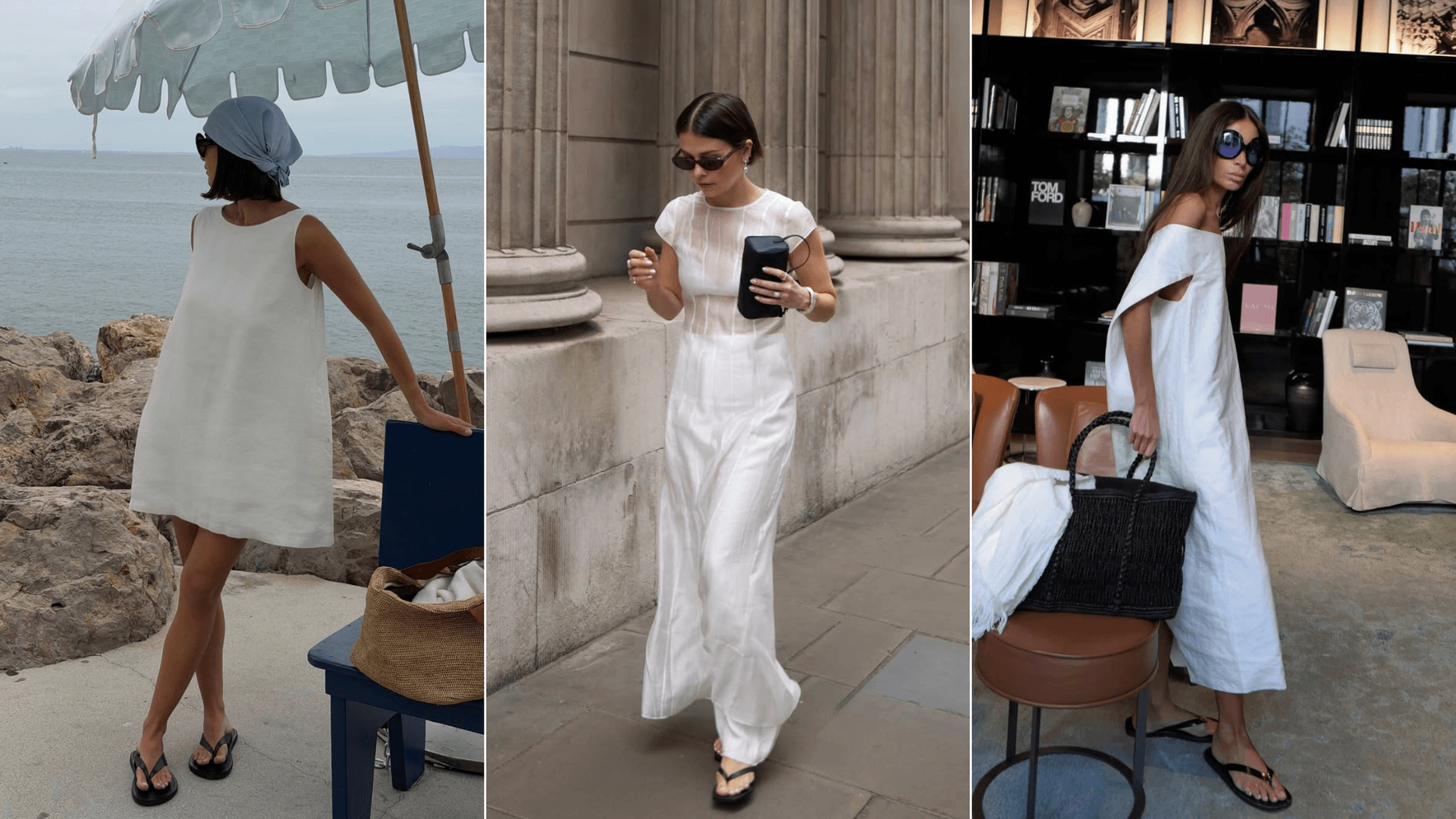
White dresses are where old-money style stops pretending and starts proving itself. Strip away color and you are left with the hard stuff, the things money can actually buy: fabric weight, lining, cut, and proportion. That is why a white dress can look inherited or look rented, depending on whether the shape has backbone and the cloth has enough body to hold its nerve.
White is the hardest color to fake
White is ruthless because it shows everything. If the fabric is too thin, the dress turns bridal in the wrong way, all sentiment and no discipline. If it is too soft, it goes bohemian, drifting around the body without any sense of intention. If it is too cheap, it slips into resortwear, the kind of thing that looks good for one sunset and bad under every other light.
That is why the best white dresses in the current conversation are not loud at all. Marie Claire UK’s white-dress coverage keeps circling back to silhouettes that feel controlled rather than overworked, especially trapeze shapes and sheer organza. The message is simple: old-money summer style is not about ornament. It is about restraint that still looks expensive.
The trapeze shape is the real quiet-luxury signal
The trapeze silhouette has serious pedigree, and that matters because old-money dressing always likes a reference point with a little dust on it. Fashion History Timeline places the shape’s couture breakthrough in Yves Saint Laurent’s Spring/Summer 1958 Trapèze collection for House of Dior, which introduced the versatile trapeze line to high fashion. That is the opposite of trend-chasing. It is a shape with a passport.
The most revealing detail is Saint Laurent’s white “L’Eléphant Blanc” dress. It did not float because it was flimsy. It held its shape with a boned corset and a stiff horsehair understructure, which is exactly the kind of construction that separates expensive-looking from actually expensive. The skirt does not just hang; it stands away from the body. That distance creates authority, and authority is a big part of old-money polish.
A trapeze dress works because it gives you volume without fuss. There is no cling, no excess cinching, no desperate attempt to prove sex appeal. The line opens from the shoulders or the upper body and lets the cloth do the rest. When you see that kind of shape in white, you are looking at a dress that understands luxury as architecture, not decoration.
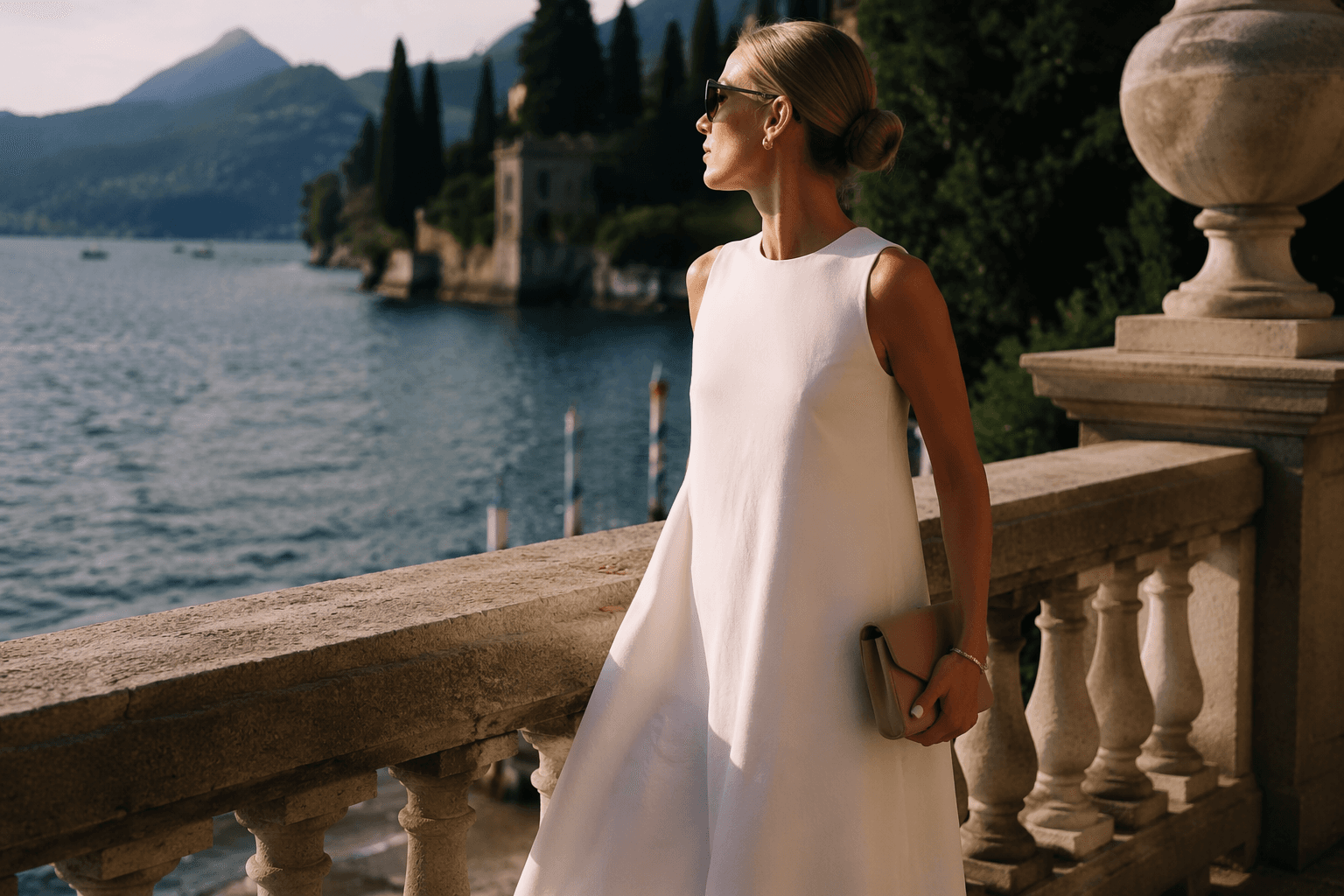
Organza is where transparency becomes refined
Sheer fabric can go wrong fast. On the wrong dress, it looks flimsy, bridal, or like it was chosen for heat rather than taste. But organza has a different history, and that history is part of why it reads as polished instead of flimsy when it is handled well.
Fashion History Timeline points to Elsa Schiaparelli’s 1937 off-white A-line evening gown in printed silk organza as proof that sheer white fabrics have long been used for elegance, not excess. Then the 1938 fashion overview sharpens the point even more, describing women’s fashion that year as favoring a simple, clean, sophisticated silhouette with minimal embellishment. That combination, light fabric and disciplined shape, is basically the old-money formula in one sentence.
Organza only works when the dress has enough structure to stop it from collapsing into prettiness. The point is not transparency for its own sake. The point is lightness with intent. If the fabric skims the body but the silhouette still reads controlled, the result feels like heritage summer dressing. If the organza is all flutter and no frame, it starts to look like a garden party costume.
How to spot the difference between polish and costume
This is the part that matters when you are actually shopping or sizing up what someone is wearing across a room. A white dress can signal inherited polish, but only if the construction backs up the fantasy. The clues are visible before you ever look at the label.
- The shape should hold itself, not collapse the second the wearer moves. Saint Laurent’s 1958 Trapèze example matters here because the boned corset and horsehair understructure created that lifted, architectural feel.
- The cloth should have presence. Organza can be refined because it has crispness, not limpness. Linen and cotton, which Marie Claire UK also flagged in its summer-dress coverage, need enough density to feel deliberate rather than papery.
- The neckline and proportion should feel balanced. Marie Claire UK’s 2024 summer-dress edit called out white and décolletage-bearing silhouettes, which works when the rest of the dress is controlled. When the top is open, the cut has to be exact or the whole thing tips into effort.
- The finish should look considered, not decorative. Minimal embellishment is part of the language here. If the dress is trying to distract you with trim, sparkle, or overworked detail, it has already lost the old-money argument.
That is the real divide. Inherited polish looks calm because it is built well. Bridal dresses chase symbolism. Bohemian dresses chase looseness. Cheap resortwear chases ease. The best white summer dress does none of those things. It just stands there with impeccable posture.
Why the category keeps winning every summer
Marie Claire UK’s broader summer-dress coverage makes the case that white is not a niche mood, it is a wardrobe foundation. In 2025, Andrea Thompson called dresses “the building blocks” of a summer wardrobe, and that feels exactly right for this category. White dresses keep returning because they do the work of a full outfit without needing much around them.
That is also why the old-money version of the look keeps evolving without actually changing its core. The silhouette may lean trapeze, the fabric may be organza, linen, or cotton, and the neckline may open into something more décolletage-heavy, but the underlying code stays the same: softness disciplined by structure. The white dress survives because it asks every summer the same brutal question, and still passes. Can the garment look rich without saying a word?
This article was produced by Prism’s automated news system from verified source data, official records, and press releases, then run through automated quality and moderation checks before publishing. The system is built and supervised by the people who set the standards it runs under. Read our full AI policy.
Did this article answer your question?