WWD frames luxury’s new guard at the TWA Hotel
Luxury’s new guard looks sharper at TWA, where real legacy beats airport nostalgia. The strongest debuts mine house DNA instead of merely staging it.

The real story is the reset
WWD’s TWA Hotel shoot is less about an airport backdrop than a reckoning inside luxury itself. Alex Badia uses spring and pre-fall 2026 to frame a clean status shift: the new creative directors are not building from scratch, they are “digging into house archives and brand DNA” and making old signatures feel newly lived-in. That is the tension old-money dressers understand instinctively, because permanence only matters when it still moves.
The clothes in this story are not presented as spectacle for spectacle’s sake. Trench coats, tweed, cocktail dresses, and silk slips reappear with softer tailoring, unexpected fabric pairings, and a mood that feels “less celebrity-ready and more like real life.” That is the crucial editorial distinction. The best new luxury does not shout that it knows the code; it makes the code feel inevitable again.
Why the TWA Hotel changes the reading
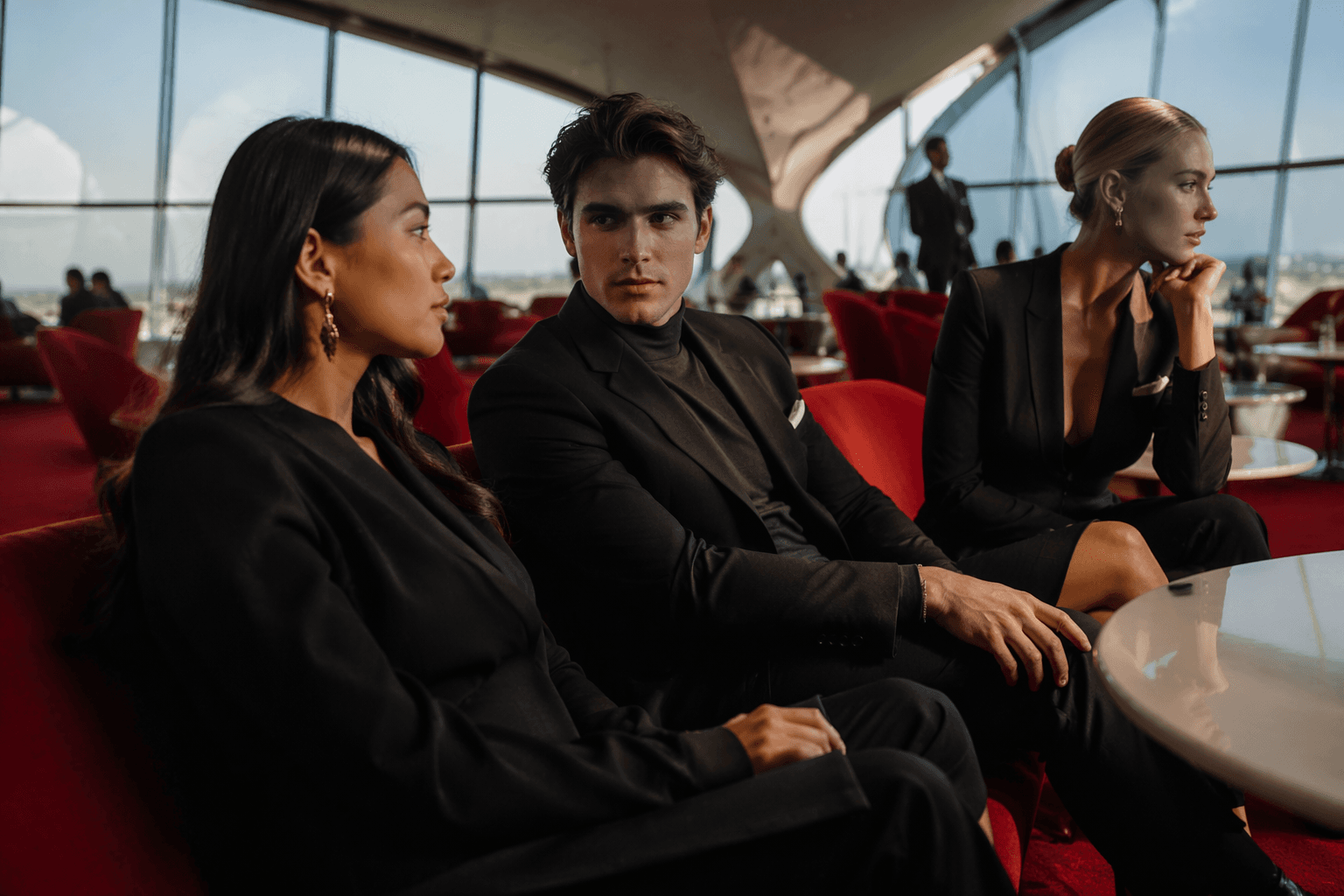
The setting matters because the TWA Hotel is not a decorative prop. It is JFK’s only on-airport hotel, positioned steps from Terminal 5, and built around Eero Saarinen’s former TWA Flight Center, which opened in 1962 as Howard Hughes’ vision of travel as excitement rather than convenience. For a story about luxury’s new guard, that matters more than any glossy backdrop could.
The building itself carries the same argument as the clothes: preservation with a point of view. The terminal went dark in 2001, then reopened as the TWA Hotel in May 2019 after more than two years of careful restoration. The hotel now offers 512 guestrooms, 50,000 square feet of meeting and event space, and a 10,000-square-foot fitness center, while also claiming LEED Gold certification and AirTrain access as the only on-airport hotel at JFK. It is polished, useful, and deeply staged, which is exactly why it suits a conversation about cultivated glamour.
Saarinen’s birdlike terminal was already a design icon when it opened, but preservation architect Richard Southwick’s explanation is the sharper lens: the building became obsolete as aviation moved from smaller supersonic-era jets to wide-body aircraft. That detail gives the hotel its emotional charge. It is not nostalgia frozen in amber; it is a form of adaptation that understands how to survive a change in scale.
The designers being tested, not just introduced
Badia’s point of view becomes clearest in the names he places under this shift. Matthieu Blazy at Chanel, Jonathan Anderson at Dior, Demna at Gucci, Simone Bellotti at Jil Sander, Michael Rider at Celine, and Glenn Martens all signal that luxury is being reauthored by designers who know how to treat a house archive as living material. This is not a season of blank-slate reinvention. It is a season of editors, in the old sense of the word, trimming, tightening, and rebalancing the language of prestige.
Each of these appointments carries its own tension. Chanel asks whether softness can still feel exacting. Dior asks how much romanticism a modern wardrobe can bear without collapsing into costume. Gucci, under Demna, has to reconcile provocation with lineage, while Jil Sander and Celine sit closer to the old-money ideal of restraint, where proportion and fabrication do the talking. Glenn Martens adds a more directional kind of glamour, one that can handle severity without losing sensuality.
What the clothes say about old-money style now
The styling in this story is where the old-money reader should pay attention. The shift away from “celebrity-ready” polish and toward something more believable is not a retreat from luxury. It is a refinement of it. A trench coat cut with less stiffness, tweed softened by an unexpected partner fabric, or a silk slip made to feel less precious and more wearable all push luxury back toward the wardrobe, where it belongs.
That distinction separates legacy from performance. A photogenic setting can flatter a collection, but it cannot save one that only knows how to look expensive. In the TWA Hotel’s mid-century light, the stronger looks are the ones that treat heritage as structure, not scenery. They read as clothes that could move through an actual life, even one with impeccable hotels, polished transfers, and private rooms.
For old-money fashion, that is the right test. Does a new creative director deepen a house’s code, or simply borrow its symbols? Does a revival sharpen silhouette, construction, and fabric intelligence, or merely recycle the surface of elegance? The WWD framing suggests the most convincing answers are coming from designers willing to work with archive, not around it.
The new luxury code is continuity with tension
The TWA Hotel makes the story feel aspirational because it is both preserved and operational, both memory and infrastructure. That is the same balance luxury now needs. The houses that matter most are not the ones chasing novelty for its own sake, but the ones turning inheritance into something that can still be worn, packed, and repeated without looking stale.
That is why this shoot lands for old-money readers. It understands that heritage is not about museum logic, and glamour is not about surface alone. When a restored 1962 terminal, reopened in 2019 and still visibly carrying Saarinen’s optimism, becomes the setting for spring and pre-fall 2026, the message is clear: the future of luxury belongs to the houses that can honor their codes without embalming them.
This article was produced by Prism’s automated news system from verified source data, official records, and press releases, then run through automated quality and moderation checks before publishing. The system is built and supervised by the people who set the standards it runs under. Read our full AI policy.
Did this article answer your question?