10 Best Dresses for Short Women: Flattering Cuts and Styles for 2026
Not every dress is built for petite frames, but these 10 cuts actually work with your proportions instead of swallowing them.
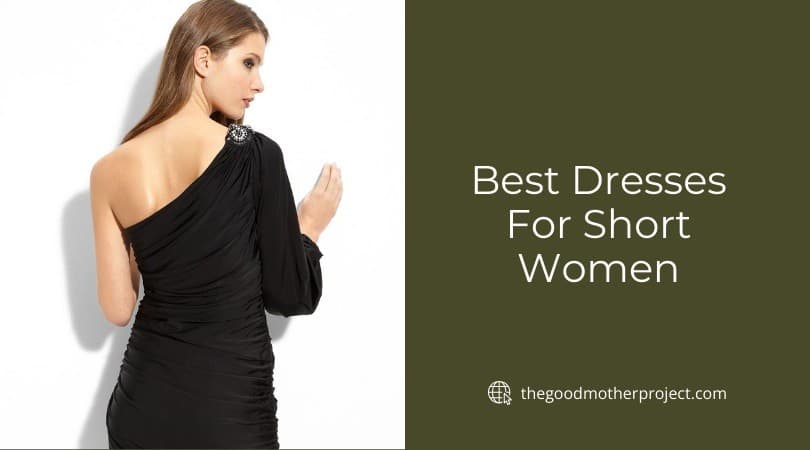
Proportion is everything in petite dressing, and nothing exposes a bad fit faster than a dress that was designed with a 5'8" fit model in mind. The hems land wrong, the waist hits at the hip, the sleeves swallow your hands. But the right silhouette does the opposite: it creates length, defines where you actually want definition, and makes the whole outfit look intentional. These 10 picks are built around the cuts that consistently deliver for shorter frames, whether that's an A-line that skims cleanly from waist to hem, a wrap that lets you control exactly where the waist falls, or a high-waisted silhouette that makes your legs look like they go on forever. Here's what's actually worth buying right now.
1. A-line midi dress
The A-line is the workhorse of petite dressing for good reason. The fitted bodice and gently flared skirt create a waist without adding bulk, and the flare itself draws the eye downward in a way that reads as elongating rather than widening. In a midi length, the key is finding a hem that hits at or just below the knee rather than at the widest part of the calf, which is where most standard-size versions go wrong for shorter women.
2. Wrap dress
The wrap silhouette is one of the most adjustable cuts you can own. You control where the fabric crosses at the waist, which means you're not at the mercy of wherever a brand decided to place the seam. The V-neckline draws the eye up and creates vertical line through the torso, and the angled skirt hem typically falls at a flattering diagonal. Look for versions in fluid fabrics like matte jersey or crepe that drape rather than stiffen.
3. High-waisted fit-and-flare dress
High-waisted construction is essentially a cheat code for creating the illusion of longer legs. When the waist seam sits above your natural waist, it shifts the visual center of gravity upward and gives you more leg proportion below. The fit-and-flare version specifically keeps the skirt controlled enough that it doesn't overwhelm a petite frame the way a full ball-skirt silhouette might.
4. Mini dress
The mini is the most straightforward length choice for short women because it simply shows more leg, full stop. The less fabric below the waist, the longer the leg appears. The risk is styling: a mini that's too oversized in the body reads as shapeless rather than edgy. The best petite minis are fitted or slightly structured through the bodice so there's a clear visual break between top and leg.
5. Bodycon dress
A close-fitting bodycon eliminates extra fabric that can add visual bulk or cut you off at the wrong point. For petite frames, the advantage is that the dress follows your actual silhouette rather than a generic one, which means seams and hems land where they should on your body specifically. Keep the hem at mid-thigh to knee for the most flattering read; anything longer in a bodycon starts to look like it's pulling toward the floor.
6. Empire waist dress
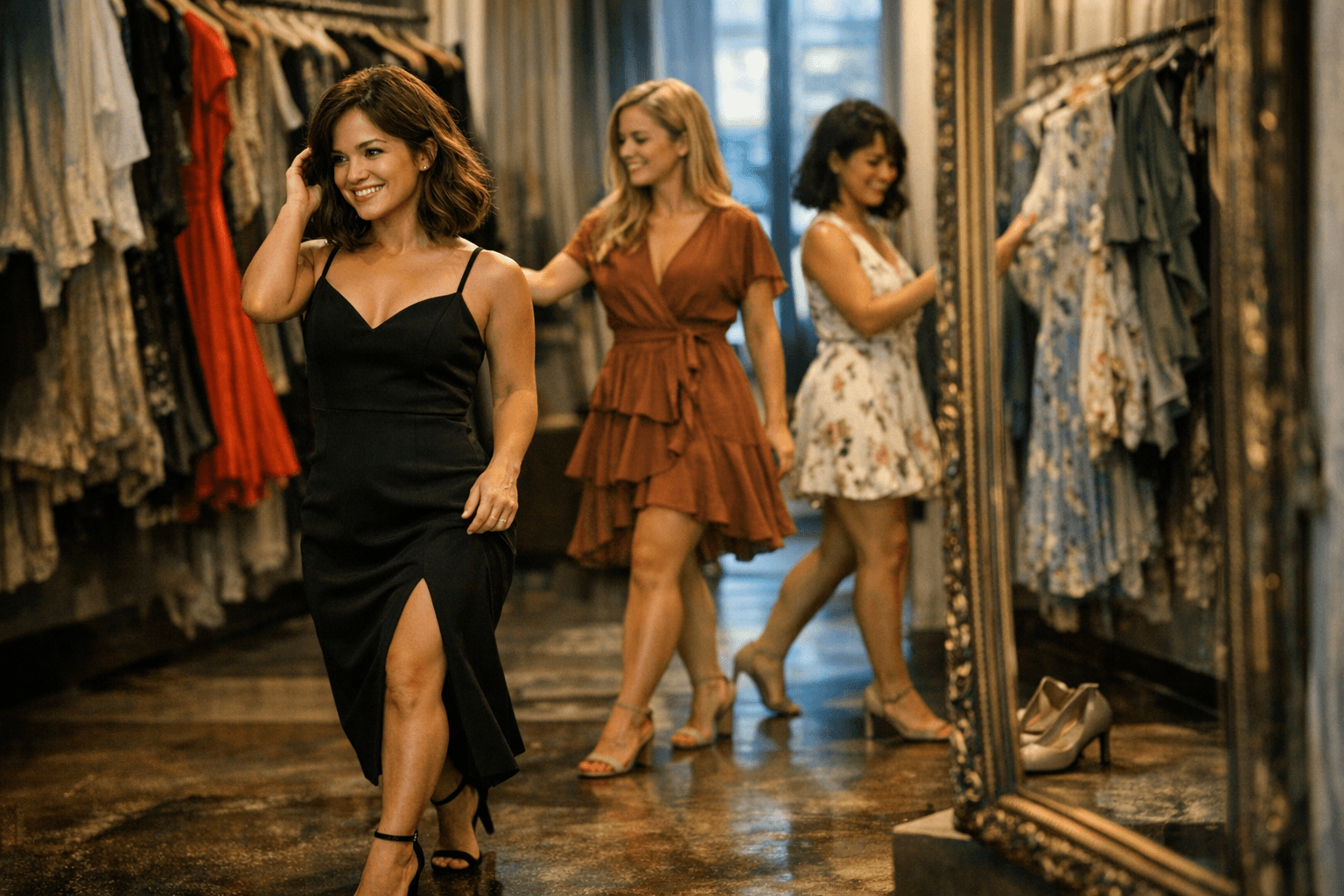
The empire seam sits just below the bust, which is typically the narrowest point of the torso. Everything below that seam flows away from the body, making this cut extremely forgiving while still looking structured. For petite women, the high seam placement does similar work to a high waist: it creates the impression that the legs begin much higher than they actually do. This silhouette is especially useful in lightweight fabrics that move rather than hold a rigid shape.
7. Shirt dress with a defined belt
A shirt dress on its own can overwhelm a shorter frame, but add a belt and the whole equation changes. Cinching at the waist breaks up the column of fabric and introduces a clear waist definition that the style otherwise lacks. The best approach for petite wearers is to belt at the true waist or slightly above it, and to look for shirt dress versions that are proportioned shorter through the torso so the buttons and collar don't look oversized relative to the frame.
8. Smocked or elasticated waist dress
Smocking is having a sustained moment right now, and it happens to be genuinely useful for petite dressing. The gathered, elasticated fabric sits snugly at the waist without requiring a separate belt, and the soft texture reads as relaxed without being shapeless. Because the waistline self-adjusts to fit exactly, there's no risk of a waist seam that falls at the wrong point. In floral or textured fabrics, smocked midi dresses are a complete outfit with minimal effort.
9. Slip dress in a shortened length
The slip dress is tricky in its standard length for petite wearers because bias-cut or satin fabric already has a tendency to skim lower than it reads on a hanger. The solution is either buying from a petite-specific label that already cuts an inch or two shorter, or sizing into a shorter length intentionally. At the right hemline (hitting mid-thigh to just above the knee), a slip dress is one of the cleanest silhouettes for short frames because there's no structure to fight, just fabric that follows the body.
10. Tiered or ruffle-hem dress in a petite length
Tiered dresses are the one style where petite shoppers need to be most selective about sourcing. Standard sizing places the tiers too low, which means the ruffles hit at proportions that widen rather than lengthen. But a tiered dress that's cut specifically for a shorter frame, with the tiers positioned above where they'd land on a taller wearer, is genuinely flattering: the horizontal movement adds visual interest without the fabric mass landing at the widest point of the leg. Always check whether a tiered dress is available in a petite cut before buying; it's the single detail that makes or breaks this silhouette.
The throughline across all 10 is proportion, specifically the relationship between where the waist is defined and where the hem falls. Petite dressing isn't about following a rigid set of rules; it's about understanding which silhouettes are designed to work with a shorter frame rather than requiring endless alterations to compensate for one. These cuts do the structural work so the styling can actually be the focus.
This article was produced by Prism’s automated news system from verified source data, official records, and press releases, then run through automated quality and moderation checks before publishing. The system is built and supervised by the people who set the standards it runs under. Read our full AI policy.
Did this article answer your question?