21 Petite Styling Tips to Create Height with Proportion and Tailoring
Master proportion and tailoring: tiny adjustments, high rises, cropped lengths, vertical lines and structured tailoring, create a taller silhouette without heavy alteration.
1. Proportion-first mindset
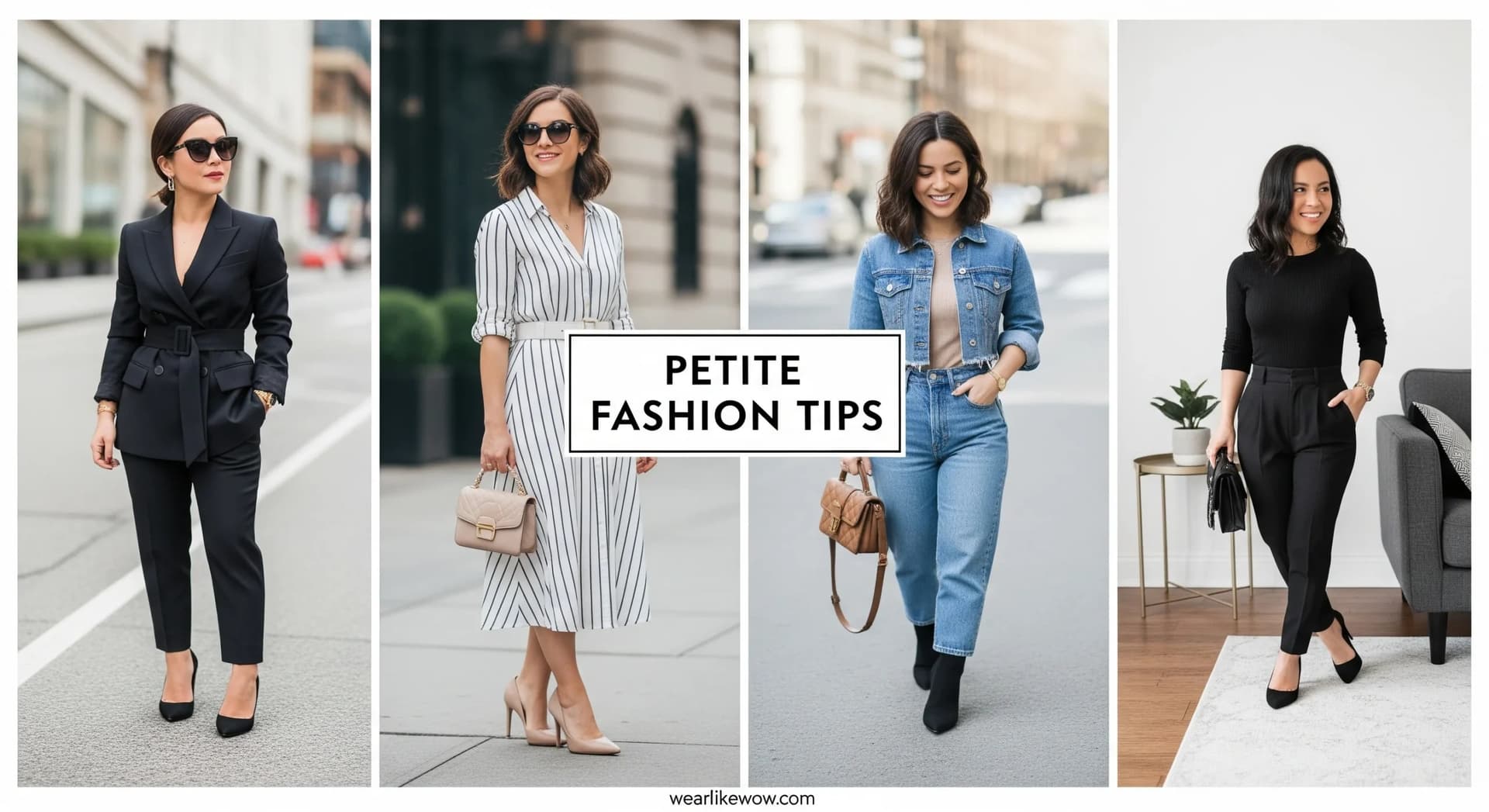
Start every outfit by thinking proportion: where the waist sits, how long the hemline falls, and how much body each piece visually takes up. For petites the goal is to create longer visual lines with fewer stops; the research highlights proportion as the foundation for height-building, so plan looks around one or two focal lengths rather than layering many competing pieces.
2. Invest in structured tailoring
Structured tailoring sculpts the frame and reads as intentional, which is essential for petites. The research calls out structured tailoring as a core tool, choose blazers with defined shoulders, light waist suppression and minimal excess fabric so the jacket follows your shape and creates a vertical note from shoulder to hip.
3. Use high rises to lengthen legs
High-rise trousers and skirts literally start the leg line higher, which instantly lengthens proportion. Make high rises your default for trousers and jeans: they move the visual waist up and, paired with a tucked top, make the legs appear longer without changing height.
4. Embrace cropped lengths strategically
Cropped lengths are cited in the research as a technique for petites when used purposefully, cropped jackets that end at the ribcage and trousers that finish just above the ankle both shorten the torso or expose the ankle to extend the leg line. Keep the crop deliberate: a slightly shorter jacket outlines the waist, and a cropped pant with heel shows more leg.
5. Prioritize vertical lines
Vertical lines are a perennial petite trick the research emphasizes; they draw the eye up and down instead of sideways. Use single seams, vertical pin-tucks, lapels, or long button plackets to create uninterrupted verticality, and avoid horizontal breaks like wide contrast panels at mid-torso.
6. Monochrome and tonal dressing
A monochrome or tightly tonal outfit reduces visual interruptions and elongates the silhouette. Stick to similar values from top to toe, whether in cream, navy, or black, and let texture or a single slim accessory add interest without chopping your height.
7. Choose the right footwear
Footwear is more than heel height; the research lists footwear as a key tool for creating height through proportion. Go for shoes that continue the leg line: nude pumps, pointed toes, or boots with a close fit through the ankle that don’t create a wide visual break between leg and shoe.
8. Pointed toes and elongated profiles
Pointed-toe shoes lengthen the foot silhouette and subtly add perceived height. Swap square or round toes for sleek pointed styles in pumps or flats, and match shoe color to trousers or tights for an uninterrupted leg line.
9. Keep ankle straps slim or invisible
Bulky ankle straps interrupt the leg line; instead choose slim straps or clear/skin-toned finishes when you need support. The research’s emphasis on footwear reminds petites to avoid heavy hardware at the ankle that truncates the leg visually.
10. Tailor pant legs: taper and crop
Tapered pant legs that skim the ankle create a clean vertical finish; wide legs need extreme care. The research points to cropped lengths and tailored cuts, take trousers to a tailor to remove excess width and define a gentle taper that reads long and lean without puddling.
11. Hemline awareness: where skirts and dresses sit
Hemline position determines perceived height more than skirt length alone. For petites, skirts that hit just above the knee or just below the knee, with a slightly higher waist, tend to elongate; midi skirts can work if cut narrow or worn with heels that match the shoe-to-leg color palette.
12. Define the waist deliberately
A clearly placed waist (natural or slightly raised) is crucial; the research highlights high rises and tailored waists. Use belts that are slim and sit at the smallest part of the torso, or select dresses and trousers with stitched-in waist definition to avoid swallowing your frame.

13. Scale prints and details to size
Oversized prints and chunky embellishment overwhelm petite frames; keep patterns and trims small and vertical whenever possible. The research mentions proportion repeatedly, choose motifs and hardware scaled to your body so every detail complements rather than competes with height.
14. Favor single-breasted, shorter blazers
Single-breasted blazers with a shorter body length read lighter and lengthen the leg line compared with long, heavy double-breasted styles. The research’s focus on structured tailoring and cropped lengths supports selecting jackets that end at or above the hip rather than below it.
15. Use V-necks and open lines to elongate the torso
V-necks create a natural vertical focus toward the center of the body and can lengthen the torso visually. Opt for modest V shapes rather than high crew necks if your aim is to draw the eye upward and create the impression of a longer neck and center line.
16. Lightweight layers and minimal bulk
Multiple heavy layers can shorten a petite silhouette; the research suggests using proportion and tailoring rather than volume. Choose lightweight knits and thin structured coats that stack neatly, if you layer, make each layer slightly shorter than the one beneath to preserve vertical flow.
17. Belt placement: forego low-slung belts
Low belts across the hips break the torso into a short leg line; instead place belts at the natural waist or just above to lengthen the legs. The research’s guidance on high rises and waist definition supports belts that lift the visual starting point of the leg.
18. Outerwear that respects scale
Coats and trenches should be proportionate: cropped trenches, belted short coats, or single-breasted wool overcoats that hit above mid-thigh preserve verticality. Avoid oversized parkas and long, bulky hems that swamp a petite frame and hide tailoring underneath.
19. Proportionate accessories: small bags and delicate jewelry
Large totes and oversized statement jewelry can dwarf a petite silhouette; choose small-to-medium bags, crossbodies, and delicate chains that complement rather than dominate. The research’s note on proportion extends to accessories, scale everything down and favor pieces that echo the outfit’s vertical lines.
20. Dresses with structured seams and vertical panels
Dresses with princess seams, vertical paneling, or front center seams mimic the benefits of tailoring and vertical lines. These construction details define the torso and lengthen the eye, aligning with the research’s prescription of structured tailoring and vertical design to create height.
21. Build a tailoring-forward capsule wardrobe
Finally, assemble a wardrobe around tailored staples: a single-breasted cropped blazer, high-rise trousers, a tapered coat, a sheath dress with vertical seams, and three-to-four go-to shoes that elongate (pointed flats, nude pumps, ankle boots). The research underscores wardrobe building as essential; a small, well-tailored capsule makes proportion-first dressing repeatable and effortless, so you always have pieces that create height through considered cuts rather than relying on constant alteration.
Conclusion: These 21 strategies combine proportion, vertical lines, footwear choices, cropped lengths, high rises and structured tailoring to produce the same visual effect as a few inches, by guiding the eye and streamlining silhouettes. Adopt the tailoring-first approach and you’ll find creating height is less about size and more about precision.
This article was produced by Prism’s automated news system from verified source data, official records, and press releases, then run through automated quality and moderation checks before publishing. The system is built and supervised by the people who set the standards it runs under. Read our full AI policy.
Did this article answer your question?