A 5'2" Fashion Editor Shares Her Best Petite Spring Capsule Wardrobe Picks
Sleeves that swallow your hands, hems in all the wrong places: a 5'2" editor with 10+ years of experience finally shares her petite spring capsule secrets.
If you've ever stood in a fitting room watching a blazer sleeve swallow your hand whole, or stepped back from a mirror to find a hemline sitting squarely on the widest part of your hip, you already know the problem Emily Dawes is solving. The Who What Wear fashion editor is 5'2", has spent more than a decade in the industry, and has built what she calls a "little black book" of petite-friendly sources that friends, styling clients, and colleagues have been quietly extracting recommendations from for years. This spring, she's making it official.
"I've been a fashion editor now for over a decade, and after years of seeing trends come and go it's clear to me that great style starts with great basics," Dawes writes. The philosophy sounds simple, but for petite women it carries a specific weight: standard sizing turns even the most straightforward capsule staple into a fit problem. As Dawes puts it, "Standard sizing often means sleeves that drown my hands, hemlines that hit in awkward places and trousers that require a trip to the tailor." That tailor visit adds cost, time, and the particular frustration of paying full price for a garment that still needs work before it earns a place in your wardrobe.
Her edit for spring 2026 is the antidote to all of that.
Why the Capsule Approach Works Harder for Petite Frames
The capsule wardrobe concept has been talked to death in fashion media, but Dawes's framing has a sharper edge to it. For petite dressers, the stakes of getting basics wrong are higher than for taller women. A slightly-off hemline or a sleeve with too much fabric doesn't just look slightly sloppy; it actively works against visual elongation, creating proportions that can make a 5'2" frame look overwhelmed by the clothes rather than dressed by them. Every piece in a petite capsule needs to pull double duty: fit correctly from the start and create length, not interrupt it.
"After years of seeing trends come and go it's clear to me that great style starts with great basics," Dawes says. "Sure, cult buys can be fun in the moment, but the foundations of a truly chic wardrobe are always those timeless pieces that work hard." The emphasis on pieces that "work hard" is especially pointed for petite shoppers, who can't afford a capsule full of items that need constant adjustment or styling workarounds to look polished.
Cropped Outerwear: The Proportional Non-Negotiable
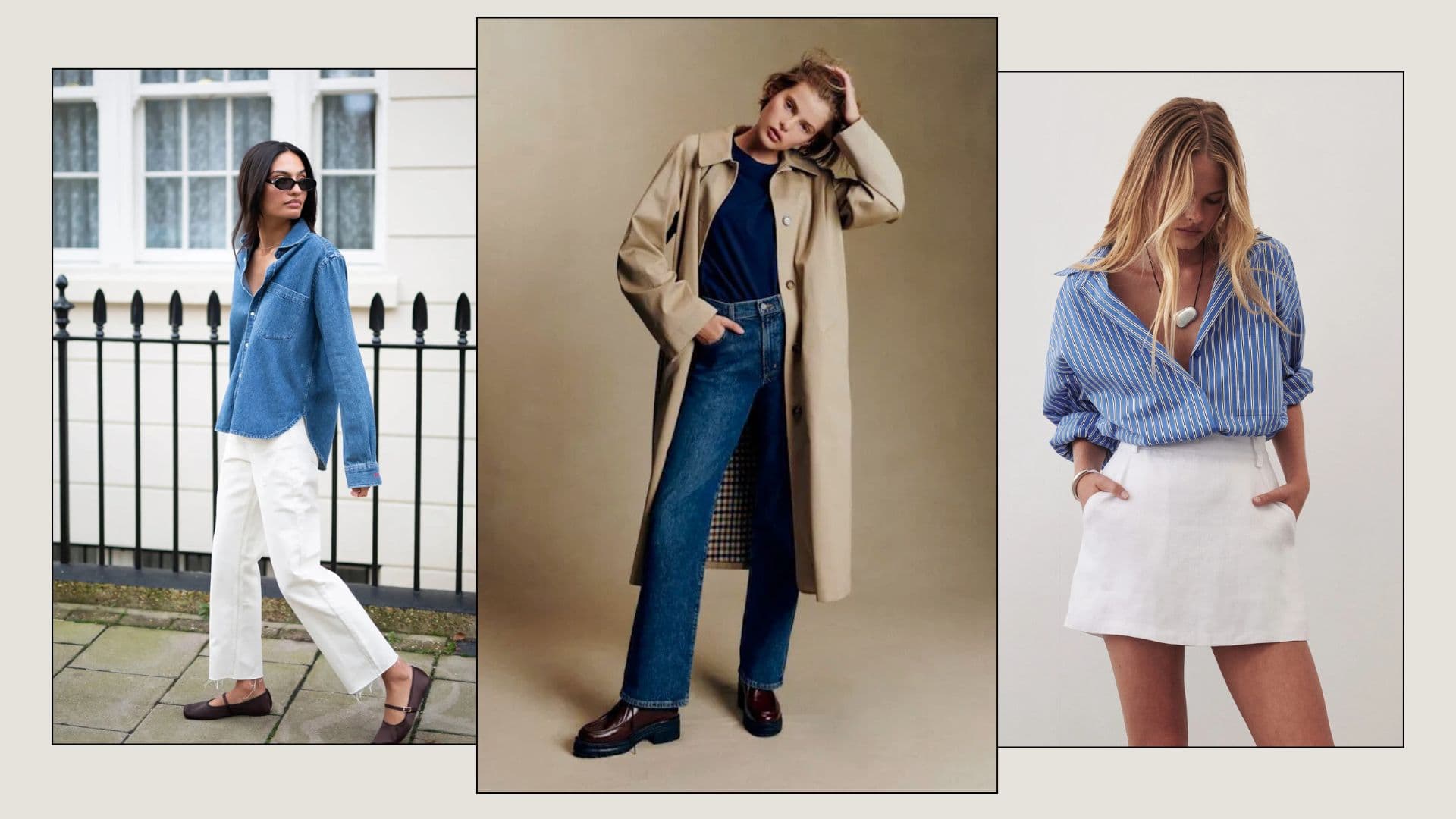
The first category Dawes singles out is cropped outerwear, and the reasoning is grounded in proportion rather than trend. A full-length coat on a 5'2" frame risks visually cutting the leg line and shortening the silhouette; a cropped jacket or coat, by contrast, hits at the natural waist or just below it, defining the body's longest vertical lines and letting leg length do the work.
This isn't about following a micro-trend in jacket lengths. Cropped outerwear functions as a structural tool in a petite capsule, working to visually lengthen the lower half of the body and create a sharper, more polished silhouette. For spring specifically, when layering shifts from heavy wool coats to lighter options, a cropped blazer or spring jacket becomes the capsule's workhorse: worn over a slip dress, a tailored trouser, or a high-waisted jean, it consistently delivers the proportional clarity that standard-length outerwear doesn't.
The 27-Inch Inseam Rule for Trousers
If there is one number that petite shoppers should commit to memory, it is approximately 27 inches. That inseam measurement is the explicit detail Dawes surfaces when discussing high-rise trousers, and it reflects a genuine reality of petite sizing: the standard trouser inseam of 30 to 32 inches means pooling fabric at the ankle, a break that reads as sloppy in tailored styles and adds bulk exactly where you don't want it.

High-rise trousers are the other structural pillar of Dawes's spring capsule, and the combination of the two elements, high rise and shorter inseam, is deliberate. A high-rise waistband worn at or above the natural waist creates the illusion of a longer leg line, particularly when the trouser grazes the ankle cleanly at that 27-inch length. The result is a sharper and more polished silhouette than any standard-length trouser can deliver without alterations. This is the kind of detail that separates a buying guide written by someone who actually wears these clothes from generic fashion advice.
Building the Actual Wardrobe
Dawes frames this project as an edit, a curated selection rather than an exhaustive shopping list, which is the right call. The goal is a spring capsule that functions across multiple contexts: the cropped outerwear piece moves from weekend to office; the high-rise trouser pairs with a simple white tee and with something more elevated. The pieces work together without being matchy, and none of them require a tailor before they're wearable.
"As both a lifelong lover of a streamlined capsule wardrobe and a petite dresser myself, I'm always on the lookout for pieces that deliver impeccable fit and enduring style," she notes, adding that the little black book of sources she's compiled over years is where these recommendations come from. That accumulated knowledge, built through a decade-plus of fashion editing and personal trial and error at 5'2", is exactly the kind of context that transforms a product list into useful guidance.
The Fit Problems Worth Knowing Before You Shop
For anyone building a petite spring capsule from scratch, Dawes's list of standard-sizing failures is worth treating as a pre-shopping checklist. Before committing to any piece, ask:
- Does the sleeve length end at the wrist, not the knuckles?
- Does the hemline hit at a point that creates length rather than interrupting the leg line?
- Is the inseam close to 27 inches, or will the trousers need significant tailoring to wear clean at the ankle?
- Does the waistband sit at the natural waist or above it, rather than drifting to the hip?
These aren't aesthetic preferences; they're structural fit requirements for a petite frame. Dawes has spent years tracking down pieces that meet them without alterations, and the spring 2026 edit is the distillation of that search.
The larger point her guide makes is one that petite shoppers often learn the hard way: fit precision is not a luxury consideration. It is the baseline. Standard sizing simply wasn't built for frames under 5'4", and the workarounds, tailoring trips, rolling hems, pushing up sleeves, are costs that add up in both time and money. A well-curated petite capsule built on cropped outerwear and high-rise trousers cut to a 27-inch inseam bypasses most of that friction entirely, leaving a wardrobe that's actually ready to wear.
This article was produced by Prism’s automated news system from verified source data, official records, and press releases, then run through automated quality and moderation checks before publishing. The system is built and supervised by the people who set the standards it runs under. Read our full AI policy.
Did this article answer your question?