Duchess Sophie’s breezy blouse look is perfect for petite summer style
Sophie’s cotton blouse proves petites can beat the heat without losing shape. The trick is soft drape, a light top half, and ivory jeans that keep the line long.

Duchess Sophie’s Penelope Chilvers Monday blouse, in a blue-and-yellow floral print, is 100% cotton, light, breathable, and relaxed. Paired with ivory jeans, it keeps the top half easy and airy while still reading polished enough for an official appearance.
Why this blouse works on petites
This is the rare summer top that does two jobs at once: it cools the body and keeps the silhouette clean. The soft cotton and relaxed cut stop the blouse from clinging, while the puffed sleeve gives a little shape up top without turning the look bulky. On a petite frame, that balance matters, because any extra weight around the shoulders or hemline can shorten the body fast.
The print helps, too. Blue and yellow florals bring energy, but the colors stay light enough that the blouse does not land with the visual heaviness of a dark, dense pattern.
The details that do the proportion work
Sophie’s blouse succeeds because the details lean toward softness, not structure for structure’s sake. The Monday blouse is built for spring through high summer, and the fit reads as a top designed to move, breathe, and sit lightly on the body. For petites, that kind of ease is gold, because the eye reads the outfit as continuous rather than chopped up.
The details to look for are the ones that shorten visual clutter and keep the torso looking neat:
- Soft drape: fabric should skim, not stiffen, the body.
- Relaxed silhouette: a little room keeps the blouse from pulling across the chest or waist.
- Puffed sleeve: a touch of volume gives shape without overwhelming the frame.
- Easy tuckability: the hem should sit cleanly into jeans or trousers so the waist still reads.
- Light color palette: pale bottoms, like Sophie’s ivory jeans, keep the leg line feeling longer.
Why the timing matters as much as the outfit
The outfit lands hard because the United Kingdom was deep in a late-June heatwave when Sophie wore it. The Met Office had a Red Extreme Heat Warning in place from June 22, with updates on June 24 and 25, and the British Red Cross said parts of England and Wales were forecast to hit 38°C on June 24 and 25.
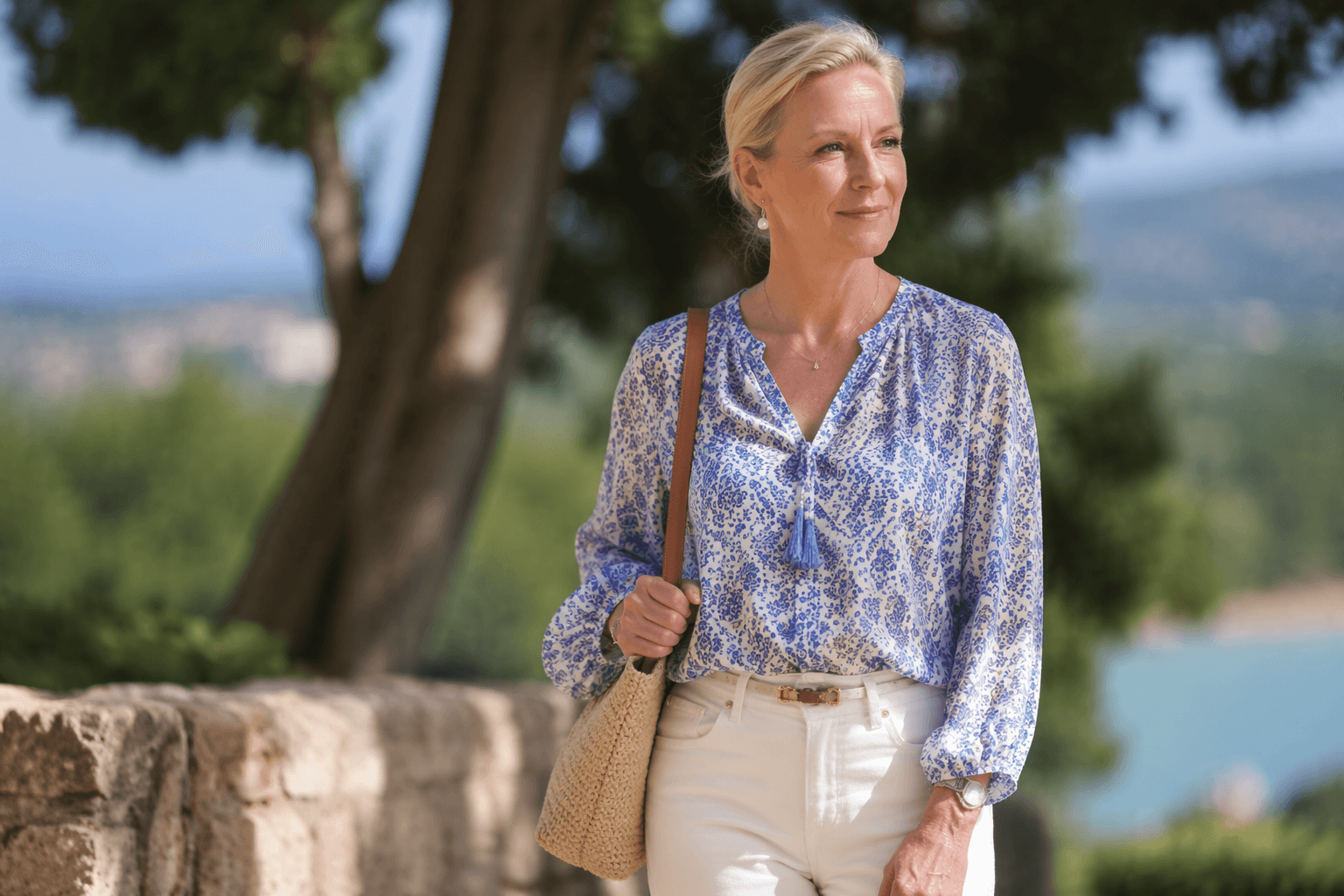
In extreme heat, heavy layers, dark colors, and clingy fabrics start looking decorative in the worst way, because they work against comfort. Sophie’s choice does the opposite: the cotton breathes, the print keeps the outfit lively, and the ivory jeans stop the whole look from feeling weighed down.
A working-royal version of summer dressing
Sophie wore the blouse during a two-day working visit to Jersey from June 23 to 24, with a schedule centered on dairy farming, sustainable food production, and island engagements. She also became the first member of the Royal Family known to set foot on Les Écréhous during that trip.
Sophie’s blouse avoids the overbuilt clothes that look formal but feel clumsy. The line stays lifted, the waist stays visible, and the outfit still has enough polish to handle the official setting.
How to translate the look without losing the proportions
The formula is simple, and it works because every piece is doing a job. Start with a blouse that has a light hand and a relaxed body, then pair it with a pale bottom that keeps the outfit open visually. The trick is not to bury the frame under volume, but to let the blouse float while the trousers or jeans anchor the shape.
If you want the same effect, keep these proportion rules in mind:
- Choose cotton or another breathable fabric with visible movement.
- Favor lighter prints over dense, dark patterns when the temperature rises.
- Pair a fuller blouse with straight, slim, or gently tailored bottoms.
- Use ivory, cream, or soft white denim to extend the line downward.
- Leave the top half unfussy so the neckline and shoulders stay light.
Sophie debuted the blouse in late May.
This article was produced by Prism’s automated news system from verified source data, official records, and press releases, then run through automated quality and moderation checks before publishing. The system is built and supervised by the people who set the standards it runs under. Read our full AI policy.
Did this article answer your question?