Eight petite outfit formulas that always flatter shorter frames
Eight petite-friendly formulas solve proportion before they become outfit ideas, from cinched denim sets to pointed-toe flats that keep the line long and clean.
Petite dressing works when the eye keeps moving. The smartest outfits do not try to disguise a shorter frame; they sharpen it with proportion, setting the waist in the right place, choosing hems that land intentionally, and letting every layer earn its length. That is why a 4'11" editor’s formula list feels so useful: it turns the old petite rulebook into repeatable styling mechanics you can copy from pieces already hanging in your wardrobe.
Denim co-ord and sandals
This is the easiest way to create a long, uninterrupted column because the matching denim does half the work for you. The key is a cinched waist and a single-color palette, which prevent the outfit from breaking visually at the middle and make the body read taller. Keep the top cropped enough to meet the waistband cleanly, then let the trouser hem skim the top of the foot so the sandals do not chop the line.
If you already own a denim shirt and jeans, make them feel like a set by keeping the wash close and the proportions deliberate. A straight, slightly fluid leg is more flattering than anything bulky, because it falls in one uninterrupted line. The mistake to avoid is a boxy overshirt worn loose over low-rise denim, which shortens the torso and makes the whole look feel heavy.
Blazer and maxi dress
A blazer over a maxi dress works when the jacket ends at, or just above, the narrowest point of your waist and the dress begins there without adding bulk. The short jacket gives structure, while the long dress extends the body downward, so the outfit has both shape and length. On a petite frame, the hem of the dress should graze the top of the foot or pool only slightly, never swallow the shoe.
This formula is especially strong when the blazer is lightly tailored and the dress is smooth rather than frothy, because fabric weight matters as much as length. You can repeat the look with any cropped jacket and any column-like dress already in your closet. Avoid a long blazer that covers most of the dress and creates two competing vertical blocks, which can flatten the silhouette instead of refining it.
Button-down shirt and high-waisted jeans
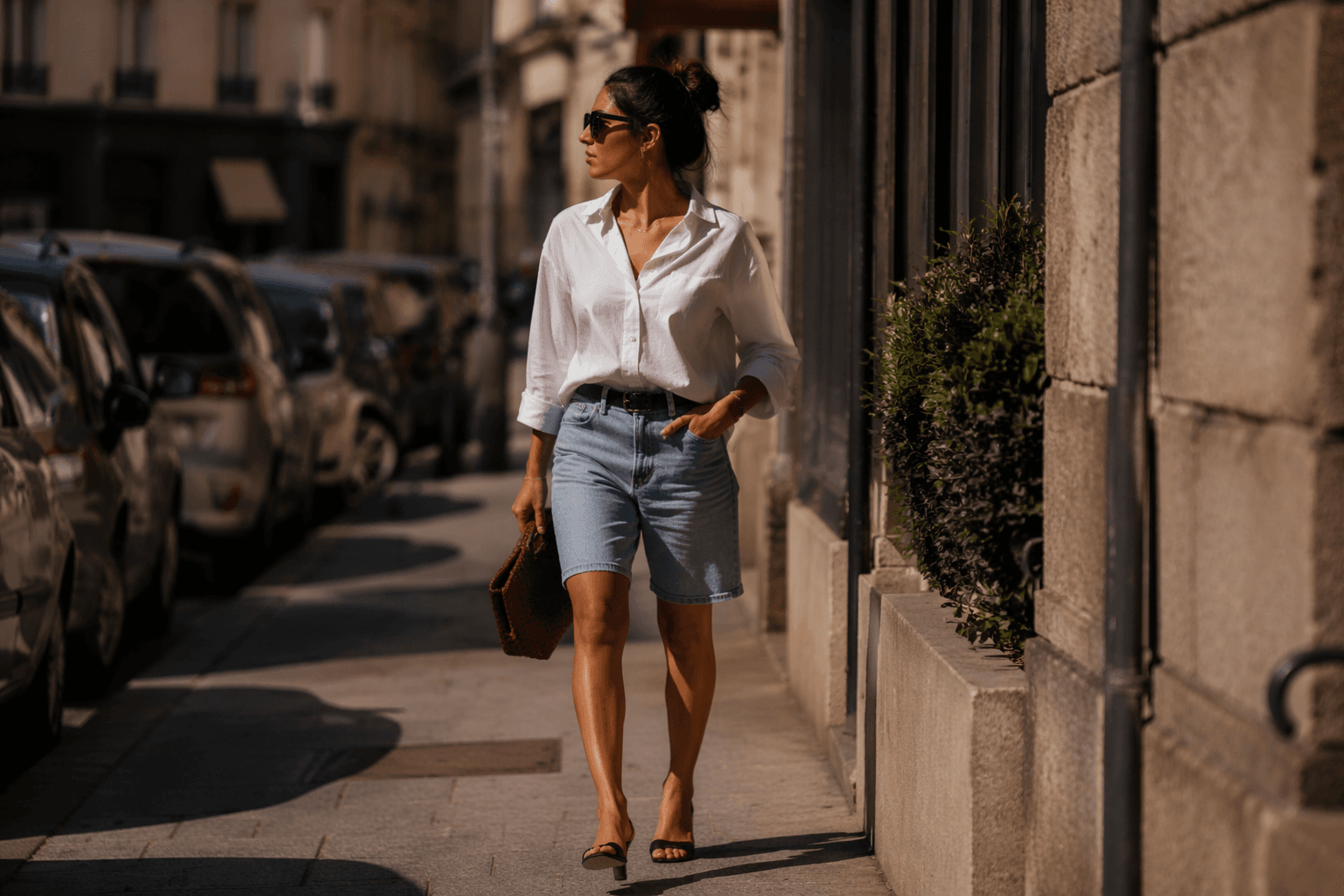
A button-down tucked into high-waisted jeans is one of the most reliable petite formulas because it visibly raises the waistline. High-rise denim, which petite collections often cut with shorter rises and shorter inseams, gives the legs more visual room before the outfit begins to travel down the body. The shirt should be tucked fully or neatly French-tucked so the waistband stays visible and the torso does not disappear.

What makes this look work is not the shirt itself but the break point between shirt and jean. Crisp cotton, silk, or even a relaxed poplin all behave well as long as the hem sits above the hip and the jeans finish at the ankle or slightly longer with a clean shoe line. The common mistake is pairing a long, untucked shirt with low-rise jeans, which drags the waist downward and steals the very length you are trying to create.
Trench coat and shirt with capris
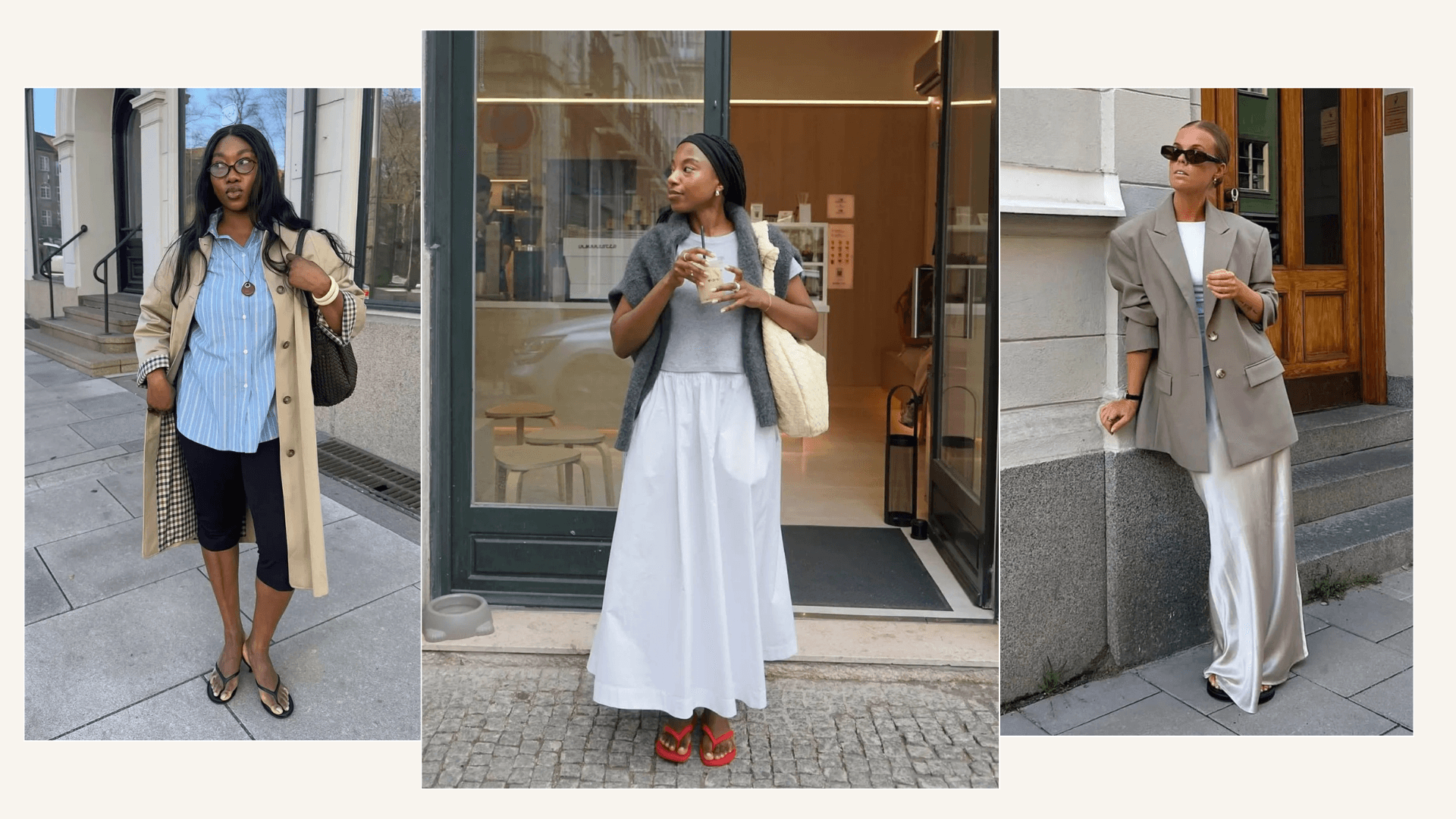
Capris can be tricky on shorter frames, which is exactly why a trench coat makes them feel polished. The coat should fall long and fluid, ideally below the knee, while the capri hem lands somewhere just below the knee or mid-calf so the outfit has a clear rhythm rather than an awkward stop-start effect. A simple shirt underneath keeps the layers lean and stops the look from becoming visually crowded.
The proportion trick here is contrast: one longer outer layer, one shorter trouser length, and one clean top underneath. If you already own capris, choose a trench with a belt so you can define the waist before the coat opens into movement. Avoid a cropped jacket with capris, because two shortened lines can make the leg feel cut in half rather than elongated.
Trouser suit and heeled sandals
A petite-friendly trouser suit depends on precision, not volume. The jacket should meet the high point of the hip or sit just below the waist, and the trouser hem should skim the top of the sandal with almost no pooling so the leg line remains uninterrupted. Heeled sandals matter here because even a modest lift can keep the hem moving cleanly instead of dragging against the floor.
This is where tailoring pays off, since petite suiting is really about making standard menswear ideas work on a smaller frame. The best version uses clean shoulders, a nipped waist, and trousers that are altered to the right inseam rather than left to bunch. The mistake is taking a suit that is too long in both jacket and trouser, which overwhelms the frame and makes the proportions feel borrowed.
Cropped T-shirt and midi skirt
A cropped T-shirt works with a midi skirt because the short top restores balance to a skirt length that can otherwise dominate a petite frame. The hem of the tee should hit above the waistband or right at it, while the skirt should fall below the knee and end at a clean point on the calf, ideally not the widest part of the leg. That spacing keeps the torso defined and prevents the outfit from settling into one long, shapeless tube.
This formula is best when the skirt has some structure or movement, not excessive volume. A ribbed knit tee, a neat cotton crop, or a boxy tee with a controlled hem all work if the waistband stays visible. Avoid a long tee that covers the waist, because once the middle disappears, the midi skirt can visually shorten you instead of lengthening you.
Shirt and wide-leg jeans
Wide-leg jeans can be surprisingly flattering on shorter women if the shirt sets the top half in order first. The shirt should be tucked, half-tucked, or tied so the waist stays defined, and the jeans should start high on the waist and fall in one strong vertical from hip to hem. The best hem length is just off the ground, or kissing the shoe, because any extra fabric breaks the line and looks sloppy rather than deliberate.
This is where proportion-aware denim matters most, especially since petite denim is often cut with a shorter inseam to avoid overwhelming the leg. A relaxed button-down, a crisp overshirt, or even a fine knit can all work as long as the top is not too long and the waist remains visible. The mistake is wearing wide-leg jeans with a long untucked shirt, which creates too much fabric and too little shape.
Knitted dress and pointed-toe flats
A knitted dress is one of the most elegant petite shortcuts because the knit hugs the body without the fuss of multiple layers. The dress should skim the frame rather than cling, and the hem should land where the leg looks longest, usually just below the knee or at the calf, depending on the silhouette. Pointed-toe flats sharpen the finish and extend the foot visually, which matters when you want flat shoes without losing polish.
This formula proves that flats do not have to flatten you. The pointed toe creates directional length, and a close-fitting knit keeps the outline clean so the outfit reads as streamlined, not weighty. Avoid round-toe flats with a hem that cuts at the widest part of the calf, because that combination closes off the line and makes the silhouette feel shorter than it is.
The larger lesson behind all eight formulas is simple: petite style is not about dressing smaller, it is about dressing with intent. Raised waists, shorter rises, shorter inseams, clean hems, and controlled layers create a vertical line that feels modern and effortless. Once those proportions click, the best petite outfit is not the one that hides your frame, but the one that edits it beautifully.
This article was produced by Prism’s automated news system from verified source data, official records, and press releases, then run through automated quality and moderation checks before publishing. The system is built and supervised by the people who set the standards it runs under. Read our full AI policy.
Did this article answer your question?