Expert Tips Help Petite Shoppers Find Clothes That Truly Fit
Hems land wrong, waists hit at the hip: professional stylists share the exact fixes petite shoppers under 5'4" need to make clothes work for their frame.

Finding clothes that actually fit when you're 5'4" or under is a specific, physical frustration. Hems drag, waistbands sit at the hip instead of the waist, and cropped styles that should land perfectly somehow manage to swallow the entire upper body. The problem isn't the shopper's proportions — it's that most clothing is cut for someone taller, and the fix requires a deliberate strategy rather than blind optimism at the fitting room mirror.
Professional stylists have mapped out exactly what works, and the guidance is more precise than "shop petite sizes" and hope for the best.
First, understand what petite actually means
Petite is a height category, not a size category. Anyone 5 ft 4 in (162 cm) or under qualifies, and that definition has nothing to do with how much space you take up otherwise. You can be petite and athletic, petite and curvy, or petite and plus-sized — the label refers only to vertical measurement. Christina Santelli, a professional stylist and founder of Style Me New with over six years of styling experience, anchors the definition to that single numeric threshold, and the distinction matters: shopping in petite sections is about proportion, not about fitting into a smaller garment.
Build your silhouette from the ground up
Shoes are the easiest and most immediate intervention. Kathi Burns, a certified professional organizer with deep styling credentials, recommends nude, pointy shoes with a bit of height. The logic is architectural: a nude shoe extends the visual line of the leg without breaking it with color, and a pointed toe adds further length. Even a modest heel shifts the entire proportion of an outfit.
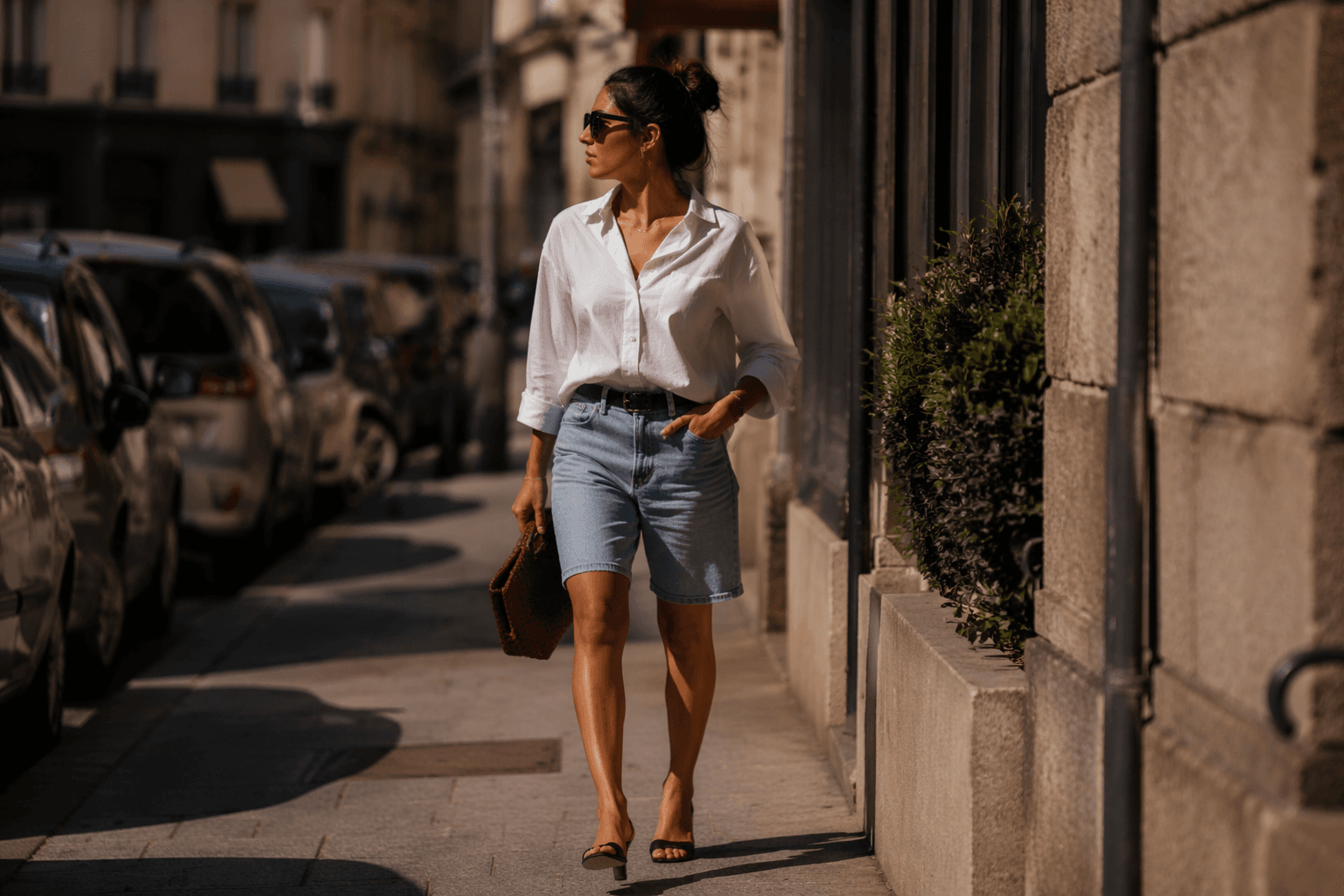
From there, the waistline is the most powerful tool in the petite wardrobe. Stylist Elle Monus is direct on this point: emphasize your waist. High-waisted bottoms, recommended by wardrobe stylist Dina Scherer, work in concert with this principle. When the waistband sits at its natural position rather than drifting down to the hip, the legs appear longer and the torso reads as proportionally balanced. Scherer, who founded Modnitsa Styling and brings over a decade of personal shopping experience to her work, pairs that advice with a second recommendation: cropped bottoms in the same high-waisted cut, which tighten the silhouette without adding visual weight.
The tops and dresses that do the most work
V-neck tops are a consistent recommendation from stylist Jordan Stolch — the neckline draws the eye downward and elongates the neck and chest, creating vertical movement without any extra effort. Cropped tops, when paired with high-waisted bottoms, keep the proportional break exactly where it should be on a shorter frame rather than letting it drift.
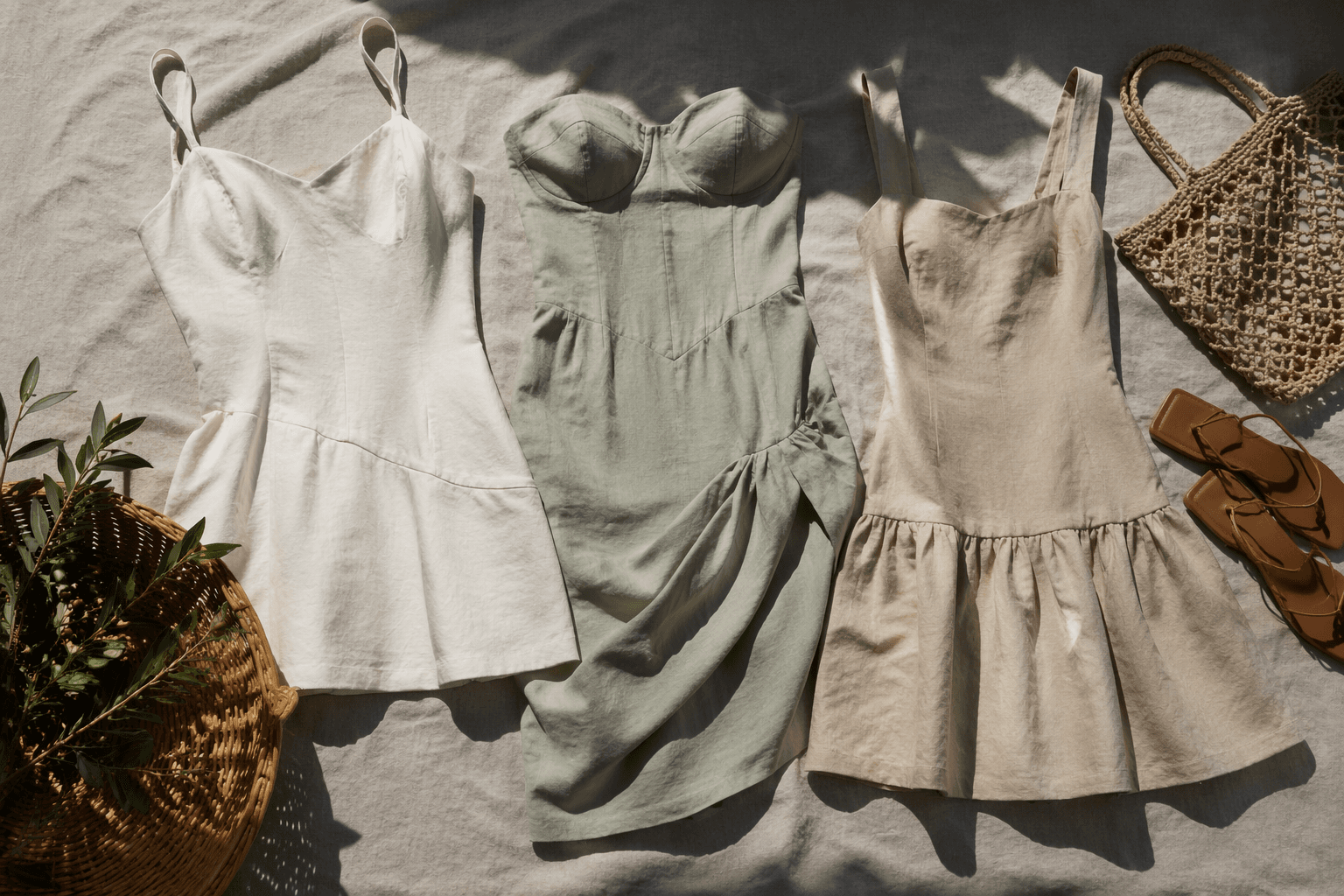
For dresses and skirts, stylist Taissha G. LaReau points to shorter hemlines as the most flattering option. A mini or midi length keeps legs visible and avoids the hemline-hitting-mid-calf problem that visually shortens the body. The same principle applies to skirts worn as separates.
Dina Scherer's recommendation for monochromatic dressing addresses the same goal from a color and pattern angle. A single-color outfit, particularly in darker or neutral tones, reads as one unbroken vertical line from shoulder to hem. Vertical details, whether seaming, stripes, or button plackets running down the front of a shirt, reinforce that effect.
What to actively avoid
Christina Santelli, who founded Style Me New, is clear about the other side of the equation: avoid oversized clothing, long hemlines, and large prints. Oversized silhouettes obscure the waist and add horizontal visual weight. Long hemlines cut across the leg at an unflattering point and shorten the overall line. Large prints scale up in proportion to the garment and can overwhelm a smaller frame, making the print rather than the person the focal point.
If you have a petite pear shape
Body shape adds another layer to petite dressing. For shoppers who carry more weight in the hips and thighs relative to the shoulders, stylist Kalee Hewlett offers a targeted approach: bold, structured tops paired with dark, straight-leg bottoms. The structure in the top broadens the shoulder line to balance the hip, while dark straight-leg pants slim and lengthen the lower half without the visual bulk of wide-leg cuts that can overwhelm a shorter frame.
The same logic of balance applies across other petite body shapes. Whether you have an hourglass, apple, rectangle, or inverted triangle silhouette, the underlying principle stays consistent: create or maintain the appearance of a defined waist, elongate the vertical line wherever possible, and choose proportions that keep any single section of the body from dominating the look.
Where and how to shop
Christina Santelli's practical advice is to look specifically for clothes cut in petite sizes. Mainstream sizing assumes a longer torso, longer inseam, and longer sleeve — even when the numerical size might fit in terms of width, the proportional construction will be off. Petite sizing corrects for those dimensions at the design stage rather than leaving the adjustment to the tailor.
That said, tailoring remains one of the most underused tools available. Elle Monus names it explicitly as a styling step, not a last resort. A tailor can hem trousers to the exact right break, take in a waist, or shorten a sleeve so that a well-priced, non-petite garment performs like something custom-cut. For anyone between petite sizes or shopping vintage and archival pieces where petite options rarely exist, a reliable tailor is as essential as a good eye.
Looking to petite celebrities for reference points is a practical shortcut when building a wardrobe. Seeing how proportions land on someone with a similar frame, in motion and in full outfits rather than on a hanger, gives a more accurate picture of what will actually translate in real life.
The proportional checklist
Pulling all of it together: monochromatic outfits and vertical details for elongation, V-necks and cropped tops for the upper body, high-waisted and cropped bottoms for the lower half, short skirts and dresses to keep leg length visible, nude pointy shoes with height to extend the leg line, a defined waist as the anchor point, petite-specific sizing wherever available, and tailoring to close the gap when sizing falls short. The one consistent thread is that proportion, not trend, is the operative principle. A silhouette built around these fundamentals will work across seasons, occasions, and whatever is currently moving through the retail cycle — because it's built around the body wearing it, not the mannequin it was designed for.
This article was produced by Prism’s automated news system from verified source data, official records, and press releases, then run through automated quality and moderation checks before publishing. The system is built and supervised by the people who set the standards it runs under. Read our full AI policy.
Did this article answer your question?