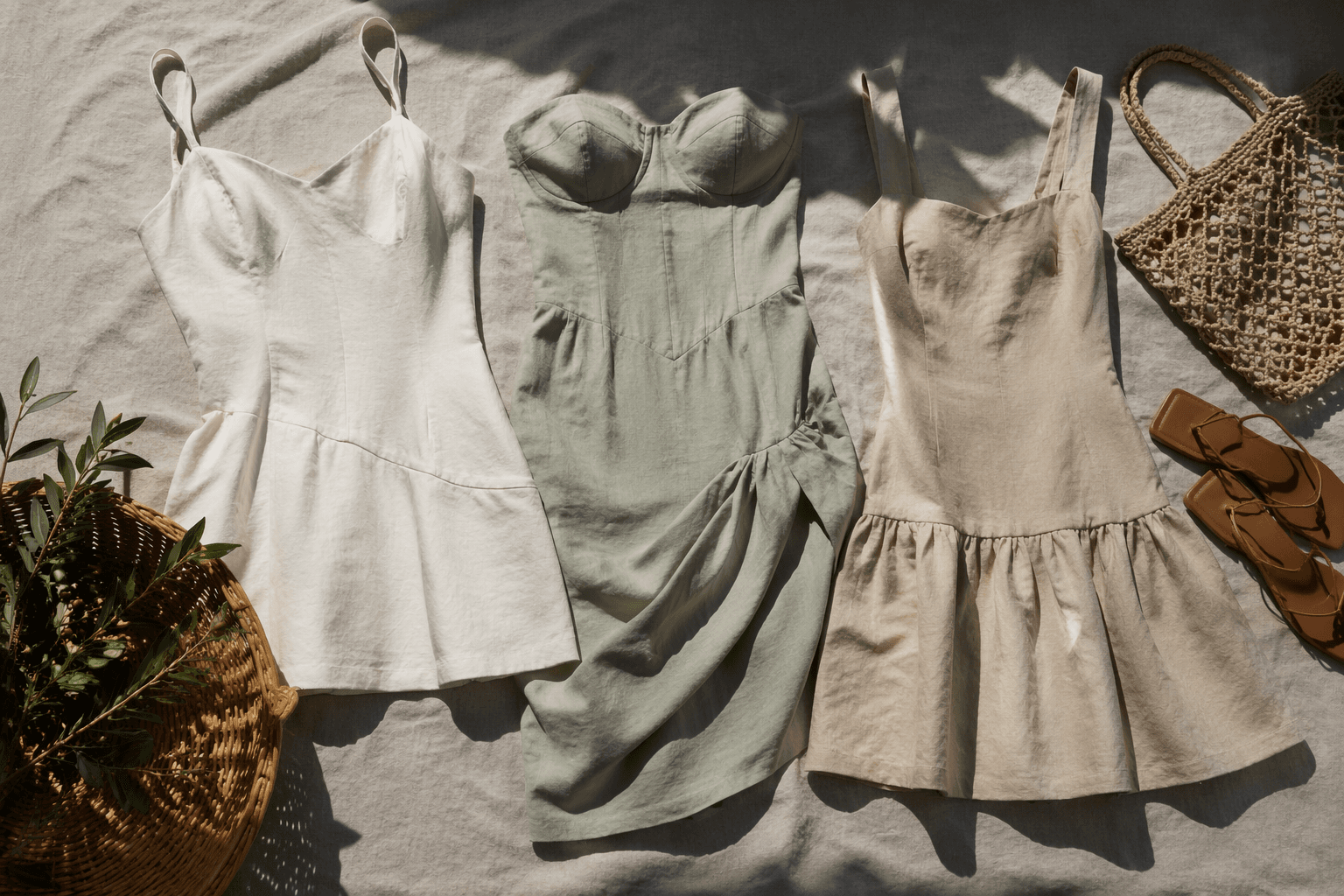
Figr's AI Avatar Tool Promises Better Fit for Petite Shoppers
A European startup's AI fitting tool renders your exact proportions onto an entire retailer's catalogue, and for petite shoppers, the inseam math alone is worth the two-photo trade-off.
The problem with buying clothes online at 5'2" has never been color or print. It has been the 28-inch inseam that functions as a maxi skirt, the blouse whose shoulder seams land two inches south of where they belong, and the size chart that conflates "petite" with "small" as though they were the same inconvenience. European startup Figr rolled out its generative AI fitting system this week with a mechanism that, at minimum, takes the structural guesswork out of those mismatches.
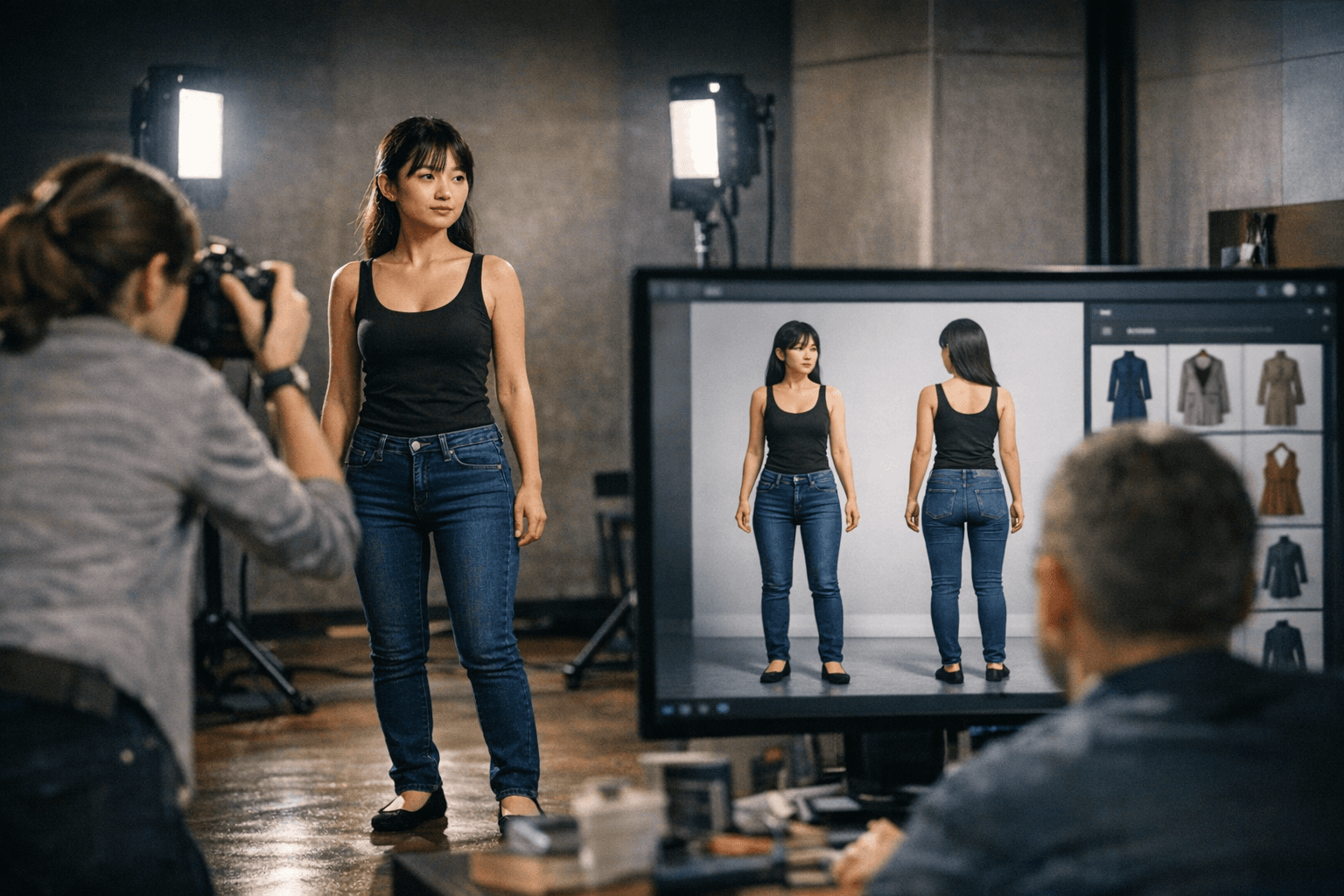
The process is deliberately stripped down. A shopper uploads two photos and within seconds the system produces what Figr calls a "Figr": a one-to-one digital representation calibrated to exact body proportions, skin tone, and measurable dimensions. A retailer's full catalogue is then rendered onto that avatar, paired with deterministic sizing recommendations derived from actual garment construction data rather than generalized size charts. That last distinction matters most for petite shoppers. "Petite size 6" means something different at every brand, and Figr's architecture, in theory, cuts through that inconsistency by reading the garment's own specs rather than relying on a retailer's loosely standardized labels.
For a petite shopper interrogating a pair of trousers, the tool's value sits in a handful of specific data points: inseam length against your actual leg measurement, rise height relative to your torso, shoulder width mapped to your frame, and sleeve length for any jacket or structured top. These are the proportional coordinates that a standard size chart never captures and that make the difference between a blazer that reads tailored and one that reads borrowed.
The trade-offs deserve the same candor. Body image data is among the most sensitive a company can hold, and uploading two photos that allow Figr's system to map your measurable dimensions requires trust that is not automatically earned. Figr positions the transaction as generating consented first-party signals, with each try-on producing data including body dimensions, style preferences, and conversion intent that feeds into a retailer's marketing and merchandising infrastructure. That is a meaningful privacy consideration, and one worth reading the terms on before handing over your proportions.
Accuracy across brands is the other open question. Figr's sizing recommendations are only as reliable as the garment construction data the retailer supplies. A label with precise technical specs will produce more accurate results than a brand with inconsistent grading. For petite shoppers, whose fit windows are narrower to begin with, that gap matters. An inseam that reads as 28 inches needs to actually be 28 inches.
The posture and heel variable is real but limited in scope. A two-photo capture in flat shoes will not predict how a hem sits with a 70mm block heel, and it will not account for the way posture shifts in a structured corset versus a jersey knit. Those remain the province of the fitting room.
What Figr does, if the garment data holds up across its retail partners, is collapse the distance between a petite shopper and a confident online purchase. In a category where the tailoring bill has historically arrived alongside the delivery box, that is not a small promise.
This article was produced by Prism’s automated news system from verified source data, official records, and press releases, then run through automated quality and moderation checks before publishing. The system is built and supervised by the people who set the standards it runs under. Read our full AI policy.
Did this article answer your question?