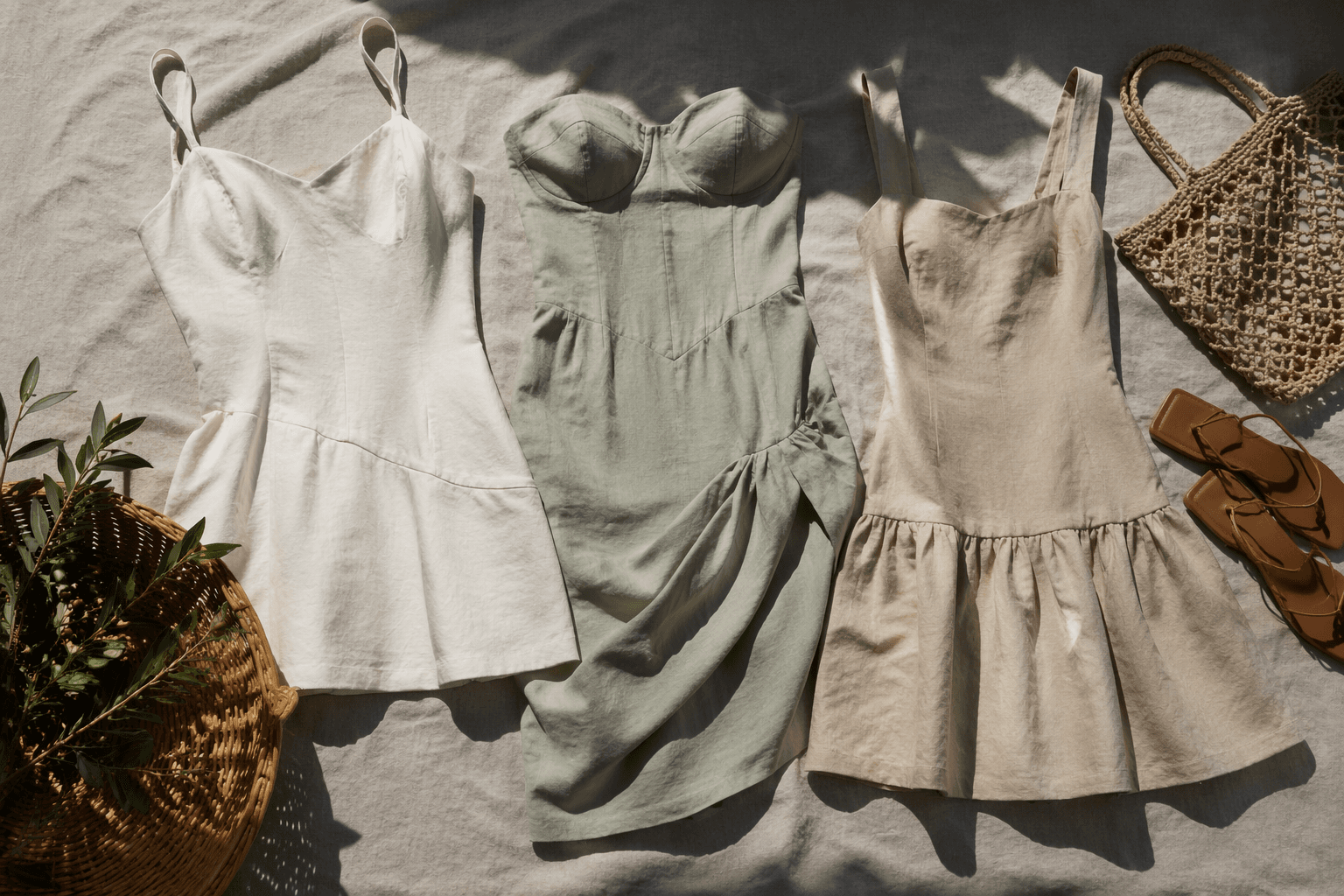
Five Dress Silhouettes That Overwhelm Petite Frames, Plus the Easy Fixes
Five dress shapes quietly sabotage petite proportions, from drop waists that floor your torso to heavy ruffles that add bulk where you least need it.
The hem lands three inches too low. The waist seam hits somewhere near your hips. The tiers seem to multiply as you move. If you've stood in a dressing room wondering why a dress that looked effortless on the hanger is doing something entirely different on your frame, the silhouette itself is usually the culprit, not you. Petite proportions, generally defined as a height of 5'4" and under, follow a different set of visual rules. Certain dress shapes are simply engineered for a longer canvas, and wearing them without adjustment means the fabric wins every time. Here are the five most common offenders, and the direct fixes that restore your proportions.
The Boxy Drop-Waist Dress
The drop-waist silhouette places its seam at hip level or lower, a construction choice that makes mathematical sense on a longer frame and none at all on a shorter one. On petite bodies, that low-sitting seam does two damaging things simultaneously: it makes the torso appear longer than the legs and strips away any curve definition in the process. The result is a straight-through-the-middle silhouette that visually shortens the leg line and adds blocky volume exactly where you need it least.
The fix is non-negotiable: return the waistline to its natural position. A-line dresses and belted styles with clearly defined waistlines are the direct swap. If you're drawn to the relaxed ease of a drop-waist shape, look for versions where the seam drops only slightly below the natural waist, no lower than two inches, and pair them with a heel or a pointed-toe flat to claw back the leg length.
Overly Voluminous Maxi Tiers
Tiered maxi dresses have had an extended moment, and for good reason: they move beautifully, they're comfortable, and they photograph well. But on a petite frame, three or four full, wide tiers of fabric become a proportion disaster. Each tier adds horizontal width and visual weight, and by the time the dress reaches the floor, the cumulative bulk can make the wearer appear to disappear into the skirt rather than wear it.
The key distinction is tier scale. Adrianna Papell, one of the few major labels with a serious petite-dedicated line, specifically advises choosing styles with smaller, more proportionate tiers and hemlines that fall above the ankle or at the knee to avoid the overwhelming effect of floor-length volume. If you want the tiered look in a maxi length, a single-color palette neutralizes much of the horizontal emphasis. Adding a thin belt, no wider than one to two inches, at the natural waist before the tiers begin gives the eye a place to anchor and prevents the dress from reading as one unbroken column of fabric.
The Low-Placement Empire Seam
The empire waist is widely promoted as a go-to for petite dressing, and it can be, but only when the seam sits correctly. The right placement is directly under the bust, which creates the illusion of a longer leg line by beginning the skirt at the body's highest natural point. The problem arrives when brands interpret "empire" loosely, dropping the seam two, three, or even four inches below the bust. That lower seam doesn't just miss the flattering mark; it actively shortens an already-compact torso.
For anyone with a particularly short torso, a misplaced empire seam is even more visually disruptive, drawing attention to a compressed upper body. The fix is to look for true empire construction and check the seam placement before committing. When shopping online, zoom in on the fit photos. If the seam falls near the ribcage rather than immediately below the bust, skip it. The correctly placed version, however, with a fitted bodice and a gently flowing skirt, remains one of the most proportionally intelligent shapes for petite frames.
The Longline Shirt Dress
The longline shirt dress is a wardrobe staple that has a complicated relationship with petite proportions. In theory, it's versatile: it buttons down the front, it layers easily, it reads as polished. In practice, when it hits at mid-calf or below on a shorter frame, it swallows the waist entirely. The continuous vertical line of buttons with no defined break at the middle creates a flat, collarbone-to-hem wall of fabric that eliminates waist definition and adds bulk in equal measure.
The most effective intervention is the cropped jacket or blazer worn open over the dress. By adding a shorter layer on top, you reintroduce the visual break at the waist that the dress itself refuses to create. Alternatively, a thin belt threaded through the dress's own loops, or tied at the natural waist if there are no loops, immediately reclaims the silhouette. For length, a shirt dress works best on petite frames when the hem falls just at or above the knee; anything longer starts to compress the leg line. If you've already bought one that's too long, a tailor can raise the hem for a relatively modest cost, and the transformation is usually dramatic.
Wide, Heavy Ruffles
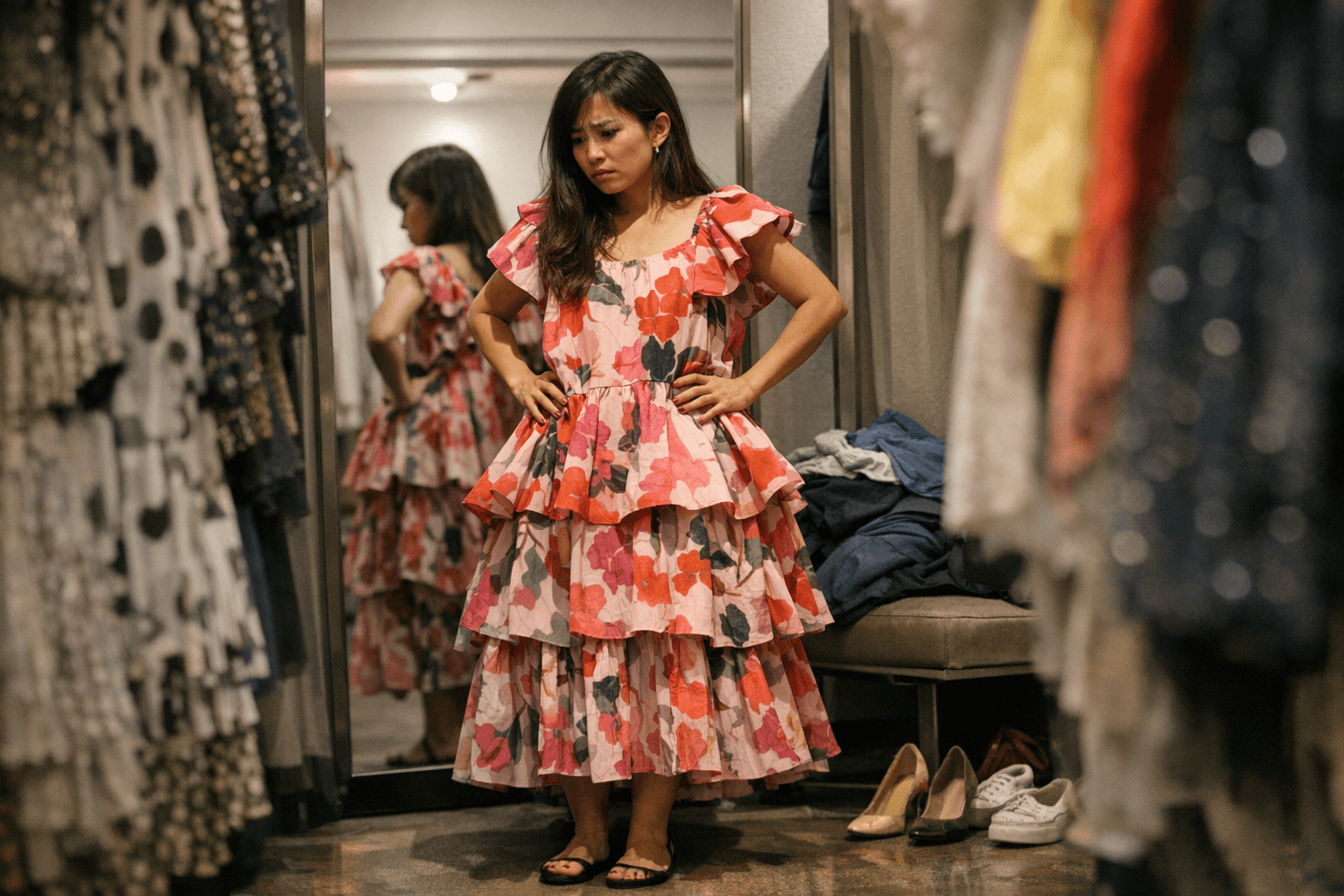
Ruffles placed strategically, at a sleeve edge or along a hemline, can add dimension without adding visual weight. Ruffles placed across the chest, layered around the midsection, or stacked in multiple rows from neckline to knee do the opposite. On a petite frame, heavy ruffle construction adds bulk at precisely the points where the body is smallest, making the frame look wider and shorter simultaneously. Oversized ruffles, particularly those cut from stiff or heavily structured fabric, have the additional effect of pushing the wearer's silhouette outward in all directions at once.
The distinction that matters here is scale and placement. Ruffles proportioned to the frame, delicate, single-row, positioned at the sleeve or hem rather than the center of the body, can actually work in favor of a petite silhouette by adding softness without mass. Lightweight fabrics like georgette and organza allow ruffles to fall rather than stand out, dramatically reducing their visual footprint. If a dress has ruffles concentrated at the bust or waist, try it with a structured cropped layer on top to interrupt and contain the volume.
The common thread running through all five of these silhouettes is the same: fabric placed at the wrong point on a shorter frame reads as bulk, not shape. The fixes, whether it's a correctly anchored waistline, a proportionate tier, or a cropped jacket used as a visual reset, all work by returning the eye to the body rather than the clothes. Once you know where each silhouette goes wrong and exactly why, shopping becomes considerably less frustrating and alterations feel like investments rather than afterthoughts.
This article was produced by Prism’s automated news system from verified source data, official records, and press releases, then run through automated quality and moderation checks before publishing. The system is built and supervised by the people who set the standards it runs under. Read our full AI policy.
Did this article answer your question?