Gap’s summer 2026 petite picks fit shorter frames better
Gap’s petite shop is doing more than chopping hems. Its summer 2026 pieces adjust proportions, and three standouts prove shorter frames can finally get the shape, not just the length.

Gap is treating petite dressing like a proportion problem, not a tailoring afterthought
The smartest thing Gap is doing this season is refusing to treat petite clothing like standard sizing with a shorter hem. Its Petite Shop is made for women 5’4” and shorter, and the difference shows up in the architecture of the clothes: the brand says petite pants use rescaled pockets, a shortened rise, smaller thigh and knee width, and a shortened inseam, while petite dresses scale down profiles, slim shoulders, narrow waists, and shorten lengths by 2 inches. That is the kind of adjustment shorter frames actually feel in the mirror.
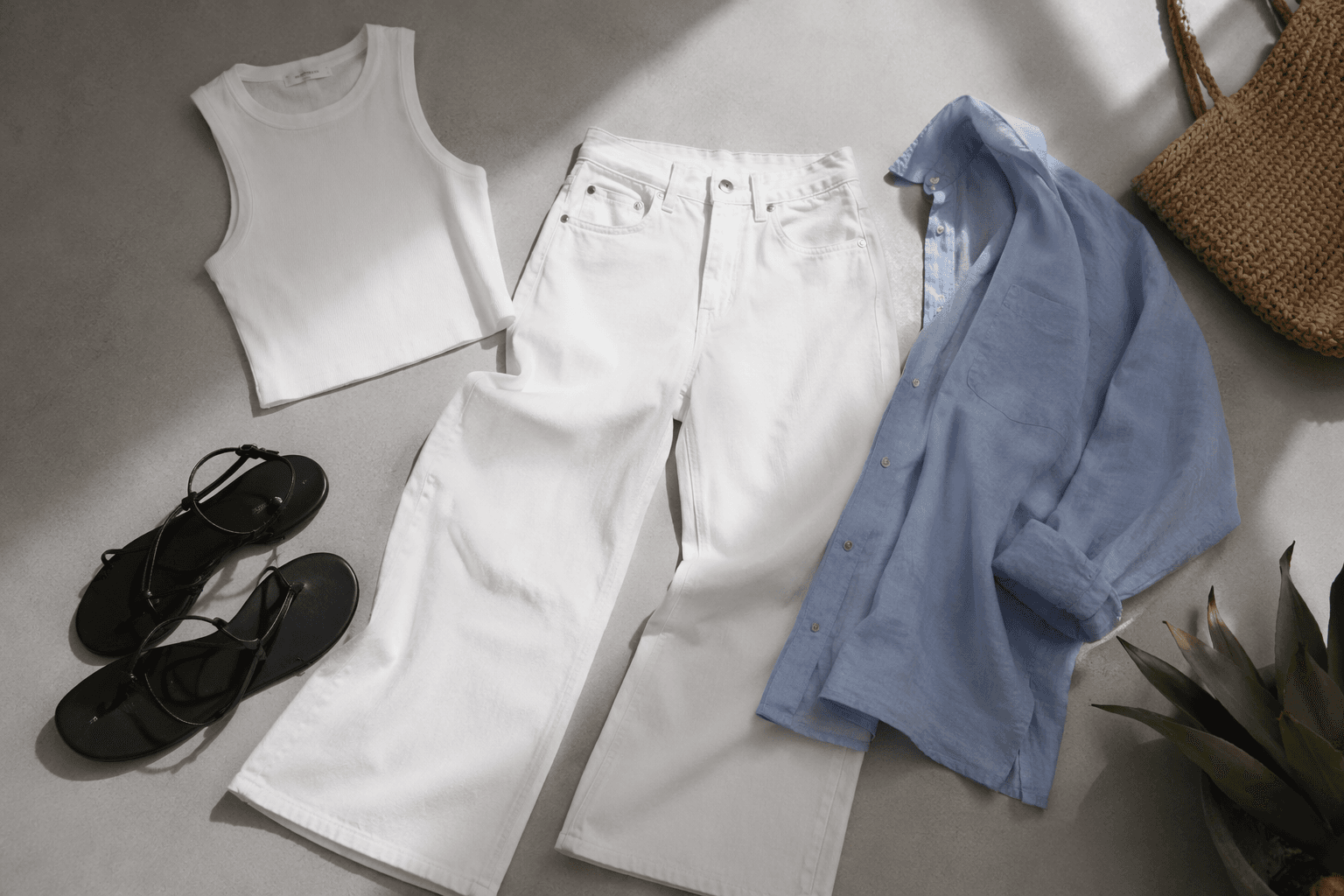
The practical stakes are obvious the moment you look at the numbers. Gap’s current size chart lists petite inseams at 29 inches, compared with 30 inches in short, 31 1/2 inches in regular, and 35 1/2 inches in tall. That gap may sound modest on paper, but on a petite body, an inch can decide whether a trouser skims the ankle or puddles at the floor, whether a maxi dress looks intentional or overwhelmed, and whether a sleeve lands cleanly or hangs past the wrist like borrowed clothing.
What worked best in the summer edit
A recent try-on of Gap’s summer 2026 collection pointed to three pieces that feel especially persuasive on shorter frames: a drop-waist maxi dress, a cotton sweater vest, and a gingham peplum top. The common thread is not just that they were styled well. They worked because their proportions gave the eye a clear landing point, which is exactly what petite dressing demands.
The drop-waist maxi dress is the boldest case. On a petite body, a drop waist can go wrong fast, pulling the torso down and swallowing the leg line. Here, though, the shape reads as deliberate because the petite cut reins in the length and keeps the silhouette from drifting into costume territory. The effect is longer and leaner without looking overstated, which is the sweet spot for a floor-skimming dress on a shorter frame.
The cotton sweater vest offers a different kind of win. Knit vests can easily bunch through the midsection or sit too long through the torso, but a petite cut helps keep the layer compact and crisp. In cotton, the piece has a cleaner hand and a more breathable feel than a heavier knit, which makes it useful for summer dressing when you want structure without weight.
The gingham peplum top is the most obviously flattering of the three, and also the most convincing proof that petites need shape, not just shrinkage. Peplum works when the waist lands in the right place, and on shorter frames that proportion can be transformative. The slight flare creates definition without adding bulk, which means the top can do the work of creating a waist instead of fighting the frame.
Where the fit gets tricky
Not every piece in the edit is a universal yes, and that honesty matters. The most important caution came in the bust and overall sizing, which suggests that even within a petite range, the best fit still depends on how much room a piece allows through the chest and how closely it tracks the body. Petite shoppers know this problem well: a garment can be shortened correctly and still miss at the bust, or feel too roomy once the proportions are slimmed down elsewhere.
That is where Gap’s petite system is more interesting than a standard hemming job. By narrowing waists and shoulders and reducing width through the leg, the brand is trying to change the whole silhouette rather than merely trim the bottom edge. But a proportional cut still has to negotiate real bodies, especially in styles like a peplum top or a dress with a defined upper body. If you sit between sizes, the safer bet is often the piece with built-in shape, while the more body-conscious fit may need a closer check through the bust before it earns a place in the closet.
How Gap’s petite approach compares
This is what separates a useful petite program from a token one: the garment has to behave differently, not just look shorter on the hanger. Gap’s Petite Shop is online only, which actually makes sense for a category built around fit data and size charts rather than impulse browsing. The range is meant to answer a very specific wardrobe frustration, and the details suggest the brand understands that petite consumers are not simply asking for less fabric. They are asking for different geometry.
That geometry matters most in pieces with clear lines. Trousers need a rise that sits correctly and a thigh that does not balloon. Dresses need shoulders and waists that do not drift too low. Even a sweater vest needs to hit with enough precision that it layers rather than overwhelms. Gap’s petite assortment sounds strongest when it is doing exactly that kind of structural work.
What to buy, what to scrutinize
The best buys in this collection are the pieces that rely on proportion for their effect. The drop-waist maxi dress earns attention if you want length without drag. The cotton sweater vest is the kind of piece that can slot into warm-weather layering without adding visual bulk. The gingham peplum top is the clearest waist-defining option and the most immediately flattering on a shorter frame.
The pieces to scrutinize are the ones that depend on fit through the bust or require a very exact body-skimming shape. If a top already runs close in the chest, the petite scaling may make it feel more precise than expected. If a dress has a fitted upper section, the shoulder and waist adjustments can be helpful, but only if the bust line remains comfortable and balanced.
The petite lesson Gap gets right
The real achievement here is not that Gap made summer clothes smaller. It is that the brand seems to understand shorter frames as a design problem with its own logic. A 29-inch petite inseam is not a fashion flourish. It is a practical difference. So is a narrowed waist, a shortened rise, and a dress cut down by 2 inches in all the places that matter.
That is why this collection feels more credible than the usual seasonal petite rack. The clothes are not merely styled to flatter. They are cut to fit, and for petite shoppers, that distinction is the whole story.
This article was produced by Prism’s automated news system from verified source data, official records, and press releases, then run through automated quality and moderation checks before publishing. The system is built and supervised by the people who set the standards it runs under. Read our full AI policy.
Did this article answer your question?