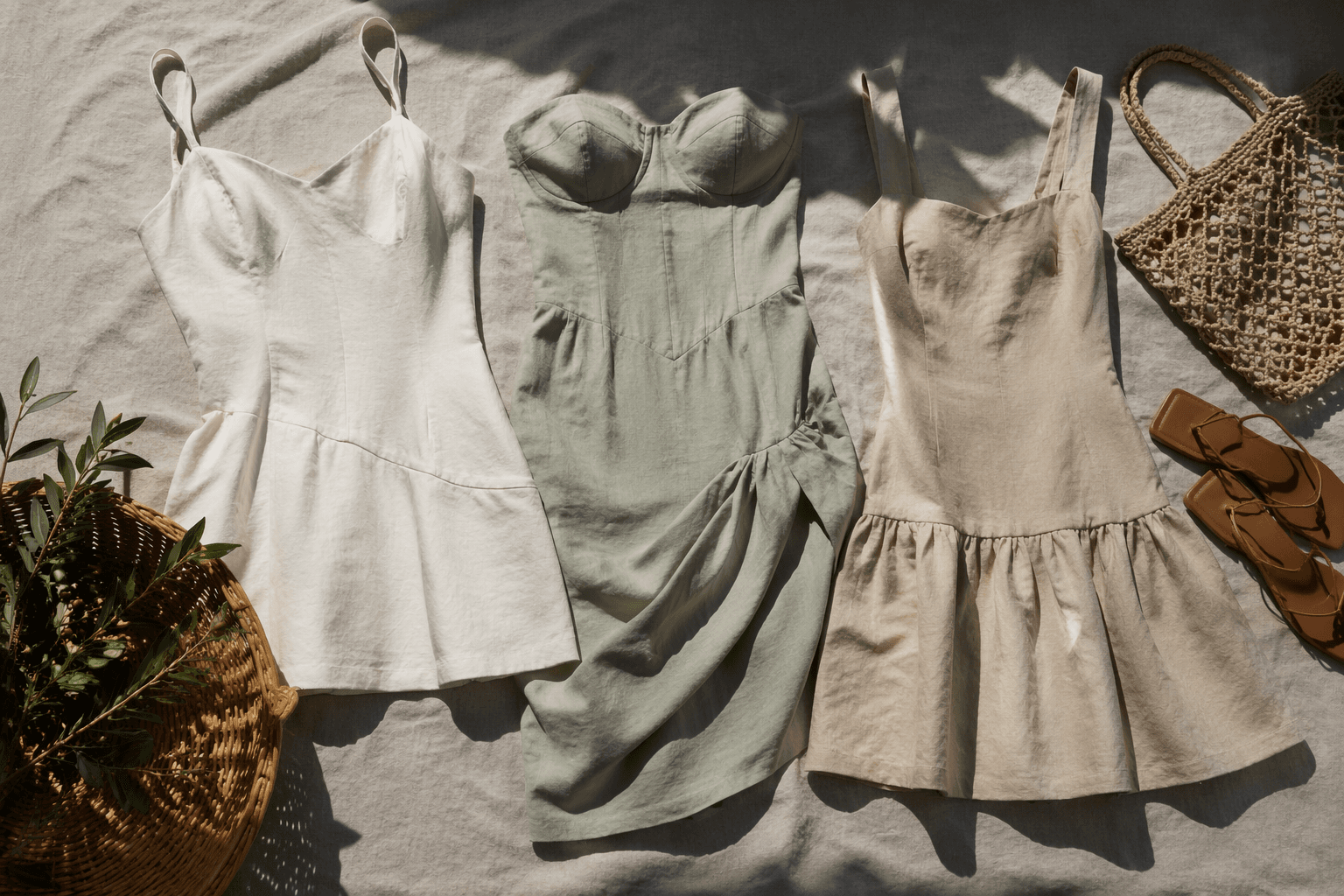
How petite women can choose dresses that flatter and lengthen the frame
The best petite dress is not the shortest one, but the one that resets your waist, neckline and skirt volume into balance.
In the late 1940s, New York designer Hannah Troy noticed that regular clothing was too long-waisted for shorter women, and her answer, Troy Petites, helped define a category built around proportion rather than simple shortening. That idea still drives the smartest occasionwear now: if the waist lands in the wrong place or the neckline dips too low, even a beautiful dress can overpower a petite frame.
Why proportion matters more than hemline
Petite clothing is proportionally cut for women whose frames are 5 feet 4 inches and under, and that distinction matters most when you dress up. Petite bodies often run into the same problems, from waist seams that sit too low to armholes that expose too much rib cage, shorter arms that make sleeves feel out of balance, and necklines that plunge farther than expected. A mini dress can read like a midi on a petite frame, and a true petite maxi keeps you from looking lost in fabric.
Petite pieces are designed with adjusted proportions through the shoulder, torso, rise and inseam, not just chopped off at the hem, and there is no single average female body shape. That is why the most flattering evening dress is usually the one that places the waist, strap width and skirt volume in the right relationship to your body.
The historical logic behind the category
Petite sizing did not appear as a marketing afterthought. The Fashion Institute of Technology’s archive bio says Troy introduced a line called Troy Petites after determining that the average American woman was short-waisted regardless of height, and a University of Minnesota project examined her apparel designs and garment artifacts from 1947 to 1955.
Vintage Fashion Guild lists her as specializing in both day dresses and evening wear. The challenge is the same at a wedding, a dinner dance or a formal event: you want vertical line, but you also want the waist seam, neckline and hem to sit where your body actually begins and ends.
Sheath: the cleanest line when the proportions are right
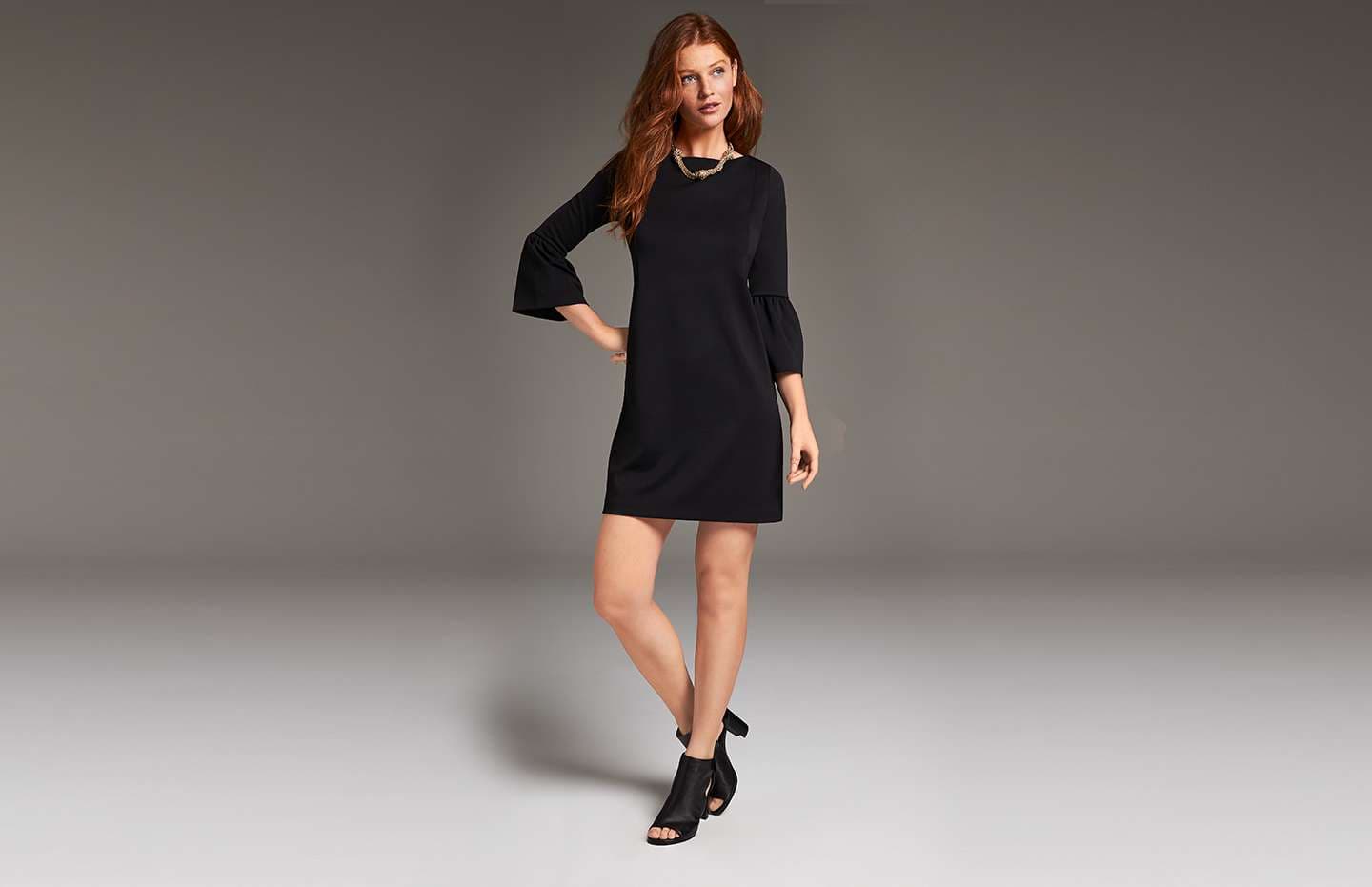
A petite sheath works best when it stays close to the body and keeps the visual line uninterrupted. Sweater dresses that stay close to the body are especially useful, and that same principle applies to a sheath in crepe, stretch satin or another fabric with enough structure to skim rather than cling. The point is not tightness, but clarity: a sheath that follows your frame without excess volume can make the body look longer because it does not break the line at the waist or the hip.
This is where strap width and neckline depth matter. A sheath with straps that are too narrow can look delicate in a way that overwhelms a petite frame, while a neckline that plunges too deeply can drag the eye down instead of lifting it. For evening events, a sheath with a moderate neckline and a higher waist seam, or no obvious seam at all, often reads more elegant than a dress that is simply shorter.
Fit-and-flare: the safest architecture for balance
If you want shape without heaviness, fit-and-flare is the petite dress language to remember. Fit-and-flare dresses that are fitted through the torso and then open at the waist define the smallest point of the body before giving the skirt room to move. That opening at the waist is what creates balance for petites, especially when the event calls for polish rather than minimalism.
The good version of this silhouette also solves one of the most common petite proportion issues: a dropped waist. When the waist seam lands too low, the eye reads the torso as longer and the legs as shorter. A properly placed fit-and-flare dress, especially one with a shortened side seam or an above-the-knee hem, can create a longer-looking line without sacrificing femininity.
Slip and column: the long line, without the drag
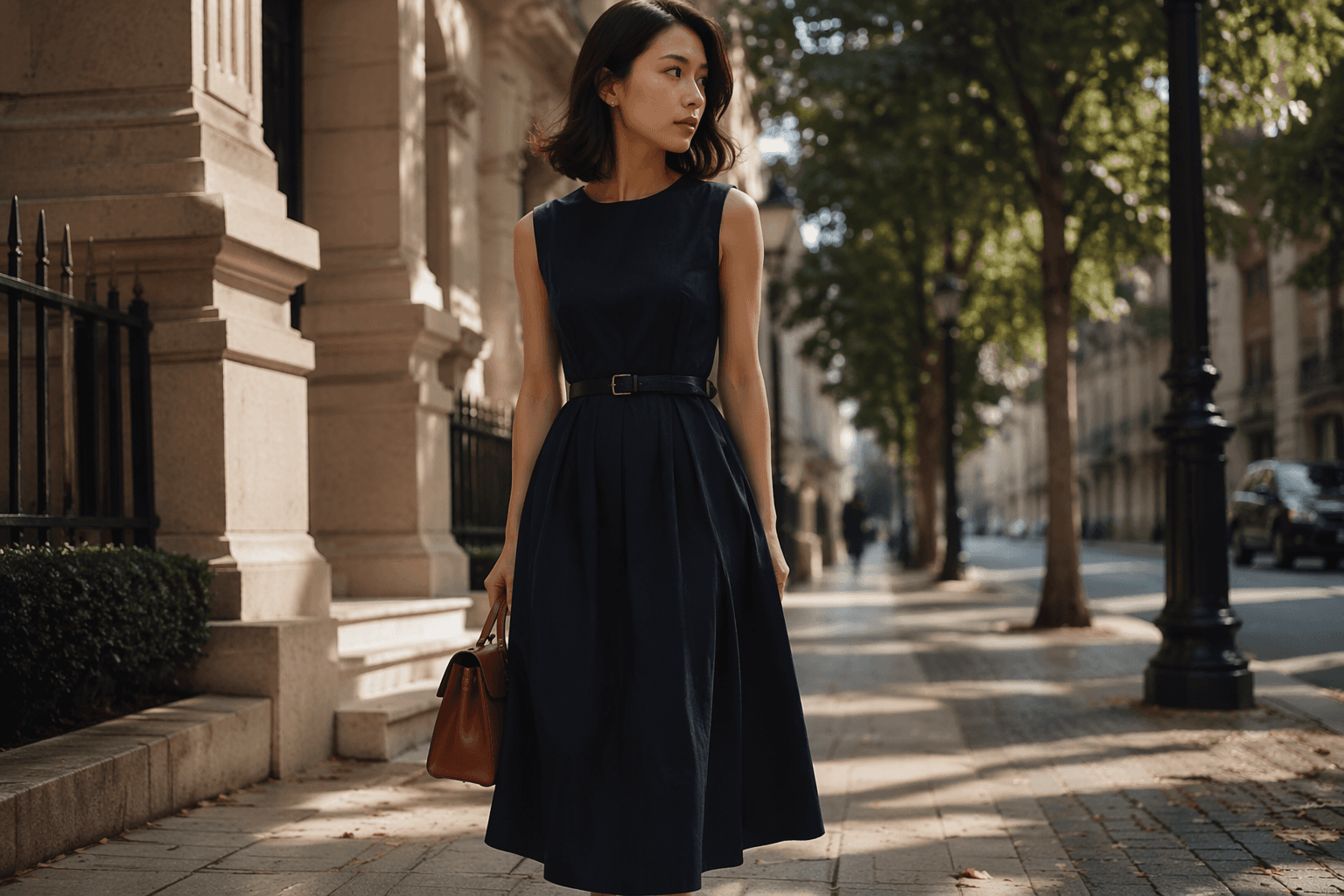
Slip-inspired dresses and column dresses are where petite dressing gets especially precise. Ann Taylor’s petite assortment includes column midi dresses and petite halter bias satin maxi dresses, both of which show how a vertical silhouette can stay sleek without drowning the frame. The key is scale: a column shape should skim, not swallow, and a bias satin dress should drape cleanly rather than pool into too much fabric.
A full-length dress can look dramatically elegant on a petite woman if the proportions are adapted correctly, because the hemline then supports the vertical idea instead of overwhelming it. When the fabric has too much weight, though, the same dress can become a wall of cloth; that is why petite maxis exist to keep the line strong and the body visible.
Wrap: the most adjustable shape in the room
Wrap dresses remain one of the smartest choices because they let you place the waist exactly where it belongs. Wrap dresses tied at the smallest part of the waist restore shape, create a natural V at the neckline, and let the skirt fall with movement instead of bulk. For petites, that adjustable tie is often more flattering than a fixed waistline that lands a little too low.
Ann Taylor’s petite assortment reinforces that versatility with petite wrap midi dresses, alongside petite gathered midi dresses and petite sheath styles. It can move from a work dinner to a wedding guest moment without feeling stiff.
What to watch for in neckline, straps and skirt volume
The best petite occasion dress gets the neckline, armhole, straps and skirt volume right. Shorter arms, lower waist seams, exposed rib cage at the armhole and unexpectedly deep necklines are recurring issues, and those are the details to scrutinize first on the hanger. Cold-shoulder styles can work, but balancing them with midi or maxi lengths keeps the shoulder detail from competing with the rest of the look.
Volume deserves the same scrutiny. A tiny frame can disappear under too much skirt, yet a skirt that is too narrow can look severe; the sweet spot is controlled fullness, especially in fit-and-flare shapes or true petite maxis.
The modern petite rack is finally broad enough to matter
The retail range now makes the category feel real, not token. Ann Taylor’s petite dresses page listed 173 items, and its petite formal dresses page listed 190 items, with silhouettes ranging from belted midi dresses and gathered midis to column midis, peplum dresses, shirt-dresses and a gathered maxi. Macy’s petite assortment also includes one-shoulder dresses, halter ball gowns, printed strapless long dresses and fit-and-flare options.
This article was produced by Prism’s automated news system from verified source data, official records, and press releases, then run through automated quality and moderation checks before publishing. The system is built and supervised by the people who set the standards it runs under. Read our full AI policy.
Did this article answer your question?