How Petites Can Wear Shirtdresses Without Looking Boxy
Shirtdresses only look boxy on petites when the proportions are off. Fix the waist, hem, and fabric weight, and the whole silhouette sharpens fast.
Why shirtdresses can drown a petite frame
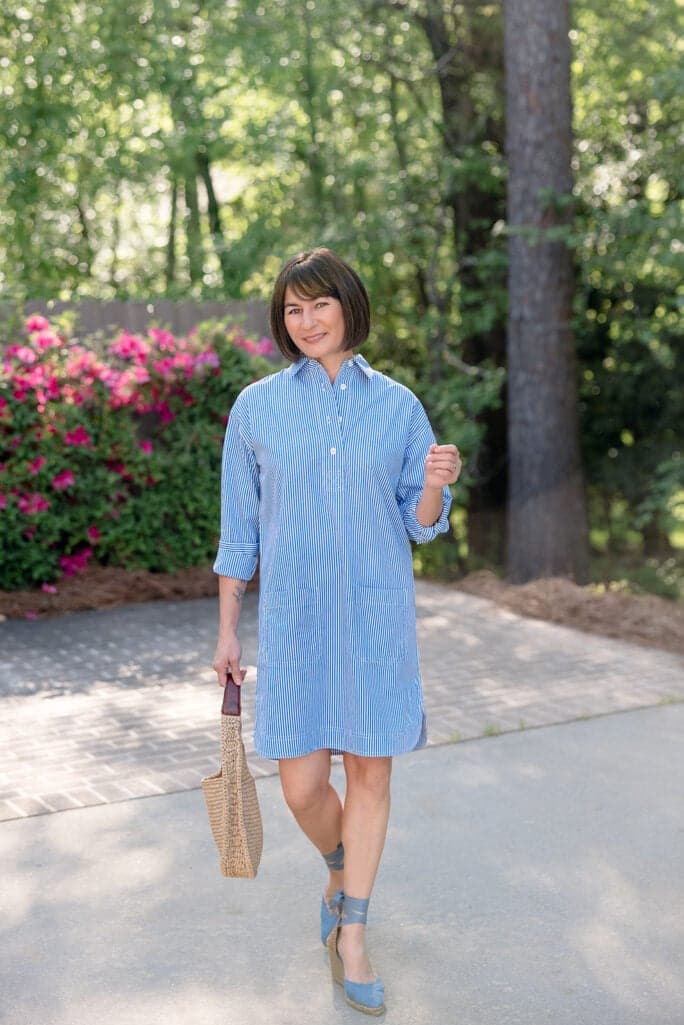
Shirtdresses are tricky on shorter bodies because the problem is usually bigger than length. A dress can hit the “right” place on the knee and still look heavy if the waist seam sits too low, the sleeves swallow the hands, or the fabric hangs like a curtain instead of following the body. Nearly all brands still build around a 5'5 or 5'6 frame, so a petite woman is often trying on clothes that were never structured for her proportions in the first place.
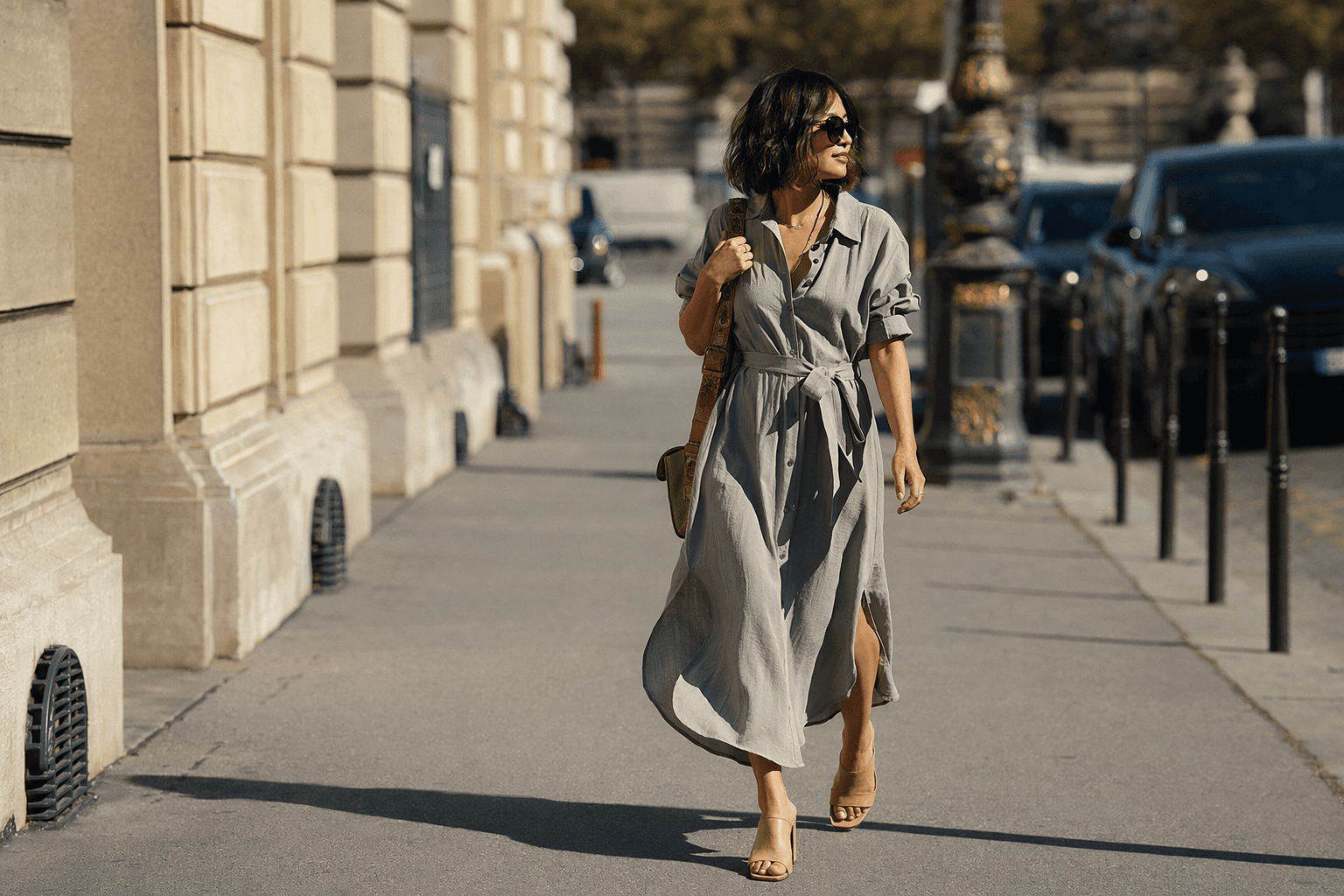
That is why the same shirtdress can look crisp on one person and boxy on another. On a petite frame, too much vertical fabric makes the body look shorter, not longer, especially when the dress is cut roomy through the torso and sleeve. The fix is not just “get it shortened.” It is getting the waist placement, hem length, and fabric weight to work together so the dress reads as shape, not volume.
The silhouette works when the waist hits first
If there is one rule that saves a shirtdress for petites, it is this: bring the eye to the waist. A petite styling expert recommends a 1:2 ratio, which means emphasizing the lower two-thirds of the body with a high waist or a clearly defined waistline. That single move changes the whole read of the dress, because it stops the fabric from falling straight down from bust to hem.
This is where petite-specific clothing matters more than a quick hem. One expert points out that hemming alone usually changes only one or two points of measure, which helps, but does not fix the structure of the garment. Petite pieces are cut with structural elements placed for shorter frames, so the waist lands higher, the torso is proportioned differently, and the dress feels intentional instead of simply smaller.
Hem length is the difference between polished and swamped
The hem is not a small detail on a petite shirtdress, it is the whole mood. A dress that lands too close to mid-calf can visually stall the body, while a shorter hem that shows more leg can create the clean line petites need. One petite fashion editor says a knee-length dress with knee-high boots can work especially well because it creates a 2:1 ratio that stretches the look instead of chopping it up.
That is the before-and-after logic: a hem that lands awkwardly can make the dress feel too long, too wide, and too serious all at once. A hem that ends at or above the knee gives the silhouette room to breathe and keeps the body from disappearing into the fabric. If the dress is slightly longer, pair it with a strong boot line or another vertical element so the outfit still reads lean.
Fabric weight changes everything
Shirtdresses are at their best when the fabric has some drape. Lighter materials move with the body and skim the frame, while stiff, heavy shirting can stand away from the body and make a petite shape look boxed in. That is why the same cut in crisp cotton can feel sharp and in a thicker fabric can suddenly seem bulky.
The old shirtwaist was practical because it could work across daily life, from work to sports, but a petite shopper has to be more ruthless about bulk. The cleanest versions are the ones that keep structure without too much stiffness. If the cloth feels rigid in the fitting room, it will probably feel even more obvious once you add a belt, boots, or layers.
The styling moves that keep the look long
The best petite shirtdress styling is all about visual continuity. Columns of color help the eye move up and down without interruption, which is why monochrome dressing keeps coming up as a smart shortcut. Add a high waist, keep the sleeve length tidy, and avoid anything that breaks the body into too many parts.
Sleeves matter more than most shoppers think. Hemmed sleeves prevent bunching at the wrist and stop the shirtdress from looking borrowed from a taller closet. That small adjustment does a lot of work, because sleeve excess can make the entire dress feel oversized even when the body fit is close.
There is also a difference between oversized and too big, and petites need to know it. A styled oversized shirtdress can look deliberate, especially when it is labeled relaxed, boxy, or oversized on purpose. A dress that is simply too big looks frumpy, and on a shorter frame that line gets loud fast.
What to look for when shopping
When you are trying one on, do not ask only whether it fits. Ask whether the proportions look sharpened, whether the waist actually lands where your waist is, and whether the hem gives your legs some visual space.
- Waist seam sitting at or just above your natural waist
- A hem that hits around the knee or gives you an easy leg line
- Sleeves that stop cleanly instead of pooling over the hand
- Lighter fabric with movement, not thick fabric that stands away from the body
- Petite-specific sizing, not just a regular dress shortened at the hem
- A silhouette that reads structured, relaxed, or oversized by design, not accidentally oversized
Look for these checkpoints:
That last point is the one that saves the most returns. If the shoulders fit but the waist floats and the sleeves bunch, the dress is not petite-friendly, it is just smaller than usual in one spot. Petite clothes are structurally placed for shorter frames, and that is the difference between “cute shirtdress” and “why does this look like a borrowed shirt?”
Why the shirtdress still matters
The shirtdress has a long runway because it started as something practical. Shirtwaists, the late-19th-century women’s garments styled like men’s shirts, became one of the first ready-to-wear categories by the 1890s. The New York Historical describes them as wardrobe essentials from the 1860s to the 1910s, worn across classes and races, in many fabrics and price points, for work, leisure, and active pursuits like bicycling, sailing, tennis, and golf.
That utility is part of the appeal now, too. Vogue called the shirtdress an “American Institution” in 1938, and Christian Dior’s 1947 New Look helped push the silhouette into the 1950s by celebrating a cinched waist and fuller skirt. For petites, that history matters because the dress was never meant to be shapeless. Its best version is defined, controlled, and balanced, which is exactly what a shorter frame needs.
Get the waist up, keep the hem honest, and choose fabric that falls instead of swallows. When those three things line up, the shirtdress stops fighting the body and starts doing what it was always meant to do, which is make you look longer, cleaner, and instantly more polished.
This article was produced by Prism’s automated news system from verified source data, official records, and press releases, then run through automated quality and moderation checks before publishing. The system is built and supervised by the people who set the standards it runs under. Read our full AI policy.
Did this article answer your question?