Kate Middleton breaks her wedding-guest formula in cream Roland Mouret
Kate's cream Roland Mouret turns the old wedding-guest color rule on its head, and petites can borrow the move if the silhouette stays sharp.

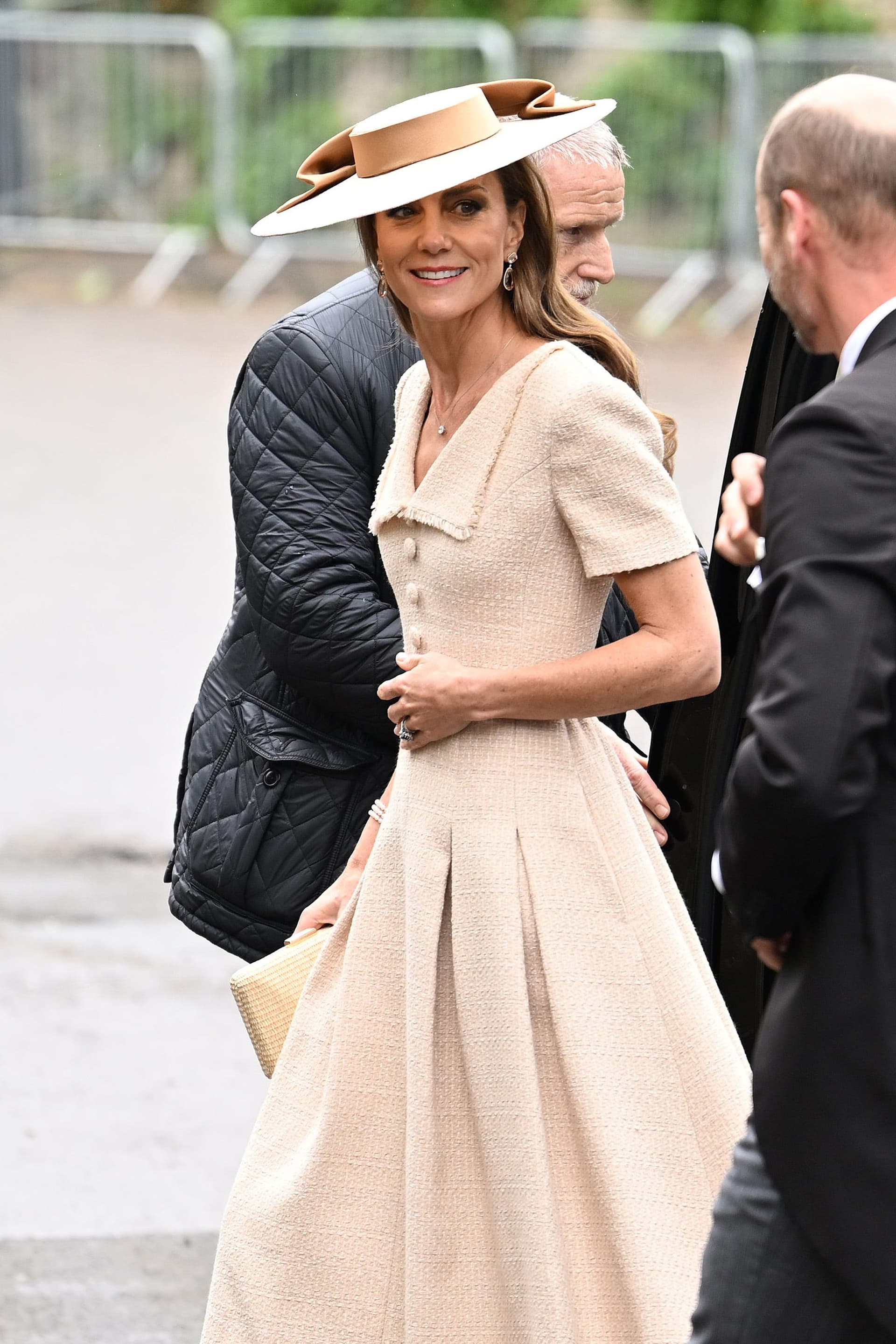
Kate Middleton’s cream Roland Mouret was the kind of wedding-guest look that makes old rules feel newly negotiable. It was polished, unmistakably royal, and just daring enough to register as a break from the formula she usually prefers: rewear, refine, repeat. For petites, that is the real lesson here. A lighter color can work beautifully, even at a formal wedding, if the line of the outfit is disciplined enough to keep the frame from disappearing inside the clothes.
Roland Mouret’s strength, and why it mattered here
Roland Mouret is a designer who understands control. His clothes tend to live in that sweet spot between sculpted and fluid, which is exactly why a cream or nude tweed midi dress feels so effective on a royal schedule that can read ceremonial rather than stiff. Coverage described Kate’s look as a cream or nude Roland Mouret dress, with some fashion writeups calling it a nude coloured tweed midi dress, and the texture matters as much as the shade. Tweed has enough body to hold shape, which keeps a pale outfit from looking washed out, while the midi length gives it formality without dragging the silhouette down.
That balance mattered because this was not a low-key family lunch. Kate wore the look to the wedding of Peter Phillips and Harriet Sperling at All Saints Church in Kemble, Gloucestershire, alongside Prince William, with King Charles III, Queen Camilla and other senior royals also in attendance. Peter Phillips is Princess Anne’s son and King Charles III’s nephew, and Harriet Sperling is an NHS nurse. The event was a second marriage for both, which gave the occasion a more contemporary, less ceremonial mood, even as the guest list kept it firmly in the royal spotlight.
The near-white rule, and why Kate could bend it
Wedding guest etiquette has long treated white and anything too close to it as a line not to cross. That is why Kate’s cream palette landed as the story, not just another elegant outfit. The beauty of the look is that it plays close to the boundary without slipping into bridal territory: the tone is soft, but the styling is not sugary. The wide-brim hat, which added dramatic height and presence, pushed the outfit further into occasionwear rather than romance.
For petites, this is the useful distinction. You do not have to abandon pale colors just because you are shorter. What you do need is enough structure to keep cream, ivory-adjacent shades, and soft neutrals looking deliberate instead of floaty. A pale dress with clean tailoring can lengthen the body visually; a pale dress with too much fabric, too much frill, or too much sheen can make a petite frame vanish.
What petites can drop from the old wedding-guest formula
Kate’s outfit gives shorter guests permission to let go of a few old habits that often feel “safe” but can actually be unhelpful. The point is not to copy the royal look exactly, but to copy its discipline.
- You can drop the reflex to wear only dark colors. Navy, black, and ink are reliable, but they are not automatically more flattering than a well-cut cream.
- You can drop the idea that formality must mean heaviness. A compact tweed or tailored crepe can look more expensive and more composed than a dress weighed down by embellishment.
- You can drop the fear of a statement hat or headpiece, as long as the scale is right. The goal is framing, not engulfing.
- You can drop the assumption that longer always means more elegant. On a petite frame, a hem that lands cleanly at the calf or just below the knee often reads sharper than fabric that pools.
What still matters, every time, is proportion. Petite dressing works best when the eye can travel in one uninterrupted line: fitted shoulder, defined waist, controlled skirt, and enough vertical clarity to keep the outfit moving. Kate’s look succeeds because it is formal without being sprawling, and that is the difference between being dressed and being swallowed.
How to read the look if you are shopping for a wedding now
If you are shorter and want the same effect, think in terms of edited contrast. A cream dress can absolutely be your wedding-guest move, but it should be anchored by one strong idea: a precise waist, a clean neckline, or a hat with enough architecture to look intentional. Too many competing details will shorten the body fast; one strong shape will make the whole look feel taller.
The other thing Kate got right is texture. Nude or cream can flatten under flash photography if the fabric is too thin, too shiny, or too delicate. Tweed gives the eye something to hold onto. For petites, that can be the difference between looking dressed for the occasion and looking like the dress arrived before the person did.
Why this outfit resonated beyond the dress code
Part of the fascination here is that Kate is usually associated with wedding-guest restraint and recycling. This felt fresher, more considered, and a little more fashion-forward without straying from royal polish. In a room that included King Charles III, Queen Camilla, and the broader weight of royal visibility, the choice read as elegant and controlled rather than attention-seeking.
That is the larger petite lesson hidden inside the headlines. You do not need to shrink yourself into the safest possible formula to look formal. You need shape, proportion, and a point of view. Kate’s cream Roland Mouret proves that a lighter palette can still feel authoritative when the tailoring is exact, and for shorter wedding guests, that is far more useful than any old rule about playing it safe.
This article was produced by Prism’s automated news system from verified source data, official records, and press releases, then run through automated quality and moderation checks before publishing. The system is built and supervised by the people who set the standards it runs under. Read our full AI policy.
Did this article answer your question?