Kate Moss proves black ballet flats can dress up summer dresses
Kate Moss's black ballet flats are the petite-friendly anti-heel: they lengthen when they show ankle, but they can flatten a dress if the proportions get heavy.
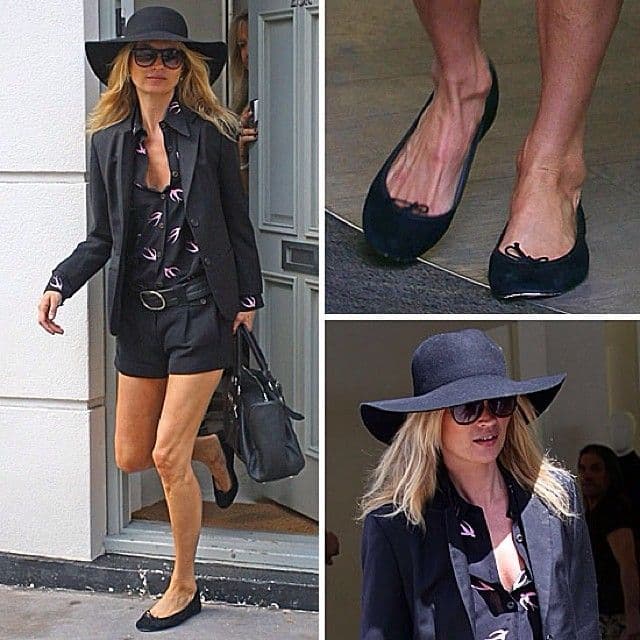
In 2019, Kate Moss wore black ballet pumps with a sweeping black maxi dress and lace sleeves. The shoe felt dressy enough for summer dressing but soft enough to keep the outfit from looking overbuilt. For petites, the real appeal is simpler: the right flat can keep the leg line clean, show enough ankle to preserve height, and stop a full dress from swallowing the frame.
Why the black ballet flat is back
The black ballet flat keeps resurfacing whenever fashion wants an anti-heel. The Parisian wardrobe has long treated the ballet flat as a staple rather than a novelty. Ballet flats stood out through 2024 and 2025, and they still feel right for 2026 because they work with the clothes people actually want to wear: dresses, tailoring, and easier summer layers.
Kate Moss has been part of the shoe’s modern shorthand for years. On her, the combination made the flat feel elegant instead of casual. That image still works because it solves the same problem petites run into every summer: how to wear a long dress without losing the body underneath it.
The petite trick is in the line, not just the shoe
Black ballet flats are flattering on petites when they protect one thing above all else: vertical line. A dress hem that leaves the ankle visible gives the eye a clear ending point, so the leg reads longer and the shoe looks intentional rather than heavy. The black color helps too, especially with darker dresses, because it continues the line instead of breaking it into pieces.
The shoe starts to flatten an outfit when it fights the dress instead of finishing it. A long, full skirt paired with a round-toe flat can make the lower half look broad, especially if the hem lands at the widest part of the calf. The same dress can look much sleeker with a slimmer toe shape, a low vamp, or a slight point that keeps the foot visually narrow.
Wear them when the dress has movement
The best pairing is a dress that already has fluidity. Kate Moss’s sweeping satin maxi works because satin catches light and the flat keeps the look grounded; the shoe does not compete with the fabric, it lets the fabric do the talking. That same idea applies to slip dresses, draped midis, and any summer piece that moves when you walk.
For petites, the sweet spot is often a hem that skims the leg without cutting it off. If the dress ends above the ankle bone or just below it, the flat can look lean and deliberate. If the hem drags toward the floor or pools around the shoe, the outfit starts to lose its shape, and the flat becomes visually smaller than the dress.
- Choose ankle exposure over ankle coverage when you can
- Keep the toe shape narrow enough to preserve length
- Let the dress have volume, but not so much that it overwhelms the foot
- Use black when you want the shoe to disappear into the line of the outfit
The ballet flat has real fashion history behind it
A key shift in the silhouette came in 1953, when Claire McCardell collaborated with Capezio to adapt soft ballet slippers for streetwear. That move took a shoe associated with the stage and made it part of daily dressing.
Ballet began in the Italian Renaissance courts and flourished in France under Louis XIV, who established the Académie Royale de Danse in 1661.
Why Repetto keeps defining the modern version
If one brand keeps coming up in the current ballet-flat revival, it is Repetto. The shoes were first conceived as dance shoes, then became iconic after Brigitte Bardot wore them in the 1956 film And God Created Woman. In 2026, they are still showing up on Kaia Gerber, Phoebe Dynevor, Vittoria Ceretti, and Maude Apatow in New York and Los Angeles.
The shoe now sits comfortably with dresses, tailoring, and elevated summer pieces rather than only with jeans and off-duty basics.
What to look for now
The current ballet-flat category is no longer one note. Modern versions include almond-toe shapes, V-front cuts, and slightly heeled styles, each of which changes the way the shoe works on a petite frame. Almond toes soften the look, V-fronts sharpen the line at the top of the foot, and a tiny heel can add just enough lift without sacrificing the ease that makes the style appealing in the first place.
That variety gives petites more control over proportion. If a dress is fuller or longer, a V-front or almond toe can keep the shoe from looking stumpier than the hemline around it. If the dress is already slim and column-like, a slightly heeled version preserves the flat’s polish while giving the body a little more length.
This article was produced by Prism’s automated news system from verified source data, official records, and press releases, then run through automated quality and moderation checks before publishing. The system is built and supervised by the people who set the standards it runs under. Read our full AI policy.
Did this article answer your question?
%3Amax_bytes(150000)%3Astrip_icc()%3Aformat(jpeg)%2Fpeo-petite-pants-tout-baf99560b70d4ad4bfdef2ce937ba893.jpg&w=1920&q=75)