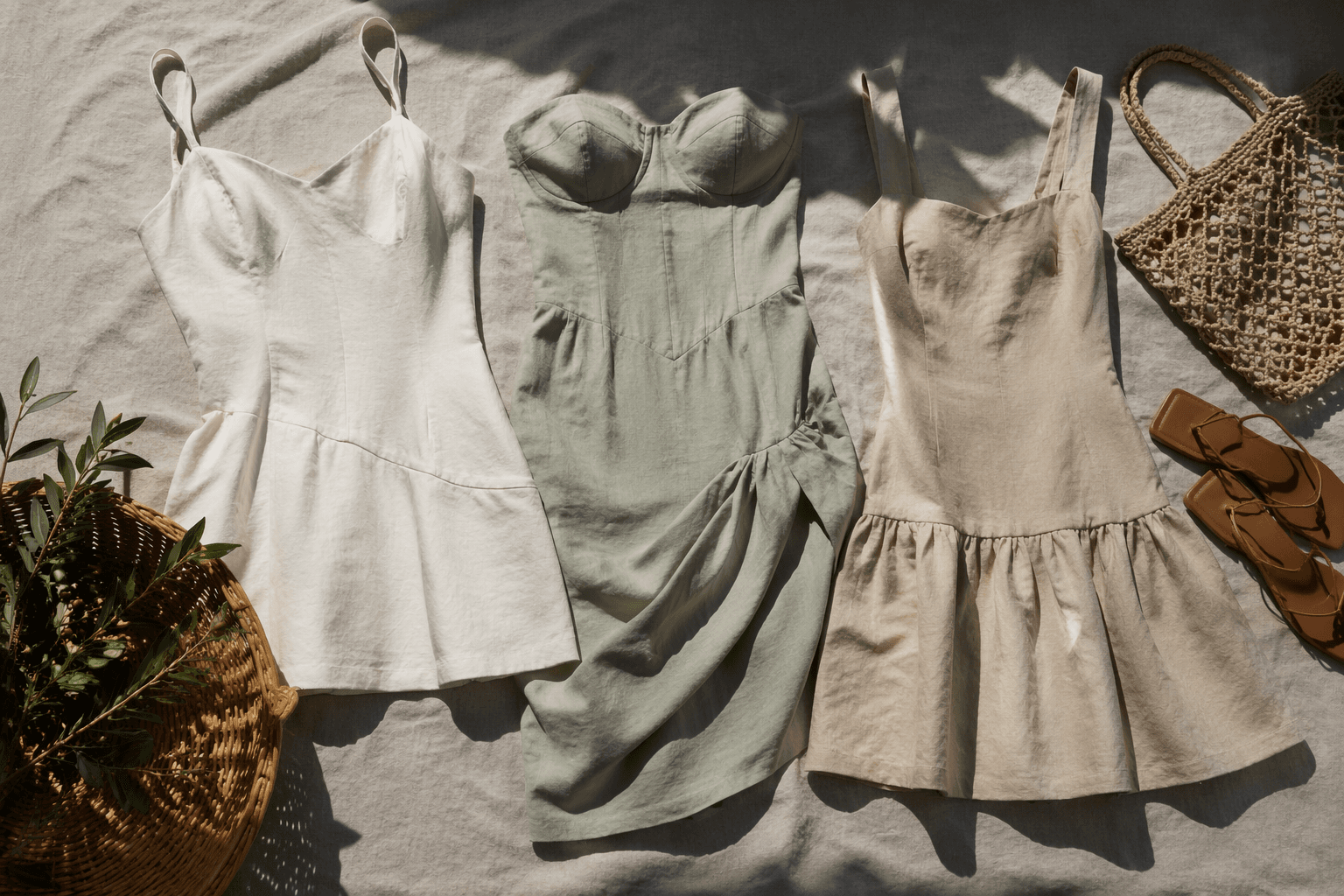
Petite and Curvy, Proportion-First Styling That Lengthens the Leg Line
The fix is not just shorter hems. It is rise, shoulder, and jacket placement that keeps curves from turning petite outfits into boxes.
Why petite still goes boxy on curves
The problem is not that the clothes are too long. It is that the proportions hit the wrong places, so a petite frame can still get swallowed by a too-low rise, sleeves that drag past the wrist, or a jacket that lands squarely across the widest part of the hip. That is why so many short-and-curvy outfits feel off even when the tag says petite.
LOFT defines petite clothing as designed for women 5'4" and under, with shorter inseams, sleeve lengths, and adjusted proportions throughout the garment. Macy’s says petite pieces are cut proportionally to fit and flatter the petite frame, and Anthropologie goes a step further, noting that some people as tall as 5'9" may still need petite sizing if their proportions are better served by it. That is the real point: petite is not just shorter. It is a different map.
The rise matters more than the hem
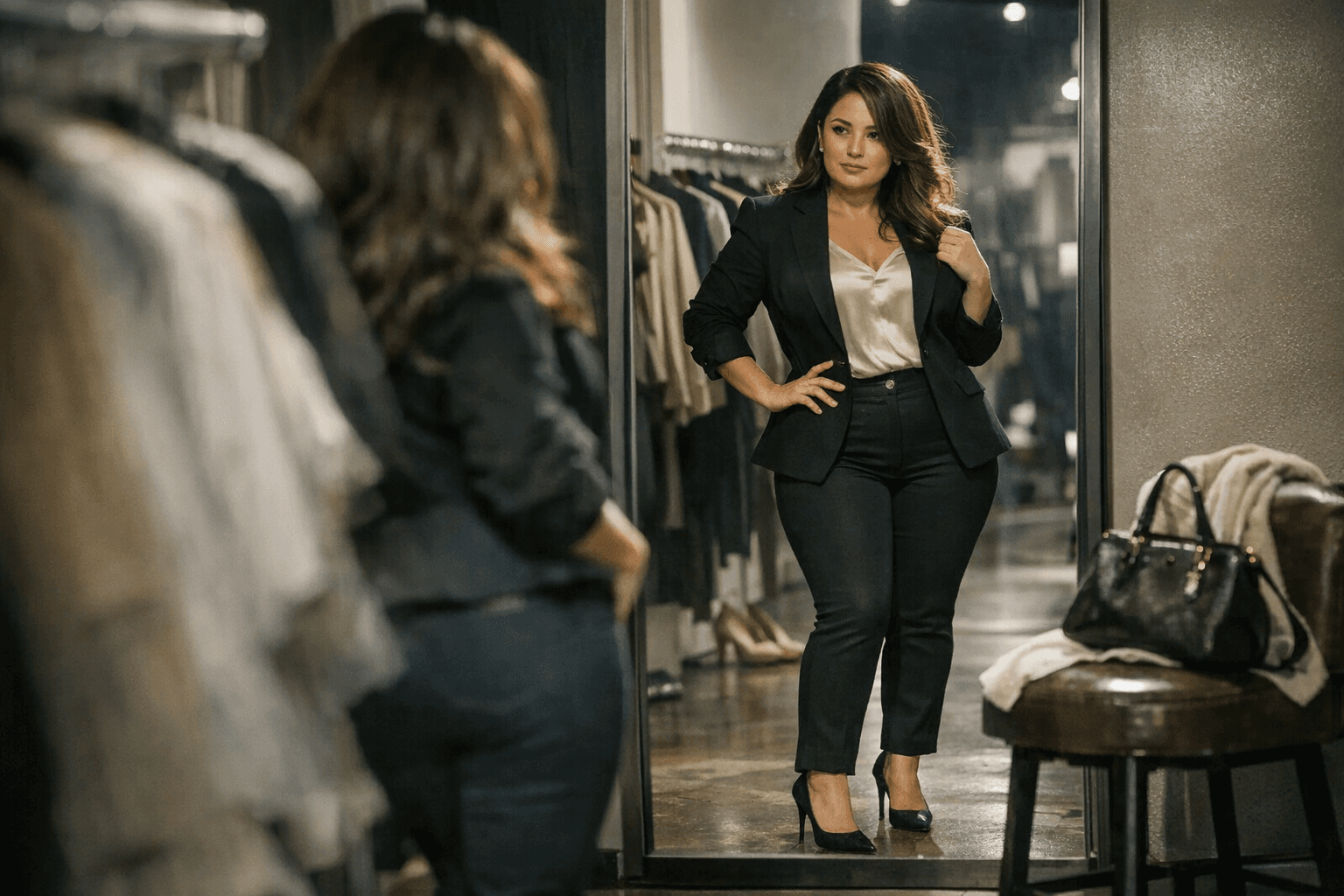
The fastest way to restore shape is a high-rise bottom. When the waistband sits above the natural waist, the eye reads a longer leg line, and the torso stops competing with the hips for attention. LOFT’s fit guide says petite pants measure about 7 inches below the waist, compared with about 8 inches for regular sizing, and that small shift is exactly why rise placement changes the whole outfit.
The formula works best when the top disappears into the bottom on purpose. A front tuck, a full tuck, or a sharp half-tuck creates a waist point instead of a straight horizontal block, and that waist point becomes the anchor for everything else. With a curvier body, an untucked top can add bulk faster than length, especially when the shirt ends right at the fullest part of the hip.
- High-rise trouser or jean
- Fitted knit, blouse, or tee tucked cleanly at the front
- A waistband that sits at the smallest part of the waist, not lower on the torso
Think in combinations, not in pieces:
That one move does more than a petite tag ever could. It makes the leg start higher, the waist look narrower, and the whole silhouette feel intentional instead of chopped.
Cropped jackets are not a trend here, they are architecture
A jacket can be the best thing in the outfit or the thing that kills it. On a petite, curvy frame, the wrong jacket length often lands in the broadest zone of the body and adds visual weight where you do not want it. A cropped jacket that ends near the natural waist or just above the high-rise band solves that in one shot.
The point is not to show skin for the sake of it. The point is to stop the upper half from overrunning the lower half. A jacket that skims the waist gives the eye a clean break, which is exactly what keeps the outfit from reading boxy or bottom-heavy.
The best versions are structured enough to hold shape but short enough to keep motion in the legs. Denim jackets, little bouclé toppers, and sharp blazers all work when the hem stops before the hip fullest point. If the sleeve is also petite-proportioned, even better, because an overlong cuff can make the whole jacket feel borrowed.
Hems need to be placed, not just shortened
Petite clothing often promises shorter lengths, but shorter is not automatically better. A hem that lands in the wrong place can make legs look truncated, while a hem that lands with intent can make everything look longer and cleaner. The sweet spot is not always the shortest version. It is the version that gives the body a visible line.
For skirts and dresses, that means paying attention to where the hem cuts across the leg. An above-the-knee hem usually opens the leg line fastest, while a midi can still work if it finishes at the slimmest part of the calf instead of right at the widest point. For pants, a straight or slight flare that skims the top of the shoe keeps the vertical line alive without puddling at the ankle.
This is where petite sizing often falls short for curvy bodies. A shortened hem may fit the height, but if the rise is too low, the hip is too tight, or the torso is too long, the garment still sits wrong. You do not just need less fabric. You need the fabric in the right places.
Dress shapes should follow the body, not float away from it
Dresses are where short-and-curvy shoppers get ambushed the most. A shapeless dress can look easy on the hanger and then behave like a tent the second it meets a smaller frame with real curves. If the waist is too low, the shoulder too broad, or the torso too long, the result is all fabric and no shape.
The fix is to look for dresses that mark the waist where your body actually bends, not where the designer assumed it should. Wrap shapes, princess seams, and belted styles usually do the best work because they create a waist without pinching it. The hem should still be deliberate, either above the knee for more leg line or at a midi point that clears the calf instead of cutting it in half.
Sleeve length matters here too. Petite sizing can shorten sleeves, but some curvy petites still need more adjustment in the armhole and shoulder than the standard petite block gives them. That is why a dress can fit at the length and still feel wrong in the upper body.
Why this is more than a styling trick
There is a psychological edge to fit that gets ignored because people treat it like vanity. A 2024 ScienceDirect study surveyed 502 fashion consumers and looked at how fit shapes confident clothing decisions and psychological well-being. Another PubMed-indexed study used audio-recorded try-ons and interviews with 20 women ages 18 to 45, and it tied dress fit directly to body image and how women feel in clothing.
Psychology Today has also summed up research showing that clothing can have a real psychological impact and can even be used to camouflage the body. That does not mean hiding yourself. It means a bad fit can drain confidence before the day even starts, while a well-placed waist, a cleaner hem, and a jacket that ends in the right spot can change how you stand up in the room.
Petite apparel is also a substantial, underserved slice of the women’s market, which makes the fit stakes even higher. If the industry keeps treating petite as a simple height category, it will keep missing the women whose real problem is proportion, not just length. The right styling formulas do more than flatter. They give the body back its line.
This article was produced by Prism’s automated news system from verified source data, official records, and press releases, then run through automated quality and moderation checks before publishing. The system is built and supervised by the people who set the standards it runs under. Read our full AI policy.
Did this article answer your question?