Petite fashion guide: balance proportions, find better fits, lengthen lines
Petite fit is a proportion problem, not a height problem, and the right hems, necklines, and jackets can instantly lengthen the body’s line.
The shortest women’s style mistakes are rarely about taste. They are usually about proportion, that sneaky gap between the body and the garment that turns a sleek outfit into something boxy, draggy, or swallowed whole. Petite dressing works when you make the eye travel upward and downward in one clean line, which is why a V-neck, a hem that lands with intention, and a jacket cut to the body can change everything.
Petite means proportioned differently, not simply smaller
Retailers commonly define petite sizing as clothing for women 5'4" and under, but the label is less about height than about structure. Petite clothes are proportioned differently, with changes to sleeve length, inseam, rise, and overall placement of key points on the body. That distinction matters, because a blazer that fits in the shoulders can still overwhelm the torso, and pants that fit at the waist can still puddle at the ankle.
The industry has spent decades catching up to that reality. A NIST apparel-sizing report says U.S. sizing standards still rely on body-measurement data gathered by the USDA in the late 1930s, which helps explain why so many petites still face hems that run long and sleeves that cover the hand. ASTM International has been working to answer that problem with petite-specific guidance, after noting that the old missy standard was based on a single average height.
Why the wrong hem makes you look shorter
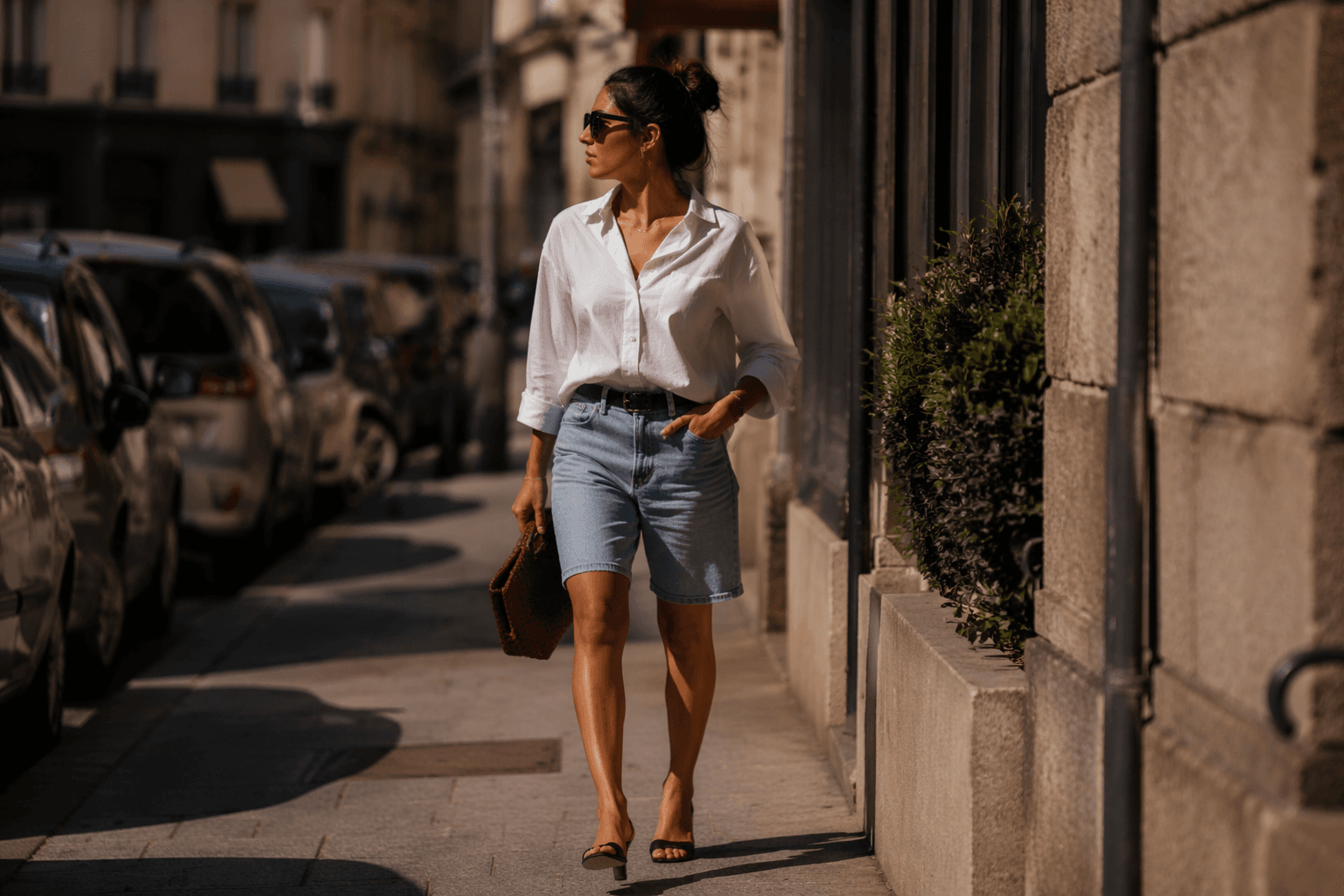
The most common petite frustration is the one you can see in a mirror instantly: a hem that lands in the wrong place. A midi skirt that cuts the calf at its widest point can make the leg feel abruptly shortened, while an ankle-length trouser that breaks heavily over the shoe can flatten the whole outfit. The same is true of sleeves that swallow the wrist or jacket lengths that stop at the broadest part of the hip.
Petite dressing is really the art of controlling those visual interruptions. A shorter sleeve, a cleaner ankle break, or a skirt that shows more leg all create a longer-looking line because the eye moves without pause. That is why so many petite-friendly pieces are not merely shrunken versions of standard clothes, but garments recalibrated to place every seam where it flatters the frame.
The silhouettes that do the most work
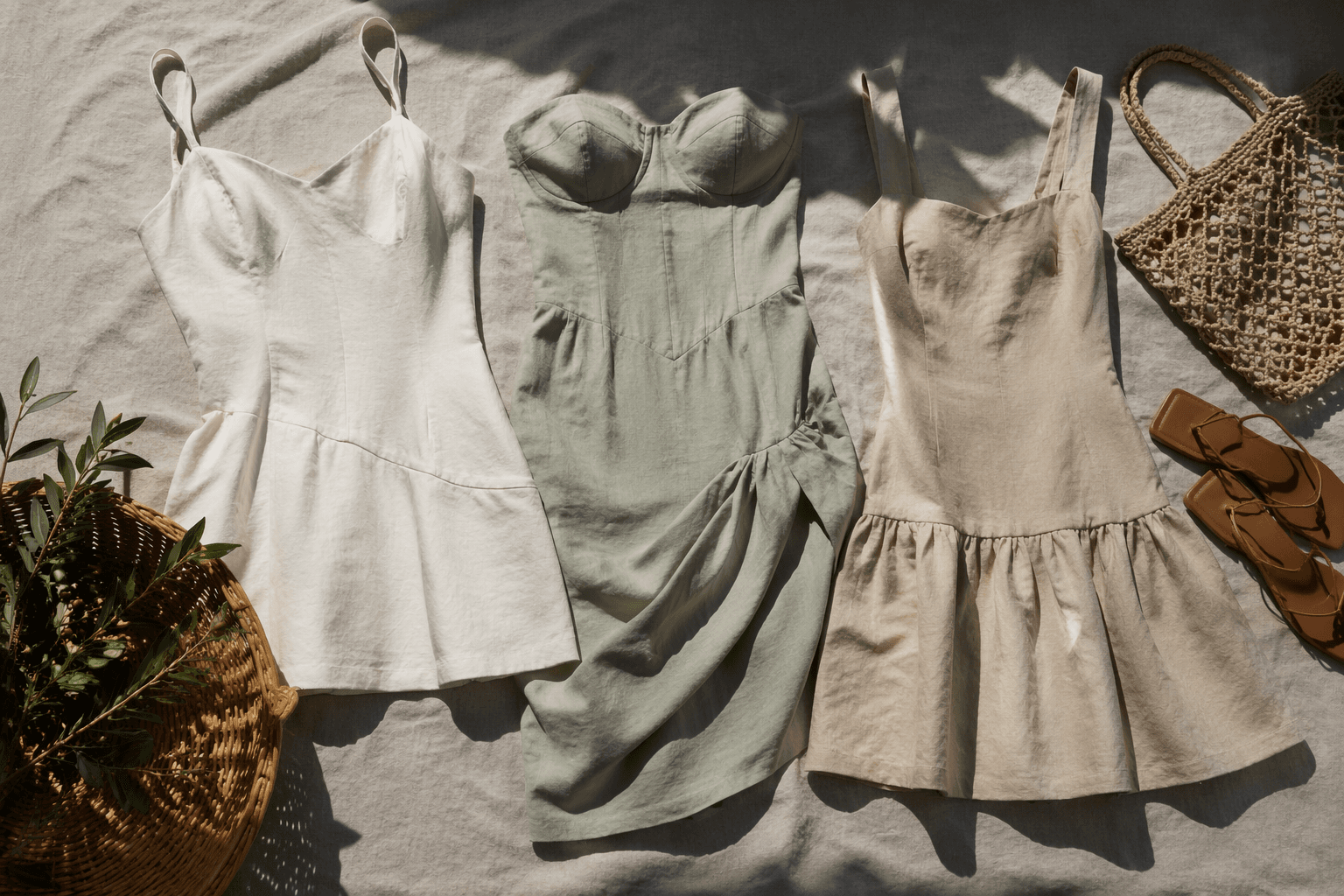
Certain shapes are disproportionately kind to a shorter frame because they restore balance where volume can easily overwhelm. V-necks open the chest and create a vertical line, which is especially useful when a top or dress has more fabric through the body. Mini skirts do something similar for the lower half, showing enough leg to keep the silhouette light instead of heavy.
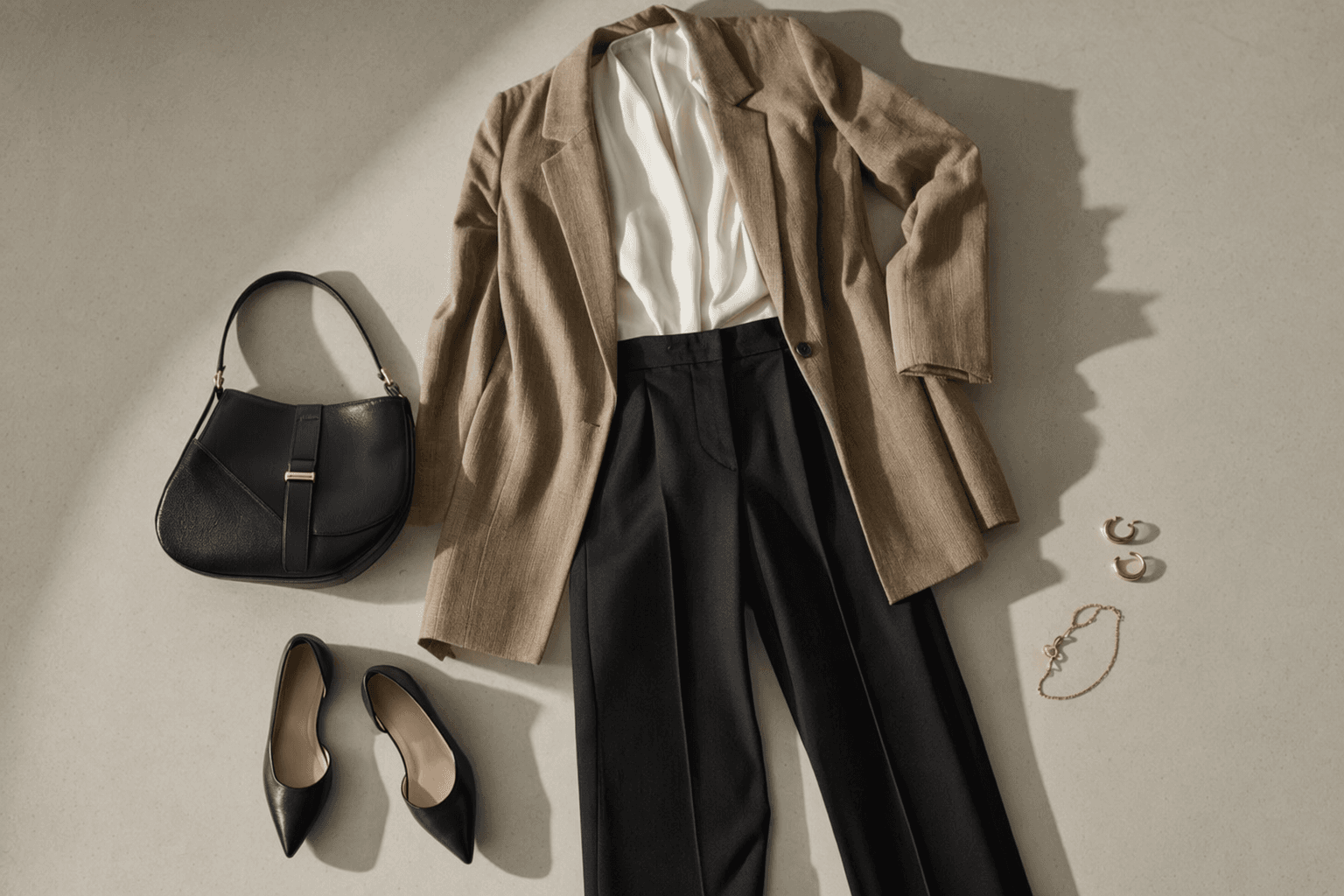
Proportional suiting is another quiet hero. A stylist in PureWow’s August 14, 2024 petite guide said oversized blazers generally do not work well on petites, while proportional suiting does. That makes sense visually: a jacket that follows the line of the shoulders and ends at a careful point through the hip lets the body remain visible, while a too-large blazer can look borrowed and flatten the waist.
- Choose necklines that create vertical space, like V-necks and open collars.
- Favor skirt and dress lengths that either show the leg or end with precision.
- Keep jackets and blazers close enough to the body to preserve shape.
- Use volume sparingly, and balance it with a leaner line elsewhere.
A useful rule of thumb is simple:
Volume is not the enemy, but it has to be placed carefully
Petites can wear volume, but it has to be edited with intention. A full skirt can be beautiful if the top is cleaner and the waist is clearly marked. Wide-leg trousers can work if they start from a higher rise and skim rather than drag. The problem is not fullness itself, it is fullness without definition.
That is where many shopping mistakes happen. A voluminous sleeve, a boxy top, and a long skirt all at once can erase the body’s natural rhythm. Better proportions let one statement piece breathe while everything else supports it. Think of the body as a column of sight lines: the more sharply each piece reinforces that column, the taller and calmer the outfit feels.
The standards are finally catching up
ASTM D7878/D7878M-23 covers adult female misses petite figure type sizes 00P through 20P, and the standard’s 2023 update brought in data from the U.S. Department of Commerce, the Caesar Study, SizeUSA, ASTM missy standards, current USA industry studies, and Alvanon scans. That breadth matters because it reflects real bodies, not just an abstract sizing idea, and it helps manufacturers visualize petite posture, shape, and proportion more accurately.
There is commercial weight behind this, too. An academic source cited the petite clothing market at more than $10 billion, which is exactly why retailers are investing in more useful fit language and better assortments. Anthropologie and Macy’s now publish dedicated petite fit guides and sizing advice, a sign that petite clothing has moved from an afterthought to a serious category with its own buying logic.
What the big assortments are telling you
PureWow’s June 28, 2023 petite styling story pointed to the scale of the category by noting that Anthropologie’s women’s apparel division had more than 800 petite items in inventory at the time. That kind of assortment tells you something important: petites are not shopping a niche corner anymore, they are navigating a broad, competitive market where fit details matter as much as trend.
Anthropologie’s own fit guidance also notes that petite sizing may work for some people up to 5'9" depending on arm, leg, or torso measurements. That is the cleanest proof that petite is not a height-only identity. A long torso, shorter inseam, or narrower shoulders can make petite proportions the best fit even when the tape measure says otherwise.
How to use the rules on clothes you already own
The easiest way to test petite proportions at home is to look at where each garment stops and starts. If a blazer ends too low and the sleeve covers your hand, a tailor can often restore balance with a shorter hem and sleeve. If a dress feels heavy, try it with a heel or a pointed shoe to extend the line below the ankle. If a top feels dull, switching to a V-neck or open neckline can make the same garment suddenly feel lighter and more expensive.
The goal is not to chase a set of rigid petite rules. It is to train your eye to see where clothes interrupt the body and where they help it flow. Once you understand that, petite dressing stops being a hunt for smaller sizes and becomes a precise, editorial exercise in line, balance, and momentum.
This article was produced by Prism’s automated news system from verified source data, official records, and press releases, then run through automated quality and moderation checks before publishing. The system is built and supervised by the people who set the standards it runs under. Read our full AI policy.
Did this article answer your question?