Petite midi skirts that hit the right point on shorter legs
A petite midi works when the hem clears the ankle and the waist sits in the right place. RIXO, M&S, ARKET and LOEWE are showing why proportion matters more than size labels.
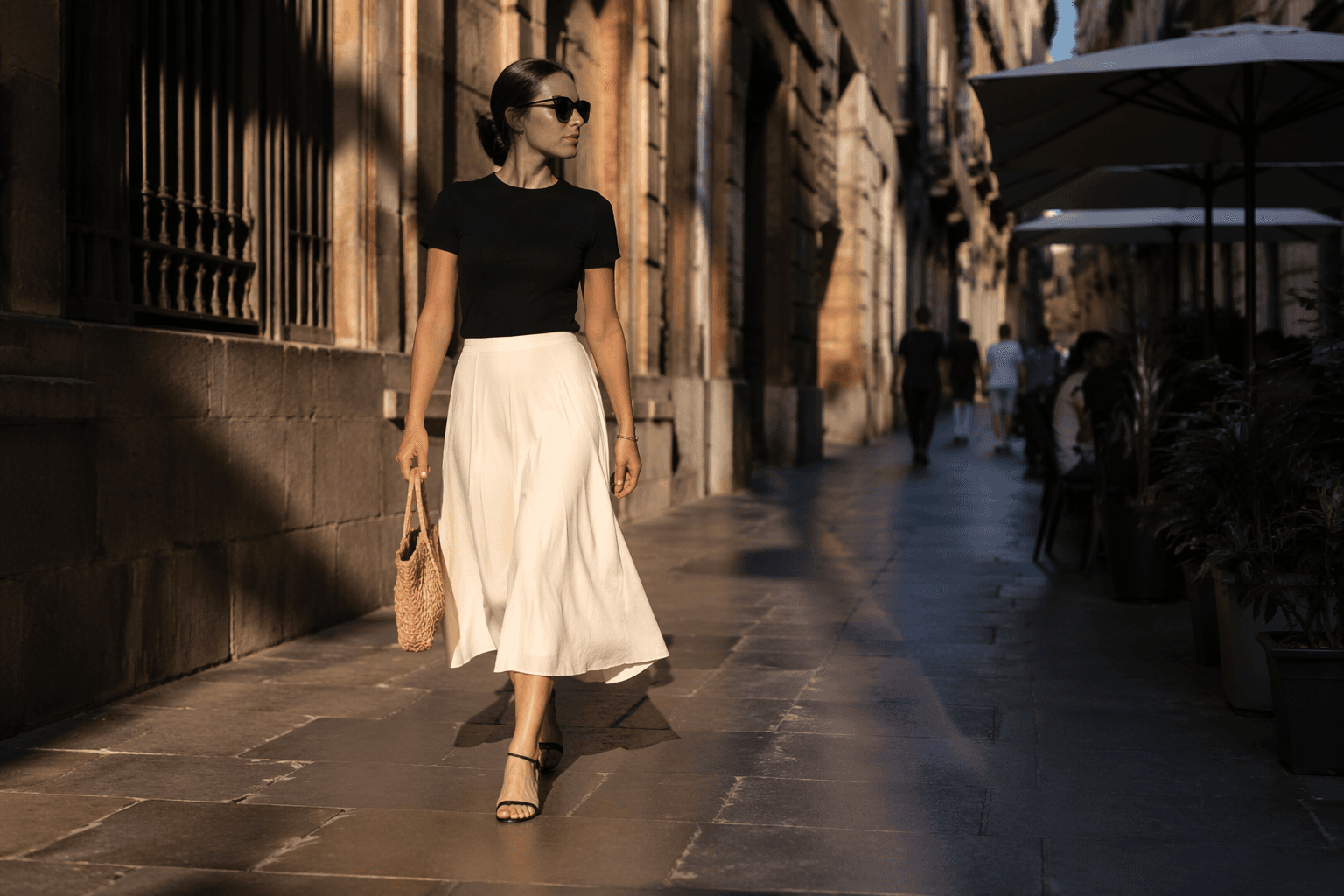
A midi skirt can look graceful on a 5ft 2 frame, but only when the proportions are doing the heavy lifting. Too often, it lands in that awkward space where a “midi” starts to behave like a maxi, chopping the leg line in all the wrong places and turning a polished outfit into a visual drag. The fix is not a smaller trend, it is smarter placement: hem depth, waistband height, and a shoe that keeps the whole look clean.
Why petite midi dressing is really a proportion problem
Who What Wear puts petite style guidance squarely at people 5'4" and under, and that is where the conversation should stay. The central issue is not whether a skirt is technically a midi, but where it falls in relation to the ankle, calf and knee. In the same petite skirt guidance, midi A-line shapes are called out as best when they sit above the ankles rather than below the knee, a detail that sounds small until you see how much leg it gives back.
That is also why the old advice still holds: focus on fit first, then tailoring, then proportion control. Petite shopping is not about blindly choosing from a petite rail and hoping for the best. It is about finding a skirt whose length range, waistband position and shape are already working in your favor.
The silhouettes that make a midi feel lighter
The easiest petite-friendly midi is rarely the most structured one. Soft drape, a controlled flare and a waist that sits where your frame wants it are the elements that keep the skirt from overwhelming the body. ARKET’s A-Line Midi Skirt gets this exactly right on paper: softly draped, regular fit, and finished with an elasticated waistband. That combination explains why relaxed A-line shapes are so often recommended for shorter legs, because they skim rather than insist on attention.
This is also where shoe pairing matters more than people admit. A hem that lands just above the ankle can work beautifully with a slim sandal, a pointed flat or a low-vamp slingback because the eye keeps moving downward. A skirt that lands lower needs even more care, since the wrong shoe can make the whole look read as heavy. For petites, the goal is to let the hem hover rather than hang.
How the brands are handling petite lengths differently
RIXO has become one of the clearest examples of how petite sizing should be handled. The brand says its petite collection is designed for women 5'3" and under, and its size guide says many of its designs run from UK 6 to 26. More important than the breadth of that range is the engineering behind it: bust seams, waist, sleeves and hems are tweaked so the proportions are meant to fit as intended. That is the kind of detail petite shoppers actually feel, because it means the dressmaker’s eye has been applied to the whole garment, not just the hem.
Marks & Spencer takes a different but equally useful approach. Its midi-skirt page says longer lengths have been added to some lines so shoppers can find a calf-finishing cut suited to their height, which is a smart acknowledgment that one midi does not suit every frame. The current edit is substantial, with 257 midi-skirt items spanning satin slip, pleated, column, pencil, tiered, wrap and denim styles. That range matters because petite shoppers are not looking for one silhouette to rule them all, they are looking for the version that lands in the right place.
Cou Cou Intimates offers one of the clearest reminders that midi length is not a fixed number. Its Midi Slip size chart lists lengths from 31.4 inches in XXS to 33.8 inches in XXL, a 2.4-inch spread that can change how the skirt reads on the body. On a shorter frame, those inches are the difference between a flirtatious calf-skimmer and a hem that feels too long to be intentional. This is why reading length charts matters just as much as checking the size label.
LOEWE shows how luxury brands can solve the same problem with precision. One wool skirt is described as regular fit, knee length and mid waist, while another mohair-and-wool-blend wrap skirt is marked regular fit, short length and mid waist. Those details are especially useful for petites because they show that the brand is not treating “midi” as a single universal formula. The label, the length and the waist placement all change the read of the skirt, and that is exactly the sort of nuance shorter legs need.
The broader conversation reaches labels such as Reformation and Khaite too, because petite style is no longer confined to a special aisle. The point is not which brand has the most fashionable name. It is which one understands that the right midi is the one that respects the line of the leg.
What to look for, and what to skip
The cleanest petite midi skirt does a few things at once:
- It finishes above the ankle or at a controlled calf point, never in that indecisive middle zone.
- It keeps the waist placement precise, because a mid waist can work, but only when the rest of the proportion is under control.
- It uses shape to lighten the look, which is why A-line and softly draped skirts are so reliable.
- It comes with a length chart, not just a size label, because inches matter more than branding.
What to skip is just as clear. Avoid hems that hit the widest part of the calf without any shape to offset them. Be wary of too much fabric pooling at the lower leg, especially if the skirt is meant to read as refined rather than bohemian. And if a skirt looks good only when it is heavily altered, it is usually not the most efficient buy.
The petite midi worth paying attention to now
The strongest petite midi skirts are not trying to disguise the body. They are working with it, using hem depth, waistband placement and silhouette to create a longer line without pretending to be something other than a midi. That is why RIXO’s petite tailoring, ARKET’s easy A-line, M&S’s expanded length edit, Cou Cou Intimates’ exact size chart and LOEWE’s sharp fit descriptors all feel relevant in the same conversation.
For shorter legs, the best midi is the one that lands with intention. When the hem is right and the waist is right, the rest of the outfit follows naturally, and the skirt finally earns its name.
This article was produced by Prism’s automated news system from verified source data, official records, and press releases, then run through automated quality and moderation checks before publishing. The system is built and supervised by the people who set the standards it runs under. Read our full AI policy.
Did this article answer your question?