Petite Office Style Tips That Actually Flatter a Shorter Frame
Forget dress codes — petite office dressing is about proportion strategy, and two moves (a belt, a colour pop) change everything.
There's a difference between putting on work clothes and actually dressing for your frame. For petite women, that gap between wearing and styling is where the magic lives, and it turns out the fixes are smaller, cheaper, and more satisfying than any trip to the tailor.
The premise is straightforward: standard workwear is cut for an average height that most petite women simply don't have. Hemlines land wrong, blazers swamp the shoulder, and dresses meant to cinch at the waist hit somewhere entirely different. The result isn't a fit problem so much as a proportion problem, and proportion problems have proportion solutions.
Style savant and fashion blogger Shloka Narang Sensarma has spent years solving exactly this, making both designer and high-street buys work harder for her petite frame. Her advice is specific, actionable, and refreshingly free of the usual "buy everything petite-cut" prescription.
The belt is doing more work than you think
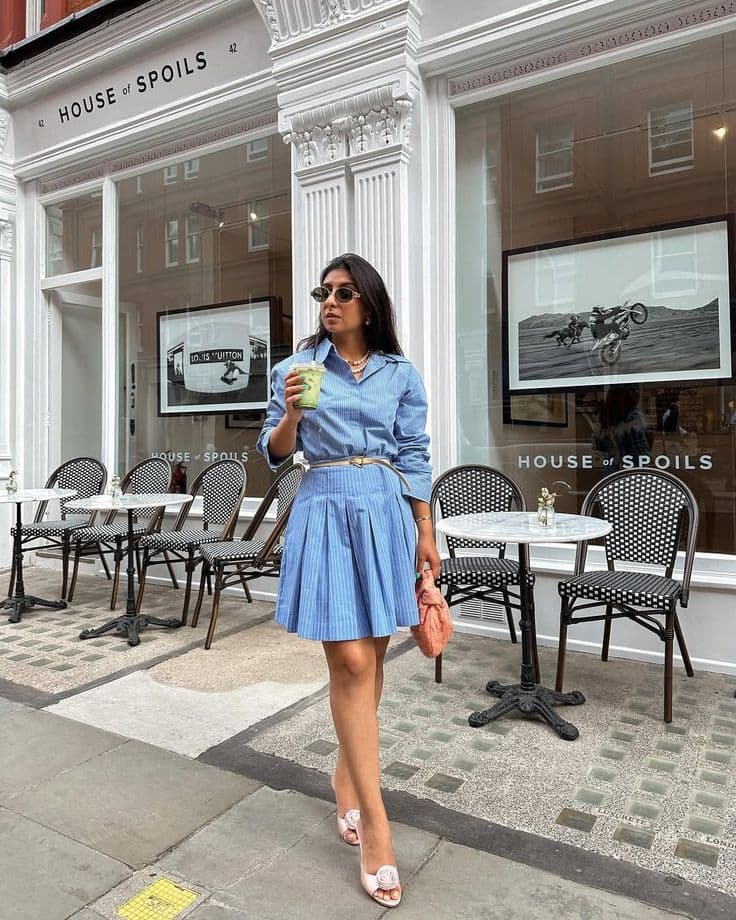
If there is one piece of kit that separates a styled petite office outfit from a worn one, it is a belt. Not a statement belt for the sake of it, but a versatile, considered one that you can deploy across multiple situations.
The use cases stack up fast:
- Trousers running a little long? Belt them at the waist rather than hemming, and the excess fabric becomes a non-issue.
- Dress sitting slightly big? Nipping in the waist with a belt creates structure where a shapeless silhouette was threatening to overwhelm.
- Working with a head-to-toe colour block? A belt in a contrasting finish breaks the visual run, adds a point of interest, and prevents the look from reading as one uninterrupted column.
"A good belt is a petite girl's best friend," Shloka says. "I have a small collection in different colours and finishes for different vibes." That collection approach is worth copying: you want a belt that reads sleek for formal days, one with texture for business casual, and something with a bit of attitude for Fridays. A studded leather option like the Seren Studded Leather Belt can read more expensive than its price point suggests, while a suede option like the Hollyhock Suede Belt softens tailored pieces without disrupting the polish.
The underlying principle is one that applies well beyond belts. As Whowhatwear put it: "There's nothing this little wonder can't do, and often it's the small difference between simply wearing and styling an outfit." That framing gets at something real. The belt isn't decorative. It is a proportioning tool, and treating it that way changes how you shop and how you dress.
Colour placement is a length illusion
The second major lever is colour, and it operates in a way that feels counterintuitive until you see it in practice. "Deceptively, adding an element of colour to a monochromatic is one styling tip that petite women can always rely on."
The logic: a monochromatic outfit from head to toe can flatten the visual read of a shorter frame, making it harder for the eye to register dimension. Introducing a contrasting colour at a strategic point, specifically at the torso, draws the eye upward and creates vertical interest that reads as height.

The execution is simple. Wearing a black blazer with high-waisted jeans? "Throw a vibrant cashmere jumper over your shoulders to accentuate your torso." The jumper draped at the shoulders pulls focus to the upper half of the body, creating the illusion of a longer leg line below. For tailored trouser days, "a contrasting knit sweater can lengthen your physique and give more stature, thanks to the commanding hue."
Both examples point to knitwear as the most practical vehicle for this trick in an office context. A Chunky Cashmere Crew-Neck Jumper in butter yellow does exactly this over dark tailoring, the warmth of the shade catching light and drawing the eye without straying into anything unprofessional. A Pink Clay cashmere-merino blend achieves a softer version of the same effect. Neither requires an outfit overhaul. They sit over things you already own and change how the whole look reads.
The principle behind all of it
What Shloka's advice and the Whowhatwear feature share is a commitment to working with clothes rather than waiting for clothes to fit. As the Whowhatwear fashion editor, who is 5'6" and acknowledges she is "not best placed to share petite style tips," puts it: the goal is finding "the easy styling shortcuts that can save you time (and money) just by taking dressing for your proportions into account."
That framing matters. Dressing for proportions isn't about buying an entirely separate petite wardrobe or restricting yourself to certain silhouettes. It's about understanding two or three specific principles, belt placement, colour positioning, and visual proportion, and applying them with intention. An off-the-rack blazer that's slightly oversized stops being a problem when you belt it. A monochromatic work outfit that reads flat stops reading flat when a cashmere layer in a contrasting colour breaks the line at the torso.
The Whowhatwear piece is explicit that there are no rules here, only options. Curvy petite frames face a slightly different set of challenges than straight petite frames, but the same tools apply: belts create waist definition where standard sizing doesn't, and colour placement at the torso gives the eye somewhere intentional to land.
Influencer Monikh, referenced in the Whowhatwear feature as a visual case study for petite styling, demonstrates the effect of these techniques in practice. Seeing them worn, rather than described, is part of why the Whowhatwear editorial takes a visual-first approach. The theory is straightforward; the execution becomes instinctive once you've seen it land correctly on a frame that matches yours.
Two techniques, every morning
None of this requires extra time or money. The belt you add takes ten seconds. The jumper thrown over the shoulders on the way out the door takes five. What changes is not your wardrobe but your eye, specifically your ability to look at a standard office outfit and ask where the proportion is falling down and what single addition corrects it.
"These simple tricks make all the difference." That is not a throwaway line. For petite women who have spent years buying clothes that technically fit but never quite land, the difference between wearing and styling is exactly that precise: a belt at the right point on a too-long trouser, a pop of warm yellow breaking a flat all-black suit. The outfit is the same. The frame it's built around is finally considered.
This article was produced by Prism’s automated news system from verified source data, official records, and press releases, then run through automated quality and moderation checks before publishing. The system is built and supervised by the people who set the standards it runs under. Read our full AI policy.
Did this article answer your question?