Petite summer dresses focus on flattering fit, wrap styles and cropped tops
Petite summer dressing is leaning on wrap waists, V-necks and cropped hems because they solve proportion before they start dressing up.
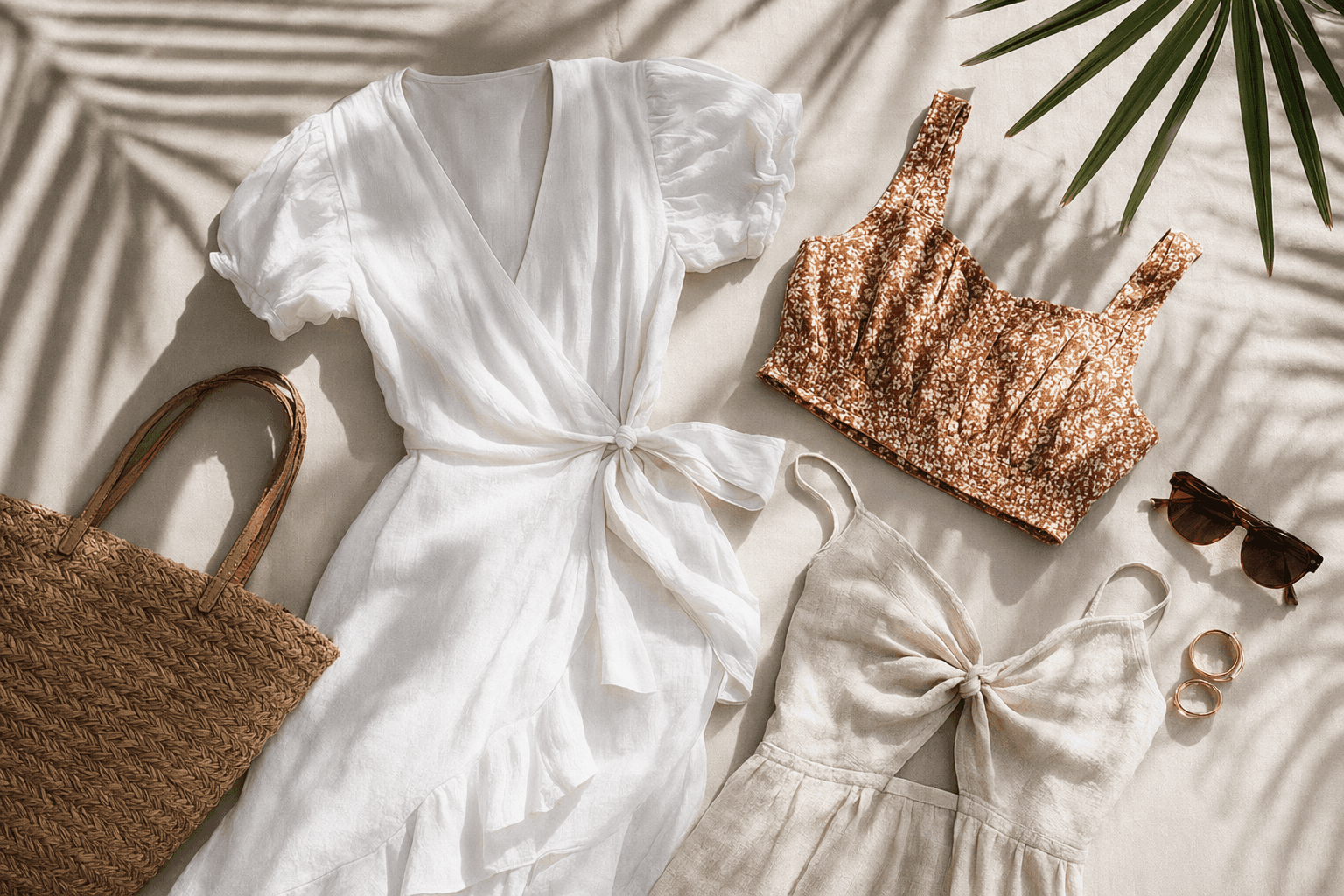
The petite equation starts with proportion
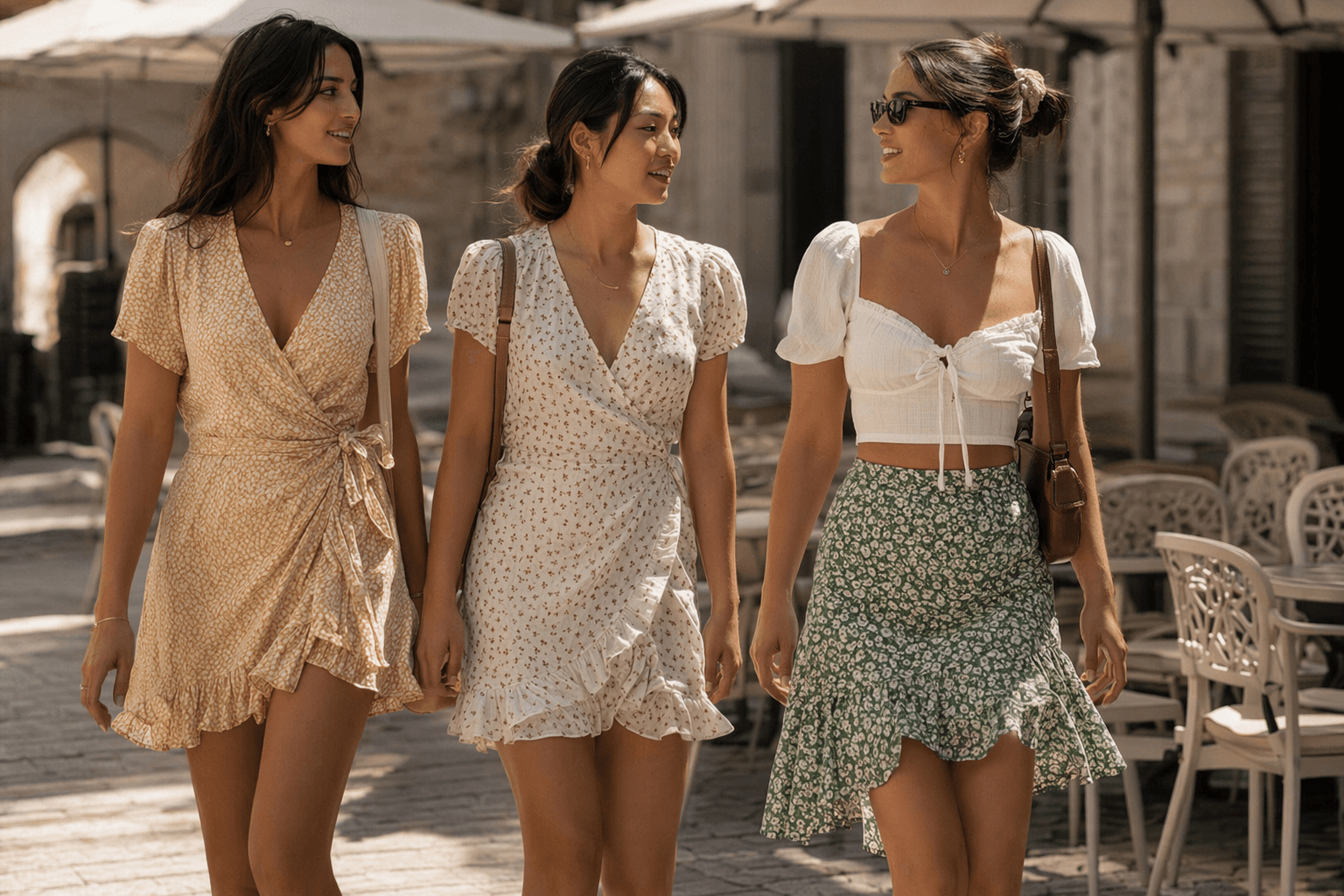
Us Weekly’s petite summer dress edit gets the brief right: for women 5'3" and under, the most flattering dress is usually the one that does the math before it does the styling. Olivia Hanson’s June 29, 2025 roundup centered wrap dresses, tie-waist minis, tiered midis, V-necks and belted T-shirt dresses, all silhouettes built to “elongate, flatter and define” rather than simply decorate.
That instinct tracks with the shopping data. In Jasmin Malik Chua’s February 2025 WWD analysis, Yotpo reviewed 51 million product reviews across 20,000 stores and found that dresses were the top returned item, accounting for 42% of return-related dress reviews. The same dataset showed that 76% of jeans sizing reviews focused on leg length, which is a reminder that inseam math and hem placement are not side issues for petite shoppers. They are the whole story.
Why wrap dresses keep winning
Wrap dresses remain the clearest answer to the petite fit problem because they create structure without rigidity. Us Weekly’s March 10, 2026 wrap-dress roundup, which ran from $13, called the style a closet staple for decades because the crossover front and adjustable belt create definition and let the wearer customize the fit. On a shorter torso, that adjustability matters: a fixed waist can land awkwardly, while a wrap lets the eye settle at the narrowest point and then move vertically.
The silhouette also does something subtler. It pulls fabric diagonally across the body, which is far more forgiving than a straight column of cloth. For petite frames, that diagonal line prevents a dress from reading too long or too heavy, especially when summer fabric gets airy and can easily float away from the body. The result is polish without bulk, which is why wrap dresses keep resurfacing whenever retailers try to solve fit in a way that feels genuinely wearable.
The petite styles that translate most cleanly
A-line dresses belong in the same conversation because they skim rather than cling. On a shorter frame, that gentle flare keeps volume off the midsection and hips without swallowing the legs, so the silhouette reads clean instead of overwhelming. V-necks do just as much work in the upper half of the outfit: they open the neckline, create a longer line through the chest and help balance a petite frame when the dress itself is compact.
Tie-waist minis and belted T-shirt dresses are especially strong because they borrow the ease of casual dressing but add a waist cue that keeps proportions intact. Macy’s current petite summer-dresses assortment reflects that logic, with petite tie-waist T-shirt dresses, petite V-neck midi dresses and petite belted styles all sitting inside a dedicated petite edit. That kind of assortment matters because it shows petite-specific fit is not a niche afterthought; it is a commercial category with enough demand to deserve its own rack.
Where petite-plus crossover works, and where it breaks down
The petite-plus crossover is strongest when a dress offers structure at the waist and restraint in the skirt. A wrap front, an A-line cut or a tie-waist finish can usually move across sizes and body types because each one gives shape at the center and lets the rest of the garment fall cleanly. That overlap gets shakier when the design depends on width or length alone, which is where many summer dresses lose petite shoppers.
Tiered midis are the clearest example. They can be lovely, but each tier adds visual weight, and on a shorter frame those layers can crowd the body before they ever reach the ankle. The same goes for fuller, looser shapes that ignore torso length or hem placement. What reads as breezy on a taller model can look unfinished on a petite frame if the waist sits too low or the hem lands at the wrong point on the calf.
Cropped tops need precision, not just trend appeal
Cropped petite tops belong in the summer conversation, but they only work when the crop is calibrated to the rest of the outfit. A true crop should meet a high-rise bottom cleanly at the waistband, so the outfit shows intention rather than an accidental strip of torso. When that line is right, cropped tops can lengthen the leg visually and keep the silhouette crisp.
The danger is proportion drift. A top that is too boxy or too short can make a petite frame look chopped up, especially if it sits against a lower rise or a full skirt. The category works best as part of a planned silhouette, not as a standalone trend moment. That is why petite shopping succeeds when the clothes are edited around body geometry instead of simply resized.
Why the market keeps coming back to petite fit
The industry has known for years that petite shoppers were being undersupplied. WWD noted in 2018 that petite sizing still lagged even as size inclusiveness expanded, and CDC National Center for Health Statistics data cited there put the average American woman age 20 and older at just under 5 feet 4 inches tall. That makes petite sizing less of a special request than a reflection of how women actually measure.
Retailers are finally behaving as if that is true. A dedicated petite summer-dresses assortment at a mainstream department store, especially one that includes petite tie-waist T-shirt dresses, petite V-neck midi dresses and petite belted styles, signals that fit is now part of the fashion offer rather than a separate apology. For petite summer dressing, the winning formula is clear: wrap, define, shorten where needed, and let proportion do the flattering before print or embellishment ever gets a chance.
Know something we missed? Have a correction or additional information?
Submit a Tip
