Petite Women's Guide to Finding the Perfect Jacket Length for Every Style
Jacket length can make or break a petite frame; here's exactly how to nail the proportions for every style.
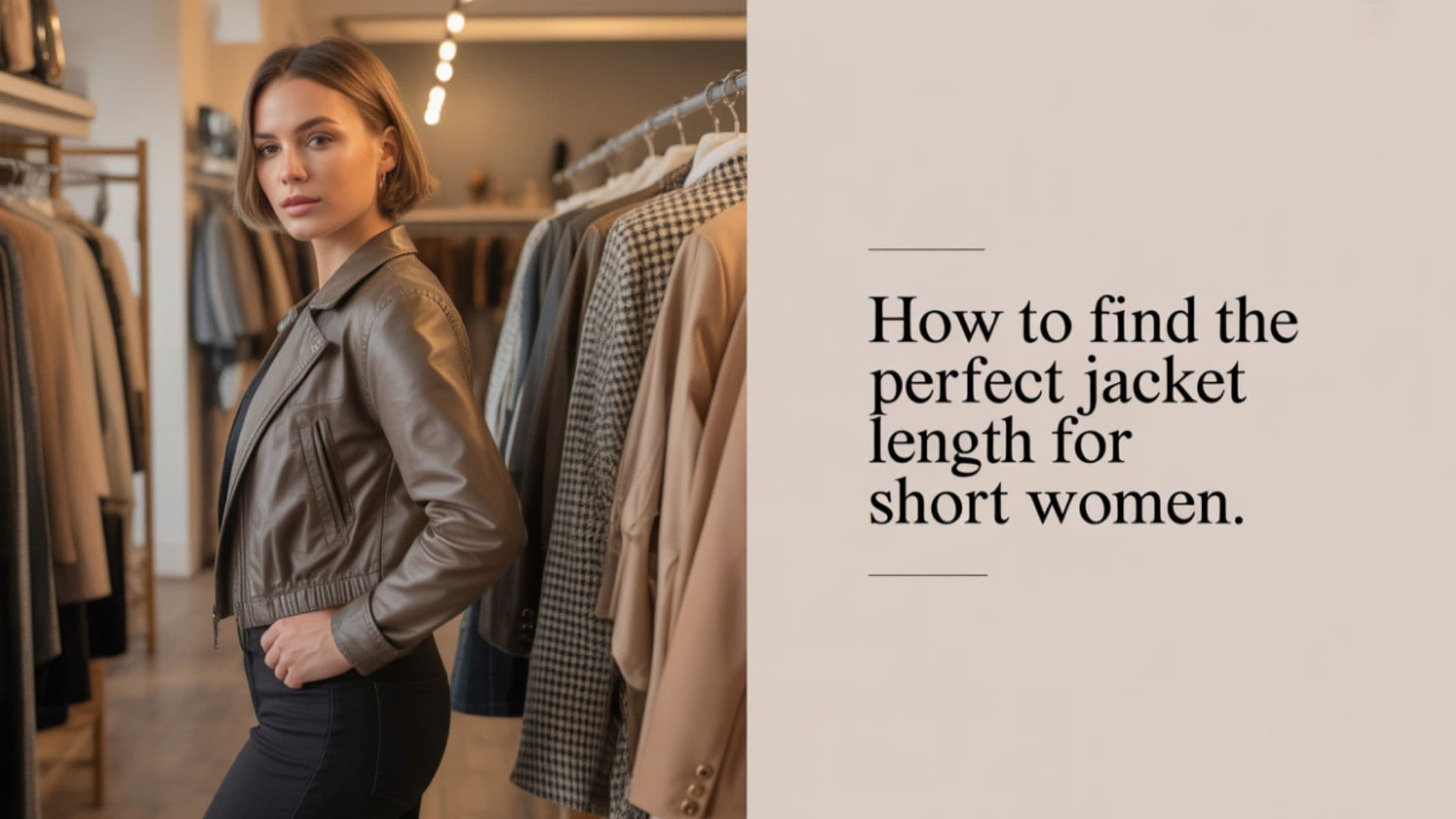
Jacket shopping when you're petite is a specific kind of frustrating. The sleeves run long, the hem hits wrong, and what looks effortlessly cool on a 5'8" model becomes a shapeless situation on a 5'2" frame. The fix isn't about finding "petite sizes" and hoping for the best. It's about understanding one core principle: proportion. Specifically, where a jacket ends on your body determines everything about how put-together you look.
The golden rule is simple. Aim for a hem that skims the high hip. That point, roughly where your hip bone starts rather than where it widens, is the sweet spot that keeps legs looking long and the torso defined. Jackets that end below the fullest part of the hip visually shorten the leg line and compress the whole silhouette. Jackets that cut off too high can look cropped to the point of costume. The high-hip hem sits right in between, clean and proportional, and it works across almost every jacket category.
Blazers: The Non-Negotiable Rule
A classic blazer is the piece petite women get the most grief about, mostly because traditional blazer cuts are designed around a longer torso. The standard single-button blazer hits at mid-hip on most women, which on a petite frame reads as nearly thigh-length. That extra inch or two drowns the waist and eats the leg line.
What you want instead is a blazer that ends right at the high hip, sitting just above where your hip widens. This length creates a visible break between jacket and trouser or skirt, which reads as more leg. Structured shoulders help too, since they add vertical height. Avoid boxy, oversized blazers unless you're intentionally styling them as a dress with a belt, in which case proportion rules shift entirely and you're working with the length rather than fighting it.
Trenches: Length Is the Whole Conversation
The trench coat presents the single biggest length challenge for petite frames. A full-length trench, the kind that hits mid-calf or below the knee, will overwhelm a shorter silhouette almost every time. It's not about the coat being bad; it's about the math. When a coat covers most of your leg, it erases the leg line and shortens the visible body proportionally.
For petite women, a trench that ends just above or at the knee is the most flattering cut. It shows enough leg to maintain the illusion of height without looking cropped or casual. If you love the drama of a longer trench, styling matters enormously: keep everything underneath streamlined, wear a heel, and belt the waist tightly to reclaim vertical structure. A mid-calf trench can work, but it requires that the rest of the outfit is doing serious work to compensate.
Leather Jackets: Short Is Right
This is where petite frames have a genuine advantage. The classic moto jacket, cropped at or just below the natural waist, is one of the most proportionally flattering silhouettes for shorter women. It doesn't fight the body; it works with it. The cropped length elongates the leg line from hip to floor, which is exactly what you want.
The trap here is sizing up for a relaxed fit, which pulls the hem lower and loses the length benefit. If you want a more relaxed leather jacket feel, look for styles cut with intentional length rather than a standard jacket worn big. The distinction matters. An intentionally longline leather jacket designed with clean structure can work at high-hip length; a standard moto worn two sizes too large will just sit at the wrong point and read as ill-fitting.
Keep hardware minimal if the jacket is already detailed. A moto with heavy zips, panels, and studs reads louder than a sleek, minimal cut, and louder can read larger on a petite frame.

Puffer Jackets: Volume Without the Bulk
Puffers are the trickiest category for petite dressing because volume is literally the design feature. Every centimeter of added length adds to the visual bulk, which is why so many petite women end up looking swallowed by their winter coats.
The crop-length puffer, ending at or just above the high hip, is the most flattering option. It keeps the visual weight concentrated above the waist and leaves the full leg visible. This is the silhouette that streetwear has been running with for several seasons, which means there are genuinely good options at this length across multiple price points right now.
If you need a longer puffer for warmth, look for styles with vertical quilting rather than horizontal channels. Vertical lines draw the eye up and down rather than across, which minimizes the width-adding effect of all that fill. A belted puffer, nipped at the waist, also recovers some of the structure that volume takes away.
How to Check Jacket Length Before You Buy
Whether you're shopping in-store or online, there are a few practical checks worth building into the habit:
- Stand in front of a full-length mirror and find your high hip by placing your hand flat just below your waistband where your hip bone begins. That's your target hem point.
- When trying a jacket on, check the hem against that point before you look at anything else. Sleeves can be altered; length is harder and more expensive to change.
- For online shopping, compare the jacket's listed length measurement against the distance from your shoulder to your high hip. This number varies from person to person, so measure once and use it every time.
- Pay attention to where the pockets sit. Pockets placed at or below the fullest hip point add visual width right where you don't want it on a petite frame.
The Proportional Mindset
Getting jacket length right for a petite frame isn't about following restrictive rules. It's about understanding why certain lengths work and making deliberate choices from there. Once the high-hip principle clicks, it changes how you see every jacket on the rack, and you stop trying things on that were never going to work in the first place.
The best-dressed petite women aren't shopping differently from everyone else; they're just shopping with more precision. That precision is a skill, and once it's yours, jacket shopping stops being frustrating and starts being straightforward.
This article was produced by Prism’s automated news system from verified source data, official records, and press releases, then run through automated quality and moderation checks before publishing. The system is built and supervised by the people who set the standards it runs under. Read our full AI policy.
Did this article answer your question?