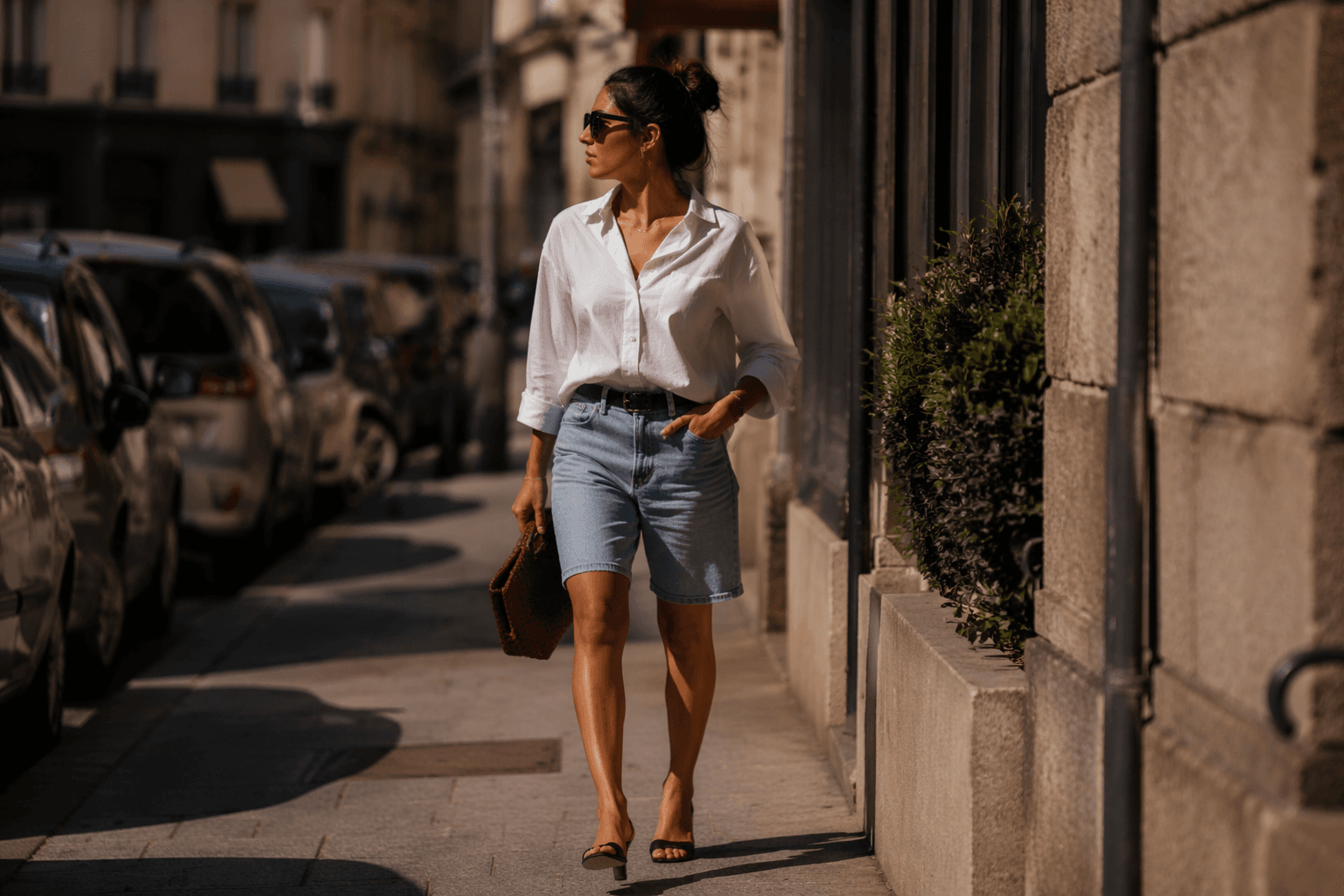
Petite workwear favors sculpted tailoring, not oversized layers
Petite workwear looks sharper when the jacket ends at the wrist bone, the waist is defined, and the silhouette stays clean. Oversized layers flatten shorter frames; sculpted tailoring lengthens them.
The petite workwear advantage is proportion
The strongest petite office look in 2026 is not bigger, looser, or more borrowed-from-the-men’s-closet. It is cleaner, tighter in proportion, and cut to show the body rather than swallow it. Cropped blazers, cinched waists, and high-waisted pairings do the work of elongating the frame before you ever reach for a heel, which is exactly why they outperform the oversized office look on shorter bodies.
That matters well beyond a niche audience. Petite sizing is generally built for women 5'4" and under, and the Centers for Disease Control and Prevention puts the average height of adult U.S. women at 63.5 inches, or 5 feet 3.5 inches. In other words, the fit problem is mainstream. It is not about finding a “special case” wardrobe; it is about making everyday workwear sit correctly on a body that needs different proportions.
What petite really means in workwear
Petite clothing is not simply regular clothing made shorter. The best petite cuts adjust sleeves, hemlines, torso length, and shoulder placement so the garment lands where the body actually needs it to land. Macy’s describes petite clothing as designed for women whose frames are 5’4” and under, with pieces cut proportionally to fit and flatter the petite frame, and that distinction is the heart of the category.
That is also why the oversized office trend can become a trap on shorter bodies. A boxy blazer with a long body, dropped shoulders, and sleeves that pool at the hand does not look fashion-forward on a petite frame; it looks like borrowed tailoring. The aim is not to disappear into fabric. The aim is to keep the vertical line crisp, with the garment ending where the eye naturally wants to stop and move on.
The blazer length that works
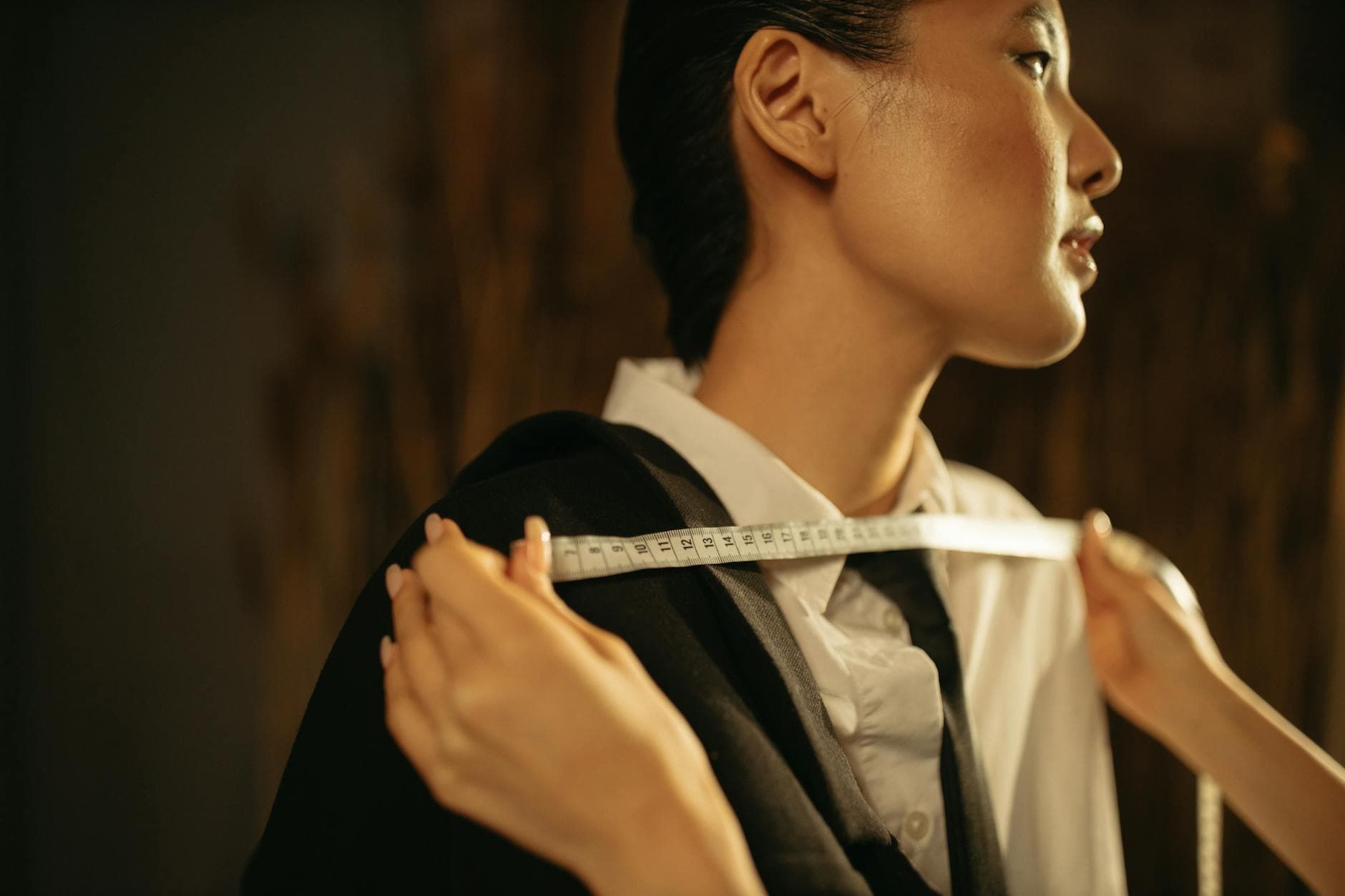
If one rule defines petite workwear, it is this: the blazer should finish at or near the wrist bone, with shoulder seams aligned to the shoulder edge. That length keeps the sleeve from overwhelming the hand and prevents the jacket from dragging the whole silhouette downward. A cropped blazer that stops around the natural waist is especially effective because it creates a neat break at the middle of the body, then lets the leg read longer underneath.
The wrong length is usually easy to spot. Once a blazer extends too far past the hip or gets boxy through the body, it starts to flatten shape instead of creating it. Petite style guidance repeatedly points back to the same fix: keep the shoulders exact, keep the sleeves controlled, and avoid any jacket that feels too long or too roomy to hold the frame together. Banana Republic’s petite fit guidance makes the same promise in plain language, saying its petite fit guide can help explain what makes a fit petite and “save you a trip to the tailor.”
How to choose the right jacket details
- Look for blazer sleeves that end right at, or just above, the wrist bone.
- Choose shoulder seams that hit the natural shoulder line, not past it.
- Favor cropped or waist-length jackets over long, boxy cuts.
- Keep the body of the blazer close enough to suggest shape without clinging.
- Use the jacket to frame the waist rather than cover it.
Nordstrom’s petite work clothes assortment reflects how central this demand has become, with petite-size jackets and blazers built specifically for work dressing. Macy’s, Banana Republic, Nordstrom, Ann Taylor, and Karen Millen all maintain dedicated petite workwear or petite blazer collections, which is proof that this is not a one-store afterthought. Retailers keep investing because the silhouette problem is real, and the solution is consistent.
Cardigans should be shaped, not slouchy
The same proportion logic applies to cardigans. On a petite frame, the best cardigan is not a long, drapey layer that hangs below the hip and cuts the body in half. It is a shorter shape that sits around the waist or just below it, ideally with enough structure to define the middle without adding bulk. Think neat, compact, and slightly tailored rather than loose and sprawling.
A cardigan that lands around the waist works because it behaves like a visual bracket. It marks the narrowest part of the torso, then lets high-waisted trousers or a skirt take over from there. That is the petite version of balance: one clean line above, one long line below, and nothing in the middle fighting for attention.
High waists do the heavy lifting
High-waisted trousers, skirts, and refined petite pairings are the easiest way to make sculpted tailoring feel modern. They give the eye a long uninterrupted line from waist to hem, which is especially useful when the jacket is cropped or the cardigan is compact. The result is polished without looking fussy, and structured without requiring a tailor.
This is where petite workwear has moved with the broader history of women’s office dressing. Workwear has shifted from rigid corporate uniformity toward business-casual ease and comfort, but petite styling has kept one old truth intact: fit still decides whether the outfit looks intentional. The current preference for cinched waists and cleaner proportion is really a modern answer to the same challenge that has always shaped women’s work clothing, how to look professional without losing ease.
The petite formula that consistently flatters
- Start with a jacket or cardigan that respects the wrist bone and the shoulder line.
- Build around the waist, not below it.
- Pair cropped or waist-length layers with high-waisted bottoms.
- Skip long, boxy, oversized pieces that erase the frame.
- Choose petite cuts when possible, because they already adjust torso length, sleeve length, and shoulder placement.
That formula is why sculpted tailoring keeps winning over oversized layers for petite office dressing. It does not ask the body to adapt to the clothes; it lets the clothes do the adapting. And for shorter frames, that is the difference between getting dressed and looking finished.
This article was produced by Prism’s automated news system from verified source data, official records, and press releases, then run through automated quality and moderation checks before publishing. The system is built and supervised by the people who set the standards it runs under. Read our full AI policy.
Did this article answer your question?