Spring Style for Petite Women Over 50, Proportion Tips That Flatter Shorter Frames
Spring petite dressing is about proportion, not just size. The right hems, rises, and waist placement keep a shorter frame sharp, polished, and never swallowed by fabric.
Spring style for petite women over 50 starts with proportion
Spring can be a treacherous season for a shorter frame. One airy blouse too long, one midi hem that lands at the wrong point, and suddenly the outfit looks borrowed from a taller woman’s closet. For petite women over 50, the goal is not to hide in volume or chase youthfulness. It is to keep shape, polish, and ease, so clothes feel light without looking oversized.
The smartest way to approach it is to stop thinking only about height and start thinking about proportion. Petite sizing is generally designed for women 5'4" and under, but the real difference is structural: sleeves are shorter, rises are adjusted, inseams are trimmed, and torso lengths are recalibrated so the garment fits the body rather than merely shrinking it. Macy’s describes petite clothing as proportionally cut to flatter petite frames, while Ann Taylor goes further with details like higher knee placement, shorter sleeve lengths, modified rises, and repositioned waistlines. That is the heart of the matter. Petite dressing is not about being smaller, it is about being properly scaled.
Why spring volume so often overwhelms shorter frames
Spring fashion loves movement, but movement can become excess very quickly. Linen shirts get boxy, pants widen, skirts float, and sleeves puddle at the wrist. On a petite body, those details are the difference between relaxed and swallowed. Excess fabric tends to shorten the eye line, which is why an otherwise beautiful piece can suddenly make the whole outfit feel heavy.
This is where the most practical petite styling advice matters: choose pieces that hold their shape. A cropped jacket that ends near the waist, a blouse that can be neatly tucked, or a skirt with a hem that lands where the leg looks longest will do more for your silhouette than any trend-driven flourish. The spring wardrobe problem is not the absence of style. It is too much fabric in the wrong places.
The rule of thirds is the petite woman’s best proportion trick
Among petite styling principles, the Rule of Thirds is the one worth keeping on repeat. Instead of dividing the body in half visually, it creates a 1/3 to 2/3 balance that makes a shorter frame look longer and cleaner. Allison Izu and Petite Style Files both use it as a core petite styling tool, and it works because the eye reads asymmetry as length.
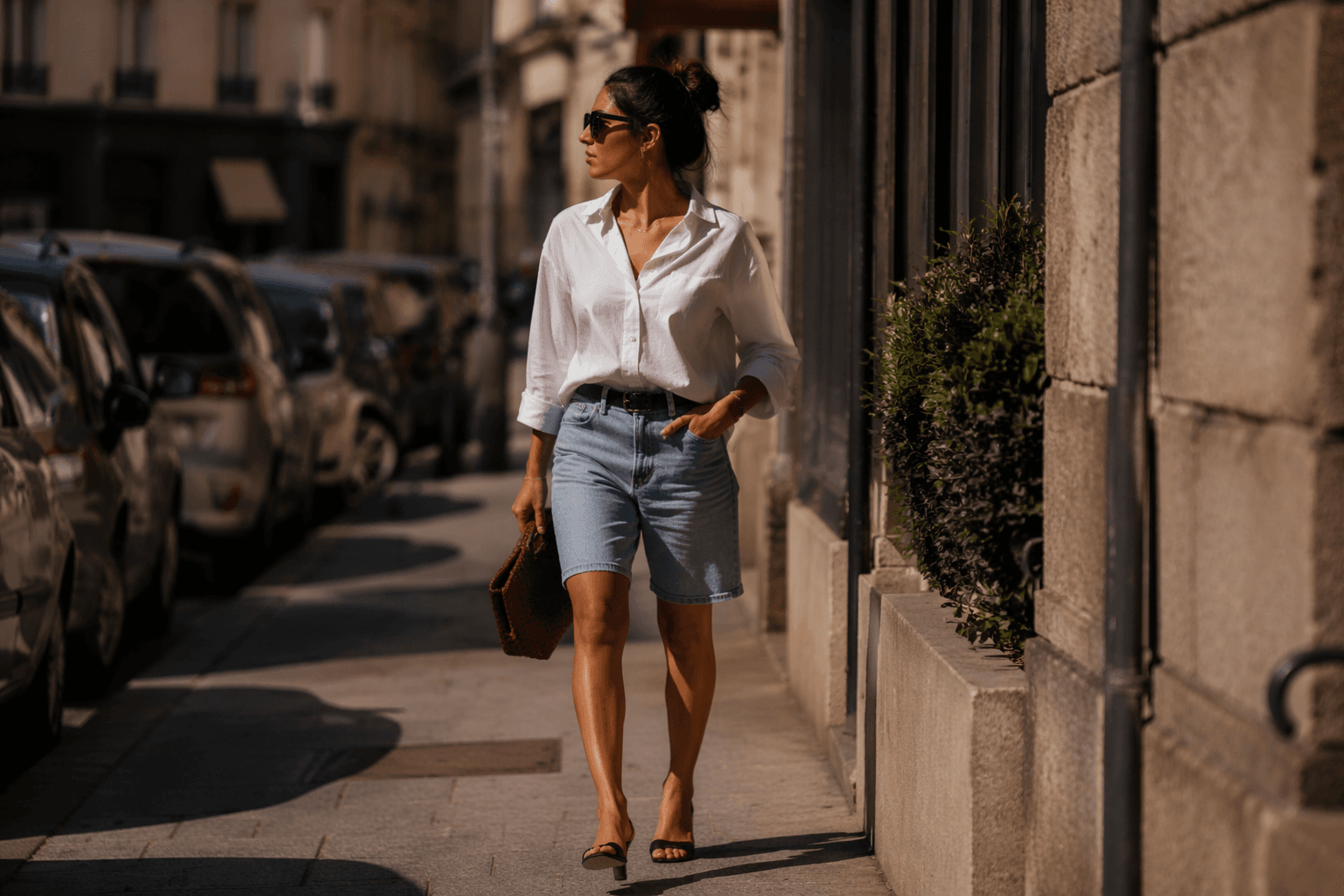
In practice, that means high-waisted bottoms, tucked tops, and cropped jackets become your easiest allies. A top that ends at the waistband, paired with a longer line from waist to hem, gives the body a vertical lift. Even a simple spring outfit looks more deliberate when the waist is visible and the proportions are controlled. The effect is subtle, but on a petite frame, subtle is often what creates the most expensive-looking result.
Midi lengths need careful placement, not avoidance
The wrong midi length is one of the fastest ways to lose shape. When a skirt or dress stops at the widest point of the calf, it can make the leg look shorter and the outfit feel boxy. But midis are not off-limits. They simply need to be placed with intention, so the hem either skims above the knee or falls lower on the calf where the leg regains visual length.
The best petite midi does not fight the body. It follows it. That may mean a dress with a defined waist and a hem that opens the leg line, or a skirt paired with a tucked knit so the top half stays neat. A flat shoe can work, but only if the rest of the silhouette is clean. When the hem, waist, and footwear all compete for attention, the frame disappears. When they cooperate, the body looks longer without looking forced.
Boxy tops need shape to earn their place
Spring brings a flood of easy shirts, oversize cotton, and relaxed knits, all of which can be lovely until they erase the waist. On petite women over 50, the trick is not to banish volume but to control it. A boxy top can work if it is shortened, partially tucked, or balanced against a slimmer bottom. Left to hang straight from the bust to the hip, it tends to flatten the body and add width where you do not want it.
Think of the solution as architecture. If the top is airy, the bottom should be grounded. If the blouse is loose, the sleeve should be manageable. If the fabric is soft and drapey, the line beneath it should stay crisp. That is why petite-friendly cuts matter so much. They reduce the need for tailoring and remove the guesswork that usually turns a promising spring piece into a closet orphan.
Wide-leg silhouettes work best when they are controlled
Wide-leg pants are often treated as intimidating on shorter women, but the real issue is not width. It is proportion. A wide-leg shape can be elegant on a petite frame if the waist is clearly defined and the leg begins high enough to lengthen the body. A high rise is crucial because it moves the visual starting point upward, which is exactly what the Rule of Thirds asks for.
The most flattering version is usually the one that looks almost effortless: a crisp trouser with a close fit at the waist, a top tucked or cropped to show the waistline, and a pant leg that falls cleanly rather than billowing. The wrong version is heavy at the hip, long at the hem, and loose everywhere else. Petite-specialty retailers such as Etela Petite exist because these distinctions matter so much. When the cut is right, wide-leg pants look modern and sharp. When the cut is wrong, they can feel like fabric with no frame.
Three spring formulas that flatter a shorter frame
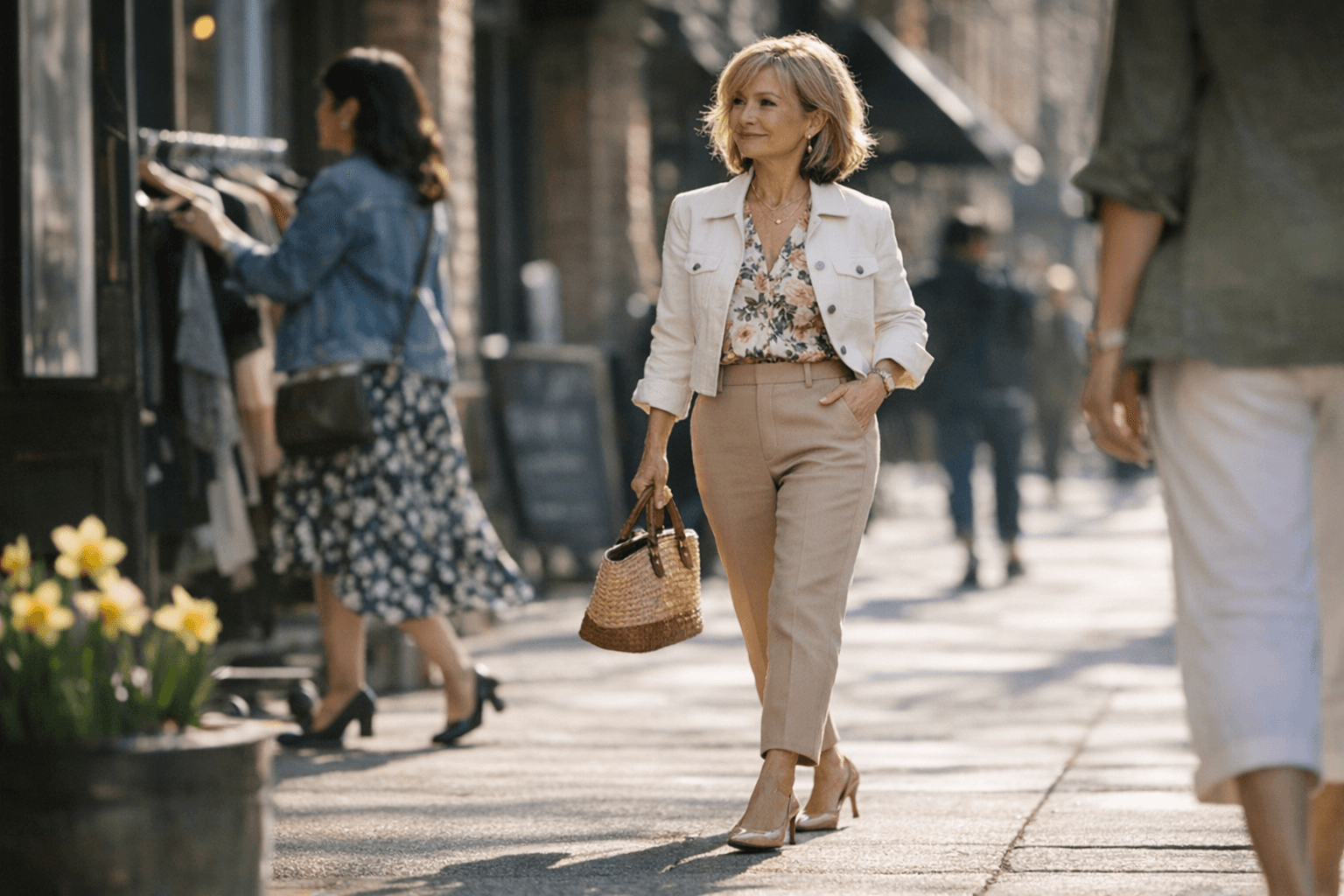
- A tucked blouse, high-waisted trouser, and cropped jacket. This is the easiest way to create the 1/3 to 2/3 balance that petite styling relies on.
- A fitted knit with a midi skirt that lands below the widest part of the calf. The waist stays visible, and the hem has room to breathe.
- A short jacket over a slim pant. The cropped layer restores shape immediately and keeps the eye moving upward.
These formulas work because they respect the body’s natural vertical line. They do not rely on gimmicks, and they do not require an aggressive makeover. They simply use proportion the way good tailoring does, quietly and effectively.
The real payoff is polish without tailoring fatigue
The best petite spring wardrobe is not one that looks petite in a literal sense. It is one that looks intentional. You want sleeves that stop where they should, hems that flatter rather than interrupt, and layers that sit on the body instead of drifting around it. That is why petite sizing remains so relevant: it reduces the need for constant alterations and makes polished dressing possible straight off the rack.
For women over 50, that matters even more. The most flattering clothes are often the ones that restore ease without sacrificing shape, and that is exactly what proportion-first dressing does. Spring should feel airy, but never vague. On a petite frame, the difference between the two is the line of a hem, the height of a waist, and the discipline to let every inch of fabric earn its place.
This article was produced by Prism’s automated news system from verified source data, official records, and press releases, then run through automated quality and moderation checks before publishing. The system is built and supervised by the people who set the standards it runs under. Read our full AI policy.
Did this article answer your question?