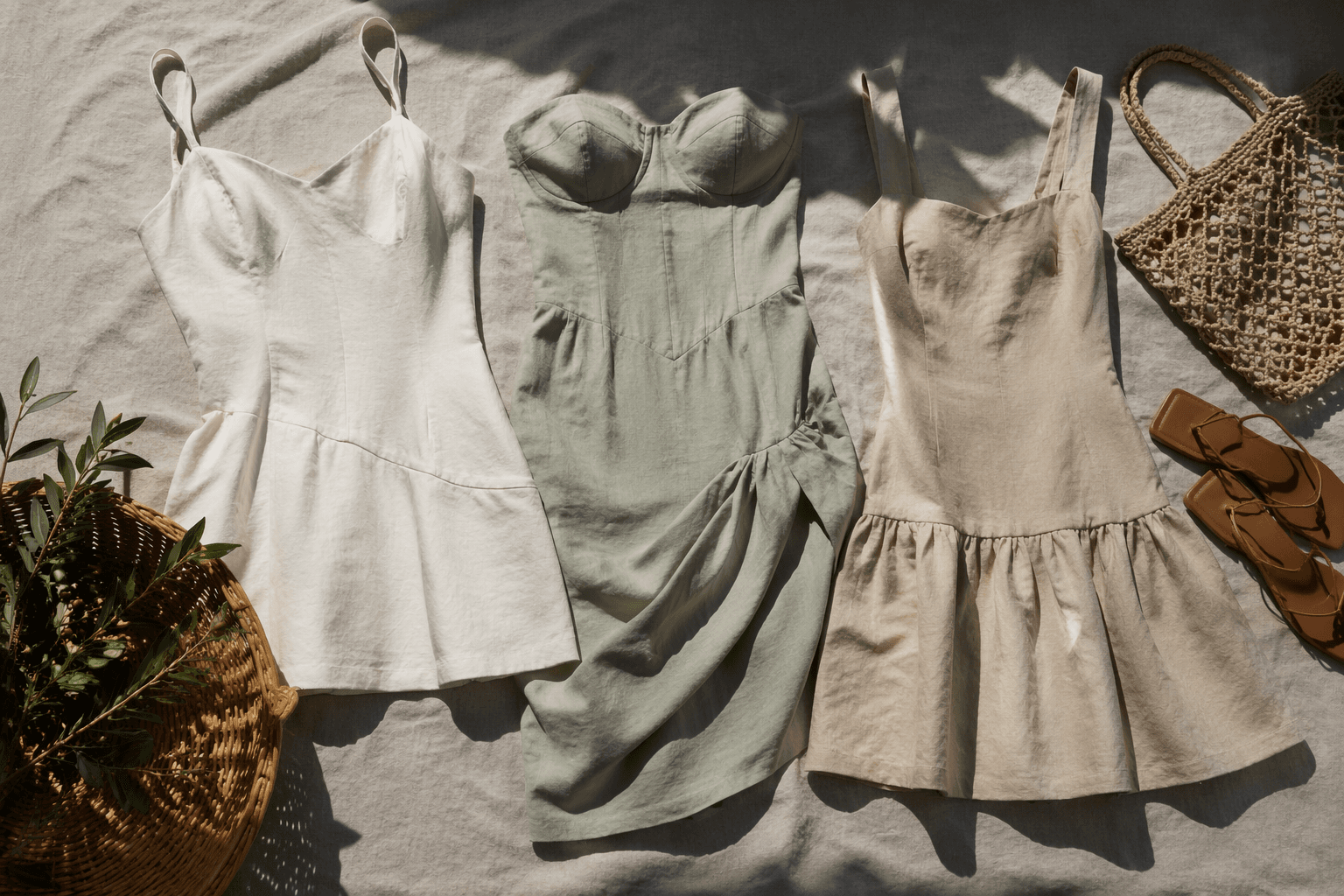
The New Era of Inclusive Fashion
The hems land wrong, the waist hits at the hip — but 40% of American women are petite, and the industry is finally designing for them from scratch.
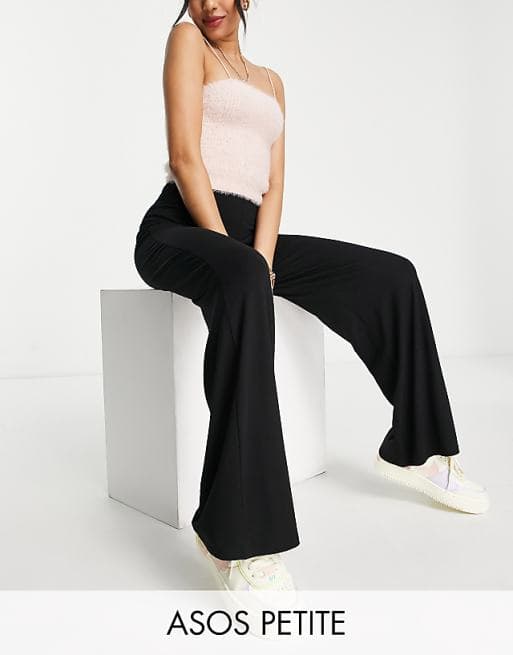
The hems land wrong. The waist hits at the hip. The sleeves swallow your hands. If you've ever tried on a dress that looked nothing like the model and everything like a costume, you already understand the central failure of fashion's relationship with petite frames. What's harder to swallow is that this failure is structural, not personal: for decades, most brands simply took a size 10 pattern and shortened it, never accounting for the fact that a shorter torso, a higher hip placement, and a narrower shoulder width are not just a scaled-down version of a taller body. They're a different body.
Here's the stat that should be on every design room wall: according to the National Center for Health Statistics, approximately 40% of American women are 5'3" or shorter. That's roughly 50 million people. And yet the industry that calls itself inclusive has historically fitted them as an afterthought.
That is beginning to change, and the shift goes deeper than a dedicated petite tab on a website.
What Real Inclusion Looks Like for a Short Frame
The conversation around inclusivity in fashion has broadened substantially, with petite shoppers now named explicitly alongside plus-size and adaptive wear communities as part of the industry's expanded understanding of who clothes are actually made for. But naming a group and designing for them are two different things. For petite bodies, real inclusion has a very specific checklist: it means sleeve lengths that end at the wrist rather than the knuckle; a trouser rise that sits at the natural waist rather than the ribcage; armholes placed for a narrower shoulder span; and a bodice length that doesn't swallow the torso.
The meaningful change happening now is at the pattern block level. Forward-thinking brands are creating separate petite pattern blocks from the start of the design process, rather than simply shortening the hem on a standard pattern after the fact. That distinction matters enormously. A shortened standard pattern keeps the pocket placement, the waist seam, and the sleeve pitch calibrated for a taller frame. A purpose-built petite block recalibrates all of those elements simultaneously. Brands are also beginning to cast real petite fit models during development, so that every sample is assessed on the body it's meant for before it ever reaches production.
This is not universal yet. But it is the benchmark against which every petite shopper should measure a brand's claims.
5 Questions to Ask Before You Buy
Use these as your pre-purchase rubric, whether you're shopping in-store or scrolling at midnight:
- Was this designed from a petite pattern block, or just hemmed down? Look for brands that explicitly mention petite-specific pattern development. If the brand's petite description only mentions shortened hem length, that's a red flag that the block underneath is still standard.
- What are the rise measurements? Trousers and skirts should state the rise in centimetres or inches. For petites, a mid-rise on a standard pattern often lands at the natural waist; the same label on a purpose-built petite block should land proportionally lower. Always compare numbers, not just labels.
- Are sleeve and inseam lengths listed separately? A brand serious about petite fit will publish sleeve lengths independently of the standard, and often offers multiple inseam options (typically 26–28 inches for trousers). A single truncated inseam is minimum compliance; multiple inseam options are genuine commitment.
- Can you see the product on a model your height? This is non-negotiable. A size 8 on a 5'10" model tells you nothing about how that dress will behave on a 5'2" frame. If the brand's photography only uses one body type, its petite line is likely marketing rather than design.
- Does the brand offer virtual fitting that previews torso length? This is the new frontier, and it matters more than most shoppers realise.
The Technology Closing the Gap
Virtual fitting tools are becoming genuinely useful for petite shoppers in ways they haven't been before, and the reason is specificity. Earlier-generation try-on features simply overlaid a garment image onto a stock photo. Newer platforms, including Reactive Reality, build a personalised avatar from a shopper's own measurements, meaning that torso length and rise can be assessed before anything ships. For petite shoppers, this is transformative: you can see exactly where a waist seam will land on your body, how long a sleeve will run, and whether the skirt hem will cut you at mid-thigh or knee before you commit to a purchase. As brands invest more in AI-powered recommendations calibrated to body proportion (not just dress size), the online shopping experience for petite frames is improving at a pace that has no recent precedent.
3 Tailoring Hacks Worth Knowing
Even the best-intentioned petite range will occasionally miss your specific proportions. A good tailor is still your most powerful tool; knowing what to ask for makes the visit more productive.
- Start with the shoulders, not the hem. Shoulder seam adjustments are the single highest-impact alteration for petite frames, because taking in the shoulder simultaneously repositions the sleeve pitch and armhole placement. Fix the shoulder first, and the sleeve length often corrects itself by an inch or more.
- Adjust the rise before you hem. On trousers and skirts, taking up the waistband or shortening the rise brings the garment into proportion from the top down. Hemming first, then discovering the waist sits wrong, means you'll pay for two rounds of alterations.
- Use a virtual fitting tool before the tailor, not after. If you can identify which specific measurements are off before purchasing, you can factor alteration costs into your decision and arrive at the tailor with a clear brief rather than a vague "it just doesn't sit right."
The Proportion-First Future
The industry is beginning to recognise that "petite" is not a niche. With an estimated global petite apparel market of $48 billion, it is a mainstream segment that has been historically under-served by design rather than by demand. The most significant shift on the horizon is proportion-first design: the principle that silhouette and measurement ratios are established before a design is scaled, not as a corrective afterthought. When that approach becomes the standard rather than the exception, the experience of shopping for a petite frame will finally match the experience that taller shoppers have always taken for granted. The hems will land right. The waist will sit where it should. And the sleeves will end exactly where your wrists begin.
Here is the complete, publication-ready article:
SUMMARY: The hems land wrong, the waist hits at the hip — and yet 40% of American women are petite. The industry is finally designing for them from scratch.
CONTENT:
The hems land wrong. The waist hits at the hip. The sleeves swallow your hands. If you've ever tried on a dress that looked nothing like the model and everything like a costume, you already understand the central failure of fashion's relationship with petite frames. What's harder to swallow is that this failure is structural, not personal: for decades, most brands simply took a size 10 pattern and shortened it, never accounting for the fact that a shorter torso, a higher hip placement, and a narrower shoulder width are not just a scaled-down version of a taller body. They're a different body entirely.
Here's the stat that should be pinned to every design room wall: according to the Centers for Disease Control and Prevention, the average height for an adult female is approximately 5'4", and 40% of all American women are 5'3" or shorter. According to the National Center for Health Statistics, that's approximately 50 million women. And yet the industry that calls itself inclusive has historically fitted them as an afterthought.
That is beginning to change, and the shift goes deeper than a dedicated petite tab on a website.
What Real Inclusion Looks Like for a Short Frame
The conversation around inclusivity in fashion has broadened substantially, with petite shoppers now named explicitly alongside plus-size and adaptive wear communities as part of the industry's expanded understanding of who clothes are actually made for. But naming a group and designing for them are two different things. For petite bodies, real inclusion has a very specific checklist: sleeve lengths that end at the wrist rather than the knuckle; a trouser rise that sits at the natural waist rather than the ribcage; armholes placed for a narrower shoulder span; and a bodice length that doesn't compress the torso.
The meaningful change happening now is at the pattern block level. Forward-thinking brands are creating separate petite pattern blocks from the start of the design process, rather than simply shortening the hem on a standard pattern after the fact. That distinction matters enormously. A shortened standard pattern keeps the pocket placement, the waist seam, and the sleeve pitch calibrated for a taller frame. A purpose-built petite block recalibrates all of those elements simultaneously. Brands are also beginning to cast real petite fit models during development, so that every sample is assessed on the body it's made for before it ever reaches production.
Petite sizing focuses on proportion, not weight — and the brands genuinely committed to this category understand that those are two entirely different design briefs.
5 Questions to Ask Before You Buy
Use these as your pre-purchase rubric, whether you're shopping in-store or scrolling at midnight:
- Was this designed from a petite pattern block, or just hemmed down? Look for brands that explicitly mention petite-specific pattern development. If the brand's petite description only references a shortened hem length, that's a clear signal that the block underneath is still built for a standard frame.
- What are the exact rise measurements? Trousers and skirts should state the rise in centimetres or inches. A mid-rise label on a standard pattern often lands at the natural waist of a petite wearer; that same label on a purpose-built petite block should land proportionally lower. Always compare numbers, not just labels.
- Are sleeve and inseam lengths listed independently? A brand serious about petite fit publishes sleeve lengths separately, and frequently offers multiple inseam options (typically 26 to 28 inches for trousers). A single truncated inseam is minimum compliance. Multiple inseam options signal genuine design commitment.
- Can you see the product on a model your height? This is non-negotiable. A size 8 on a 5'10" model tells you nothing about how a dress will behave on a 5'2" frame. If the brand's photography uses only one body type across its entire petite line, the range is likely a marketing exercise rather than a design one.
- Does the brand offer virtual fitting that previews torso length and rise? This is the new frontier in petite shopping, and it matters more than most buyers realise.
The Technology Closing the Gap
Virtual fitting tools are becoming genuinely useful for petite shoppers in ways they haven't been before, and the reason is specificity. Earlier-generation try-on features simply overlaid a garment image onto a stock photo. Newer platforms, including Reactive Reality, allow customers to create their own personalized AI avatars, meaning torso length and rise can be assessed before anything ships. For petite shoppers, this is transformative: you can see exactly where a waist seam will land on your body, how long a sleeve will run, and whether a skirt hem will cut you at mid-thigh or knee before you commit to a purchase. As brands invest more in AI-powered recommendations calibrated to body proportion rather than dress size alone, the online shopping experience for petite frames is improving at a pace that has no recent precedent.
3 Tailoring Hacks Worth Knowing
Even the best-intentioned petite range will occasionally miss your specific proportions. A good tailor remains your most powerful tool; knowing what to ask for makes the visit more productive.
- Start with the shoulders, not the hem. Shoulder seam adjustments are the single highest-impact alteration for petite frames, because taking in the shoulder simultaneously repositions the sleeve pitch and armhole placement. Fix the shoulder first, and the sleeve length often corrects itself by an inch or more without a separate alteration.
- Adjust the rise before you hem. On trousers and skirts, shortening the rise brings the garment into proportion from the top down. Hemming first and then discovering the waist sits wrong means paying for two rounds of alterations; always work top to bottom.
- Use a virtual fitting tool before the tailor, not after. If you can identify which specific measurements are off before purchasing, you can factor alteration costs into your buying decision and arrive at the tailor with a clear, targeted brief.
The Proportion-First Future
The industry is beginning to reckon with the fact that "petite" is not a niche. The petite apparel market represents an estimated $48 billion share within the global apparel industry, which is projected to reach $1.84 trillion in 2025. That is not afterthought territory. The most significant shift on the horizon is proportion-first design: the principle that silhouette and measurement ratios are established at the start of the design process, not corrected at the end of it. When that approach becomes the industry standard rather than the exception, shopping for a petite frame will finally match the experience that taller shoppers have always taken for granted. The hems will land right. The waist will sit where it should. And the sleeves will end exactly where your wrists begin.
This article was produced by Prism’s automated news system from verified source data, official records, and press releases, then run through automated quality and moderation checks before publishing. The system is built and supervised by the people who set the standards it runs under. Read our full AI policy.
Did this article answer your question?