Why petite shoppers still struggle with sleeves, hems and fit
Petite fit is not a niche complaint. The industry knows the demand is there, but too many brands still leave shorter shoppers fighting sleeves, hems and proportions.
The cost of bad grading
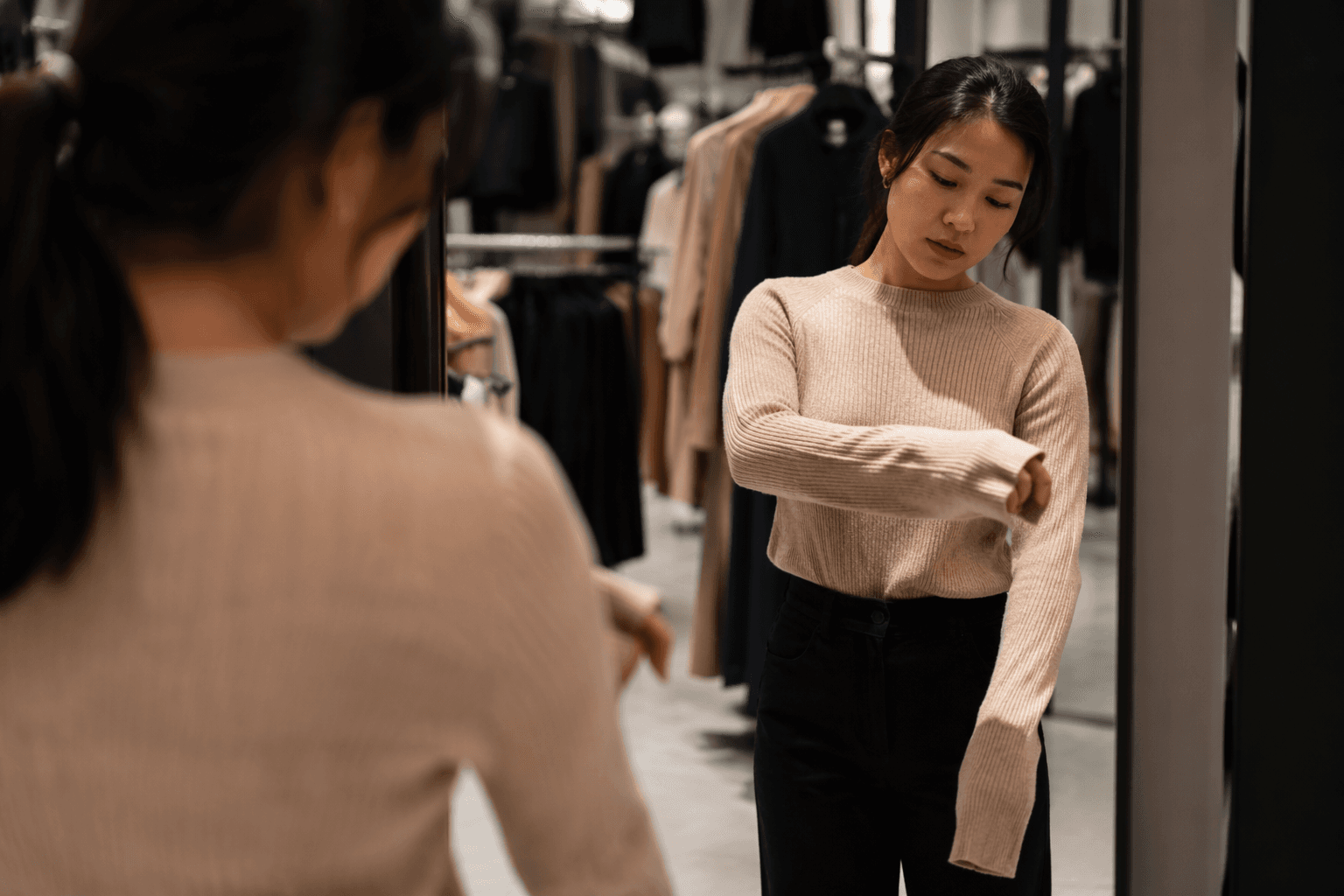
Petite shoppers feel bad fit in the most ordinary ways: sleeves that swallow the hand, pant hems that collect on the floor, waistlines that land in the wrong place and make a whole outfit look slightly off. That is the real issue here, not a lack of style appetite. Petite fashion keeps failing at the point where clothing meets the body, and the everyday frustration is the clearest proof that the industry has treated this customer as an afterthought.
The numbers make the neglect hard to excuse. The CDC says the average height of U.S. adult women is 63.5 inches, or about 5 feet 3.5 inches. Fashion coverage commonly defines petite as 5'4" and under, which means a large share of adult women fall into the category. The CDC also reports that the average adult woman now weighs 171.8 pounds, a reminder that petite dressing is not just about shortening inseams and sleeves. It is about proportion, balance and the shape of the whole garment.
Why petite design is a proportion problem
A good petite garment does more than cut fabric off the hem. It rethinks where the waist sits, how a sleeve falls across the arm, how a trouser breaks at the ankle and how volume is distributed through the torso. When brands ignore that, the result is familiar: a blouse that bunches at the wrist, a blazer that overwhelms the shoulder, jeans that drag no matter how expensive they are.
That is why petite shoppers do not respond to vague promises of inclusive sizing. They need clothing designed with shorter frames in mind from the start, not resized as an afterthought. The difference is visible immediately. A petite jacket should look sharp and contained, not truncated. A petite pant should skim, not puddle.
A market big enough to demand better
This is not a fringe customer base looking for special treatment. Forbes reported that the U.S. women’s apparel market was projected to reach $191.4 billion in 2024, and it noted that women 5'4" or shorter are considered petite. That is a huge addressable audience for a category that still gets treated like a niche rack at the back of the store.
The complaint is also not new. Fashionista was asking why more brands did not carry petite sizes back in 2014, when only a handful of retailers were selling petite clothing and petite sizing was still being defined as designed for a maximum height of 5'3" or 5'4". Go back even further and the pattern is clearer still. A 1995 WWD piece described a Petite Buying Group of 40 retailers of petite apparel across the country, which shows that organized retail attention has existed for decades. The problem has never been whether the need was real. It has been whether brands wanted to serve it.
The founders who turned a fit complaint into a business
That is where the specialist brands become the most useful proof. Jenny Wang-Howell, the founder of Petite Studio, moved to New York from China in 2013 and kept running into the same problem: sleeves were too long and pants dragged. She also saw petite offerings at multi-brand retailers as an afterthought, and that frustration shaped the brand she built. Petite Studio exists because the market kept missing the basic mechanics of fit.
Nelle Atelier tells the same story from a different angle. The brand launched in November 2023 with denim for women under 5'4", reported a 40% repeat-customer rate and later named Nordstrom as its first major retail partner. That combination matters. Repeat business shows the fit is not a novelty purchase. A major retail partner shows the category is commercially viable, not merely emotionally resonant.
Mainstream brands are proving they can do more
The clearest evidence that petite is a real business opportunity is that larger brands have already started to act when they decide the segment matters. Spanx launched its first petite shapewear in 2023 and said petite consumers had long been frustrated by garments that rolled down and legs that were too long. That is a fit problem with a direct solution, and Spanx understood that shorter shoppers were not asking for a token extension. They were asking for garments that stay put.
Mother Denim followed with Lil’ Mother in October 2023, its first petite collection, made for women 5'4" and under. Denim is one of the hardest categories to get right for shorter frames because proportion failures show instantly in the rise, the knee placement and the hem. A petite jean works when it looks tailored, not clipped.
Old Navy offered another important example with its 2021 Bodequality initiative, which expanded women’s sizing and removed the separate plus-size section in stores and online. The lesson is simple: when a major retailer decides fit is a priority, it can rework structure at scale. Petite shoppers have been asking for that same seriousness for years.
What to look for when the fit is finally right
If a brand is truly designing for petite proportions, the clues show up fast:
- Sleeves end where your wrist actually is, not halfway over your hand.
- Pants break cleanly at the shoe instead of dragging and fraying.
- Waistlines sit where they should, rather than hovering too low on the torso.
- Jackets, dresses and tops keep their shape without drowning the frame.
- Denim and tailoring feel balanced through the rise, seat and knee, not merely shortened.
That is the difference between a garment that has been resized and one that has been designed. Petite fashion works best when it looks intentional, crisp and compact, with every proportion adjusted so the eye reads the body first and the excess fabric never gets the last word.
Petite shoppers are not a tiny side market. They are a large, persistent and historically underserved customer base whose fit frustrations have already prompted specialist labels and mainstream launches. The industry knows how to solve the problem. The only question left is whether more brands are willing to build for it from the beginning instead of asking shorter women to keep paying for the alteration rack.
This article was produced by Prism’s automated news system from verified source data, official records, and press releases, then run through automated quality and moderation checks before publishing. The system is built and supervised by the people who set the standards it runs under. Read our full AI policy.
Did this article answer your question?