7-Eleven sues Nike over Air Max 95’s orange and green stripes
7-Eleven has taken Nike to federal court over an Air Max 95 colorway it says echoes its orange, green and red striping, just as the $200 sneaker nears a July 11 drop.

7-Eleven, Inc. filed suit against Nike, Inc. on July 1 in the U.S. District Court for the Northern District of Texas, accusing the sportswear giant of borrowing too heavily from the convenience chain’s unmistakable orange, green and red visual code. The shoe at the center of the dispute is the Air Max 95 Big Bubble in a Sport Green and Safety Orange colorway, a $200 release scheduled for July 11, and 7-Eleven says the palette is close enough to suggest an official collaboration or endorsement.
The timing is what gives the case its immediate bite. July 11 is not just Nike’s launch date; it is also 7-Eleven Day and Free Slurpee Day, when the chain gives away free small Slurpees at participating U.S. stores. In 2026, the drink brand turns 60, a milestone that only sharpens the overlap between a sneaker release and one of the company’s most recognizable promotions.
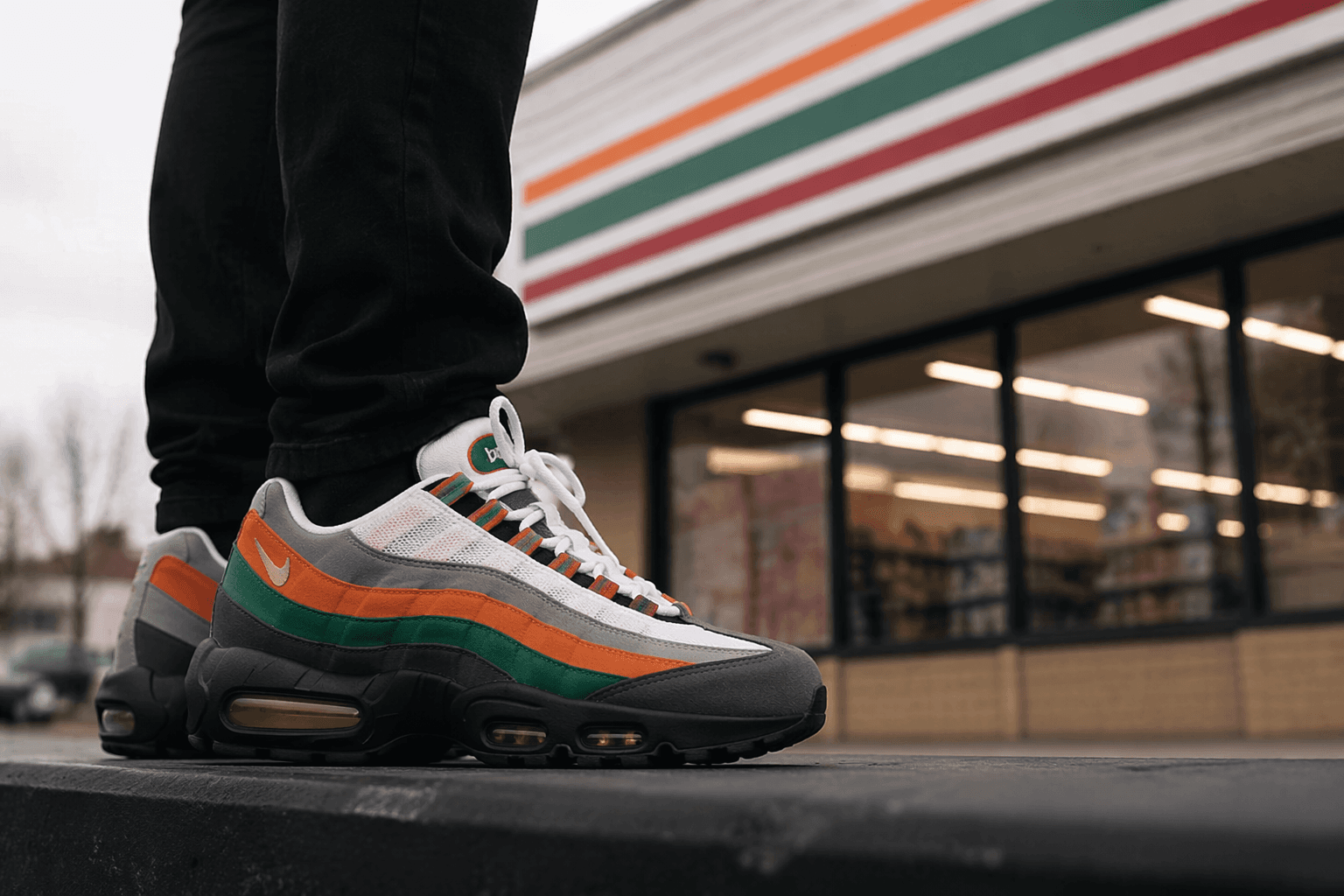
7-Eleven’s trademark filing for its Tri-Color Mark lays out the look it is defending: orange, green, red and white, with orange, green and red stripes appearing in the registered design. That is the visual territory Nike is now accused of crossing. In 7-Eleven’s telling, the Air Max 95 does not merely nod to the store chain’s colors; it risks confusing buyers into thinking the shoe is tied to the retailer in an official way.
The complaint reportedly asserts seven causes of action, including federal trademark infringement, federal dilution, federal unfair competition and Texas common-law trademark infringement. 7-Eleven is also seeking relief that would stop the release and pull inventory already in the market, a remedy that would hit hardest in the narrow window before the July 11 drop. Nike had not publicly responded in the available reporting.

For sneaker brands, the case is a blunt reminder that color can carry as much legal weight as a logo. The Air Max 95 silhouette may be the canvas, but the dispute turns on how far a brand can push a familiar striping language before a court decides the look has stopped being referential and started becoming a liability.
This article was produced by Prism’s automated news system from verified source data, official records, and press releases, then run through automated quality and moderation checks before publishing. The system is built and supervised by the people who set the standards it runs under. Read our full AI policy.
Did this article answer your question?