adidas and United Airlines unveil employee-only Samba for centennial celebration
United turned its centennial into a Samba, with blue striping, globe-stamped heels and an employee-only release that makes the shoe feel like a private badge.

adidas and United Airlines turned a corporate birthday into something far more wearable than a plaque or a luncheon: a limited-edition Samba with United Blue striping, the airline’s globe logo on the left heel and a gold “100 years” mark on the right. On a silhouette as lean and recognizable as the Samba, those details read less like souvenir graphics than a status code, the kind of small-batch touch that streetwear collectors notice immediately.
For now, the shoe is being offered only to United employees through the airline’s shop, which is exactly what gives it tension. The Samba is built for broad, democratic appeal, yet this pair is being held behind an internal gate, turning a familiar sneaker into a morale piece before it can become a retail object. Broader release plans have not been confirmed, and that uncertainty only sharpens the appeal: in a market that prizes access almost as much as design, an employee-only run can matter more than a public drop.
United’s centennial reaches back to April 6, 1926, when Varney Air Lines began serving as an airmail carrier from Boise, Idaho, under Walter Varney. United later adopted 1926 as its founding year after acquiring Varney Air Lines in 1930 and establishing United Airlines, Inc. in Chicago in 1931 as a holding company. That history gives the sneaker more substance than a standard anniversary collab. The heel hits do real archival work, condensing a complicated airline origin story into two small, highly legible marks.
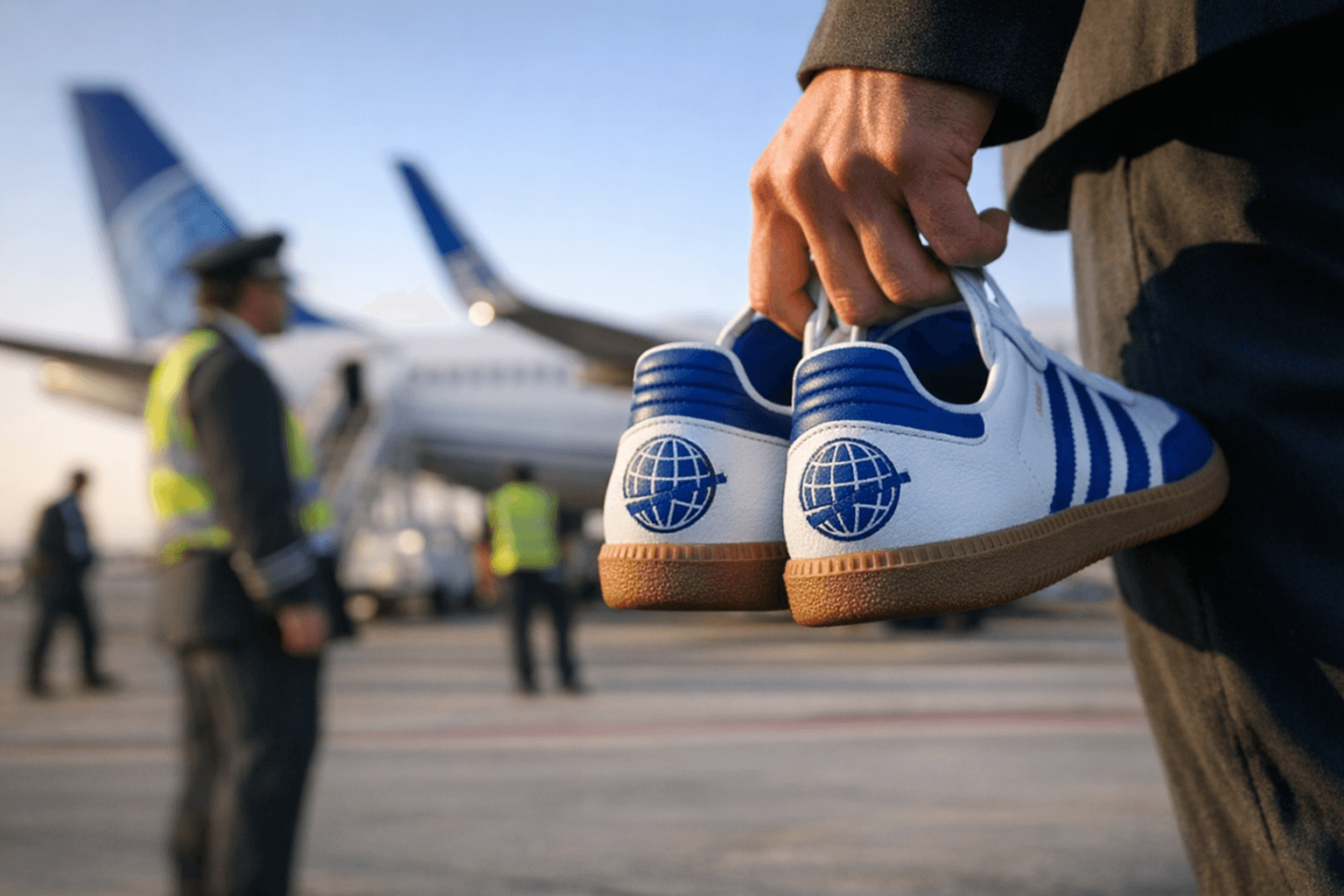
Mark Muren, United’s brand executive, said the collaboration was intended as a meaningful way to celebrate the airline’s history and the people behind it. That framing matters because United’s 100th anniversary has arrived with comparatively little fanfare, especially beside the big theatrical gestures other centennial-minded brands have used. The Samba becomes the loudest consumer-culture signal in the celebration, and also the most revealing: travel branding is no longer content to live on luggage tags and amenity kits. It is moving onto the same shelves, and into the same closets, as the sneakers that signal taste, access and affiliation.
This article was produced by Prism’s automated news system from verified source data, official records, and press releases, then run through automated quality and moderation checks before publishing. The system is built and supervised by the people who set the standards it runs under. Read our full AI policy.
Did this article answer your question?