Arc'teryx turns its deadbird logo into a bold summer flex
Arc'teryx's latest windshell turns the deadbird into a billboard, with Summer '26 prices from $180 to $220 on the brand's site.
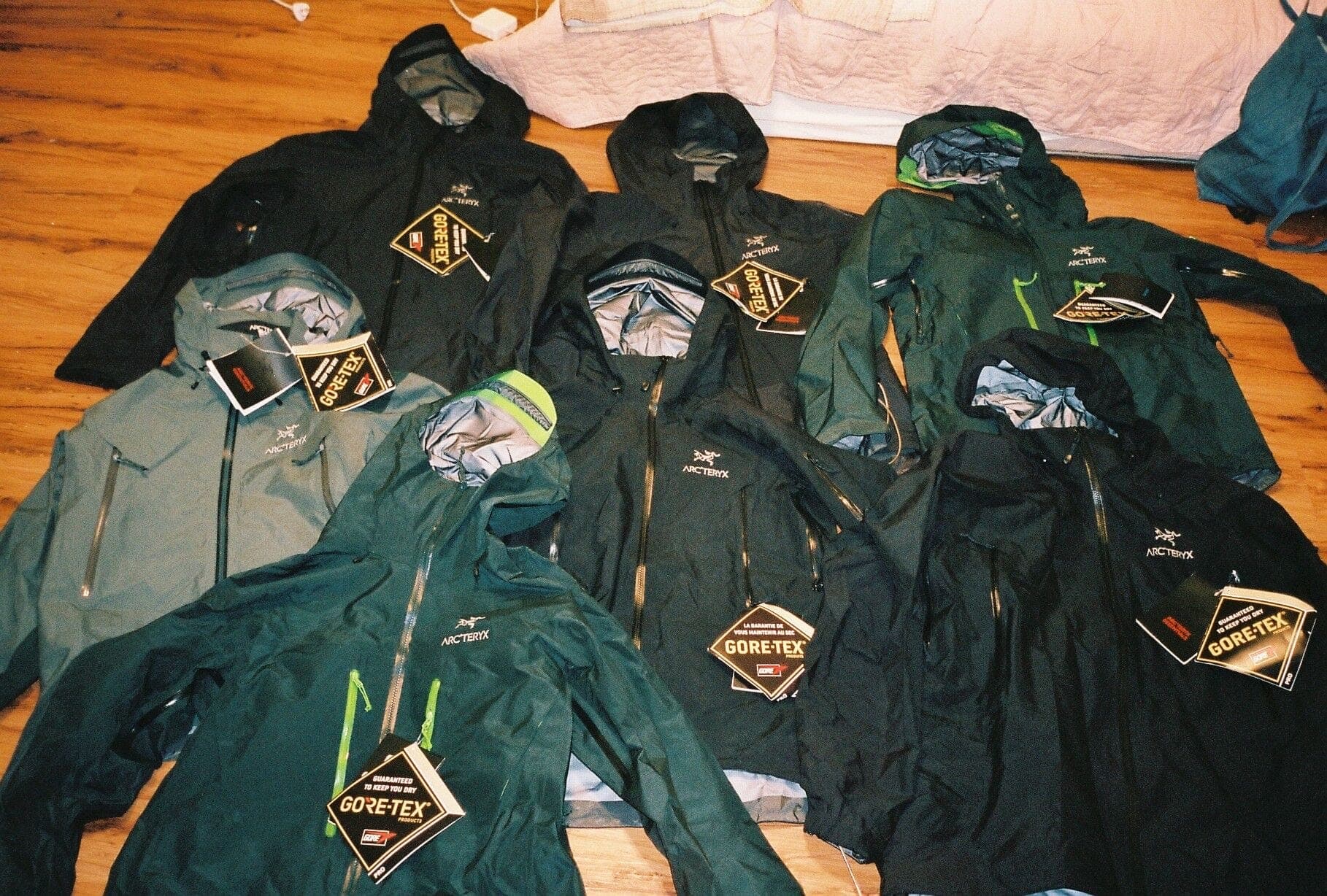
Arc'teryx has taken the quietest piece in its summer toolkit and made it shout. The new windshell stretches the Deadbird logo and the brand name across the sleeves, turning an ultra-light layer into a loud, performative flex that sits somewhere between alpine kit and streetwear statement. It lives inside Arc'teryx’s Summer ’26 push on the brand’s site, where the men’s windshell lineup runs from the $180 Squamish Jacket to the $220 Norvan Windshell Hoody.
The deadbird goes from signal to billboard
For years, Arc'teryx’s bird skeleton logo worked like a private wink. In fashion and streetwear circles, the fossil mark picked up the nickname “deadbird,” and the appeal was always partly restraint: if you knew, you knew. This new windshell flips that logic. The logo is no longer a small badge tucked near a hem or chest, but a graphic presence that announces itself across the sleeves, which makes the jacket feel deliberately performative.
That matters because Arc'teryx has already crossed the line from mountain specialist to fashion shorthand. Palace x Arc'teryx in FW20 was one of the collaborations that made the brand legible to a wider streetwear audience, and the Jil Sander partnership became another watershed moment in that rise. Once a technical label is treated like a fashion object, loud branding stops being a mistake and starts looking like strategy.
What Arc'teryx means by a windshell
Strip away the graphic treatment and the garment still behaves like a windshell, which is to say it is built for movement rather than weather heroics. Arc'teryx describes windshells as ultra-lightweight, packable wind protection for fast-moving alpine pursuits and trail running. Most styles use a DWR finish, so they are meant to shed light moisture rather than stand in for a full rain shell.
That distinction is central to how the piece reads. A windshell is not meant to feel armored; it is meant to disappear into a pack, then come out when the air turns sharp on a ridge, a trail, or a breezy city walk that needs just enough protection to take the edge off. Arc'teryx’s own lineup makes that clear in the names and prices alone:
- Squamish Jacket, $180
- Squamish Hoody, $200
- Norvan Windshell Hoody, $220
The revised Squamish Hoody is pitched as a lightweight hooded windshell for rock climbers, while the Norvan Windshell Hoody is described as the brand’s lightest trail-running windshell. That ladder of price and use case tells you where Arc'teryx still wants to anchor its credibility: in function first, then in style.
Why the logo suddenly wants attention
The louder branding is not happening in a vacuum. Arc'teryx has been building out a city-facing language for years through Veilance, the minimalist urban line it founded in 2009. Veilance applies the brand’s technical construction to climate-controlling systems with a cleaner, quieter profile, which makes the new logo-heavy windshell even more interesting: Arc'teryx already knows how to speak softly to the city, so choosing to shout now is a conscious move.

The brand’s site language reinforces that shift. “Shells for summer” and “Summer ’26” are not the phrases of a label trying to stay locked inside winter mountaineering. They frame lightweight outerwear as part of warm-weather dressing, which puts the windshell in the same conversation as overshirts, layerable street jackets, and the kind of midseason pieces that get worn for style as often as for weather.
That is where the deadbird becomes status language. In streetwear, conspicuous branding is not just about recognition; it is about readability. A bigger logo means the jacket no longer relies on niche knowledge to do its job. It can register instantly to someone who has never heard of a DWR finish, while still signaling to the devoted that this is Arc'teryx doing Arc'teryx, only louder.
From North Vancouver to the city block
The irony is that the brand has always had a serious, almost academic identity. Arc'teryx was founded in 1989 as Rock Solid, then rebranded in 1991. Its name comes from Archaeopteryx lithographica, the link between dinosaurs and avian successors, and the brand says it represents “accelerating evolution.” That origin story is a reminder that the logo was never just decoration; it was a symbol of technical ambition.
Born in North Vancouver, British Columbia, Canada, the label’s core language has been one of precision and utility. Yet its cultural life has expanded far beyond alpine terrain. Chamonix remains the kind of place where an Arc'teryx shell still looks perfectly at home, but the brand now reads just as fluently in the city, where a bolder logo can act like a badge of taste instead of a badge of technical correctness.
That crossover has serious commercial weight behind it. Amer Sports said Arc'teryx surpassed $2 billion in sales in 2024, and in 2025 reporting the brand remained the company’s flagship growth engine. Once a logo becomes this visible, it is no longer just branding for the faithful. It is a scalable visual code that can move from core outdoor devotees to a broader streetwear audience without needing to explain itself.
Why louder branding works now
Arc'teryx’s newest windshell is not trying to be subtle, and that is exactly the point. The jacket still offers the things the brand is known for, light weight, packability, wind protection, a DWR finish, but it wraps those features in a visual punch that changes how the piece lands. On the trail, it is technical kit; on the street, it is a flex.
That dual use case is where Arc'teryx’s summer play makes sense. The brand has already proven it can do quiet luxury through Veilance and high-fashion crossover through Palace and Jil Sander. Making the deadbird impossible to miss is the next logical move, because it lets the shell carry both meanings at once: useful enough for the mountains, loud enough for the sidewalk, and visible enough to keep Arc'teryx at the center of the streetwear conversation.
This article was produced by Prism’s automated news system from verified source data, official records, and press releases, then run through automated quality and moderation checks before publishing. The system is built and supervised by the people who set the standards it runs under. Read our full AI policy.
Did this article answer your question?