Brain Dead and Fox Lab revive Fox Racing's '90s moto style
Brain Dead turns Fox Racing’s ’90s moto codes into summer streetwear with graphic tees, jersey layers, and nylon pieces that feel archival and current.
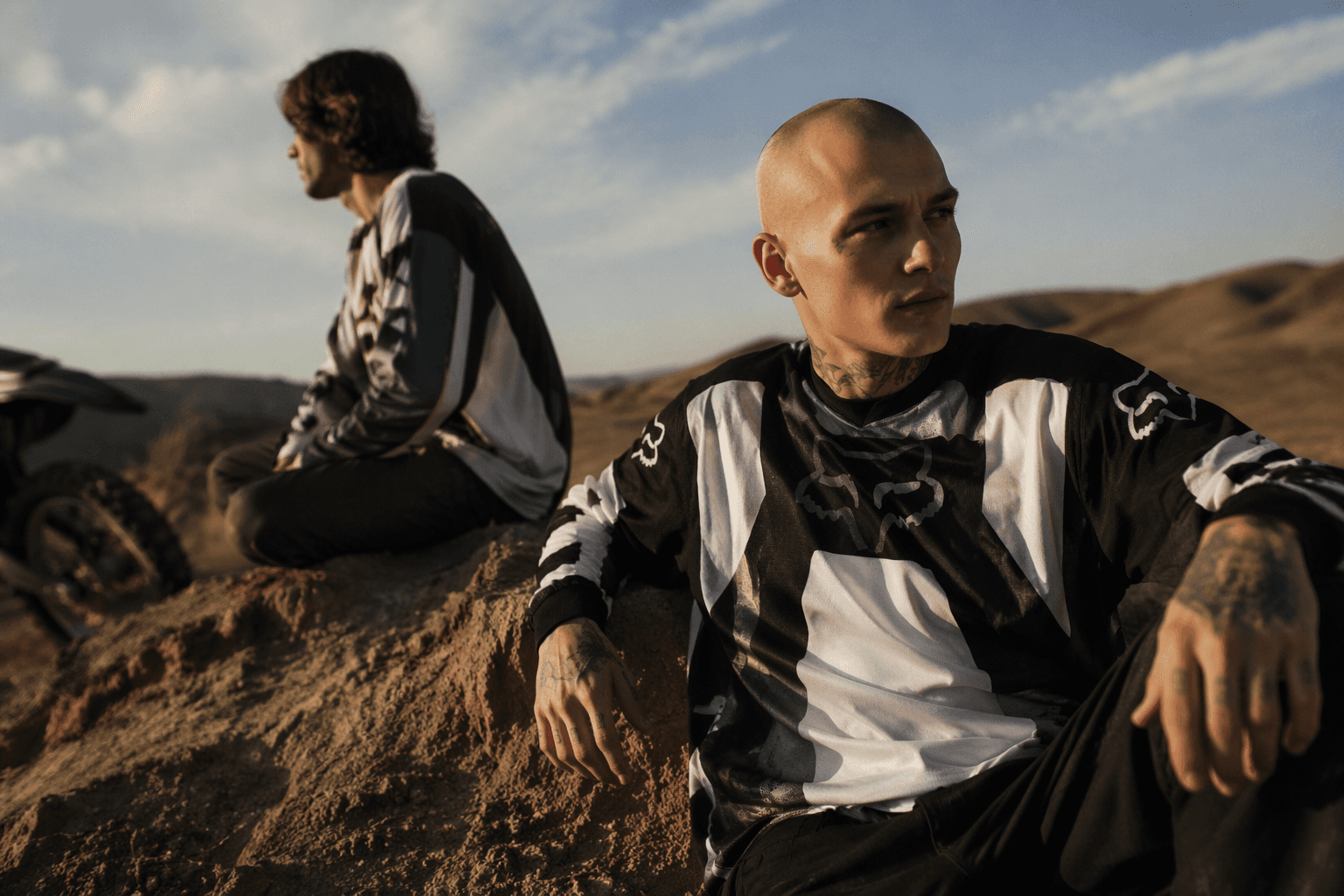
Brain Dead and Fox Lab have done more than borrow from motocross nostalgia. They have translated Fox Racing’s ’90s Southern California identity into a 17-piece summer capsule that looks built for the street first and the track second, with graphic tees, jerseys, pants, and nylon layers carrying the load. The result feels less like a simple collab and more like a subculture remix: Fox’s racing language filtered through Brain Dead’s art-school sensibility, then sharpened into something you can wear in heat without losing the bite of the archive.
A revival that understands the code
What makes this capsule work is that it does not treat moto style as costume. The collection leans into the visual grammar that made Fox Racing resonate in the first place, then pulls it through a contemporary streetwear lens that feels deliberately varied rather than over-designed. That looseness matters. In a market full of collaborations that flatten heritage into logo trade, this one keeps the tension alive between racer utility, Southern California attitude, and Brain Dead’s more experimental eye.
Fox Racing’s own identity is a big part of the appeal. The brand describes itself as the “most recognized and best-selling MX & MTB brand” and says its apparel is the choice of action sports athletes. That heritage gives the collaboration weight, while Brain Dead keeps it from reading like a museum exercise. The partnership lands because both names understand subculture as style language, not just product category.
Three artists, three different registers
The capsule’s strongest idea is its split authorship. Rather than unify the graphics into one house style, Brain Dead and Fox Lab hand the visuals to three artists, and the variety gives the collection its edge. Antonio Aiello applies a faded 1990s internet-era treatment to the fox head on graphic tees, which softens Fox iconography into something that feels recovered from an old message board or an archived racer forum. It is nostalgic, but with the kind of digital wear that makes nostalgia look lived-in rather than precious.
Alex Petty takes the long-sleeve jerseys into a cyber direction, adding a sharper, more synthetic mood that pushes the collection away from pure retro. On a jersey, that matters: the silhouette already carries sporting credibility, so the graphics can become more aggressive, more visual, more future-leaning. Alehsy Lambo’s cotton longsleeve uses airbrushed wildstyle lettering, which brings in a different kind of subcultural memory, closer to hand-painted West Coast expressionism than to clean branded merch.
That three-way split keeps the capsule from collapsing into one retro theme. Instead, it feels like a conversation between old race graphics, internet-age distortion, and street-art flourish.
The pieces that make it wearable now
The Fox LAB pages show the capsule stretches beyond the headline tees and jerseys into a much fuller wardrobe. Alongside the 17-piece core, the lineup includes a hooded jacket, paneled pants, a racing tee, an airbrushed tee, a logohead jersey, a quasi flame jersey, a tribal long sleeve top, denim pants, cargo shorts, and an Instinct boot. That breadth is what turns the collection from a collector’s drop into a real summer wardrobe with range.
The most convincing pieces are the ones that keep Fox’s performance DNA intact while making room for everyday wear. Jerseys sit around $139 to $149, which places them firmly in premium streetwear territory but still below the kind of luxury-adjacent pricing that can make graphic sportwear feel self-conscious. The pants, priced around $310 to $395, push the capsule into more serious territory, especially when compared with standard motocross or skate-adjacent basics. The hooded jacket lands at $495, and the Instinct boot hits $699.95, a clear reminder that Fox Lab is not playing purely at entry-level fashion.
The sweet spot here is the tension between utility and display. Paneled pants, cargo shorts, and nylon layers suggest movement and weather resistance, while the graphic tees and jerseys carry the visual shorthand that makes the collaboration recognizable from across a room. For summer, that balance is essential: the collection has enough air in it to feel easy, but enough structure and surface detail to keep the moto reference alive.
Why the collection reads as culture, not just product
Fox Lab presents the drop as a limited-edition release with limited quantities available, which reinforces the sense that this is meant to function as a season-specific statement rather than a permanent line extension. That scarcity is familiar in streetwear, but here it also mirrors the exclusivity of racing culture itself, where special kits and one-off graphics often carry more emotional charge than standard teamwear.
Ken Roczen wearing a special graphic kit from the collection at Round 15 of Philadelphia Supercross on April 25 gave the capsule a different kind of legitimacy. He won that race and ultimately claimed the 2026 AMA Supercross Championship, so the clothing is not only referencing motocross culture from a distance. It is being worn in the same arena where that culture is still being made, tested, and won.
That matters because the best collaborations in this lane do not merely cite sport, they move through it. Brain Dead and Fox Lab have taken a familiar Southern California racing code and recast it for a summer streetwear audience that wants graphic charge, heritage texture, and enough real-world wearability to make the archive feel immediate. The capsule succeeds because it understands that moto style is most powerful when it still looks like it could be ridden, even when it is being styled for the city.
This article was produced by Prism’s automated news system from verified source data, official records, and press releases, then run through automated quality and moderation checks before publishing. The system is built and supervised by the people who set the standards it runs under. Read our full AI policy.
Did this article answer your question?