Chucky meets Schott NYC in a limited streetwear-workwear capsule
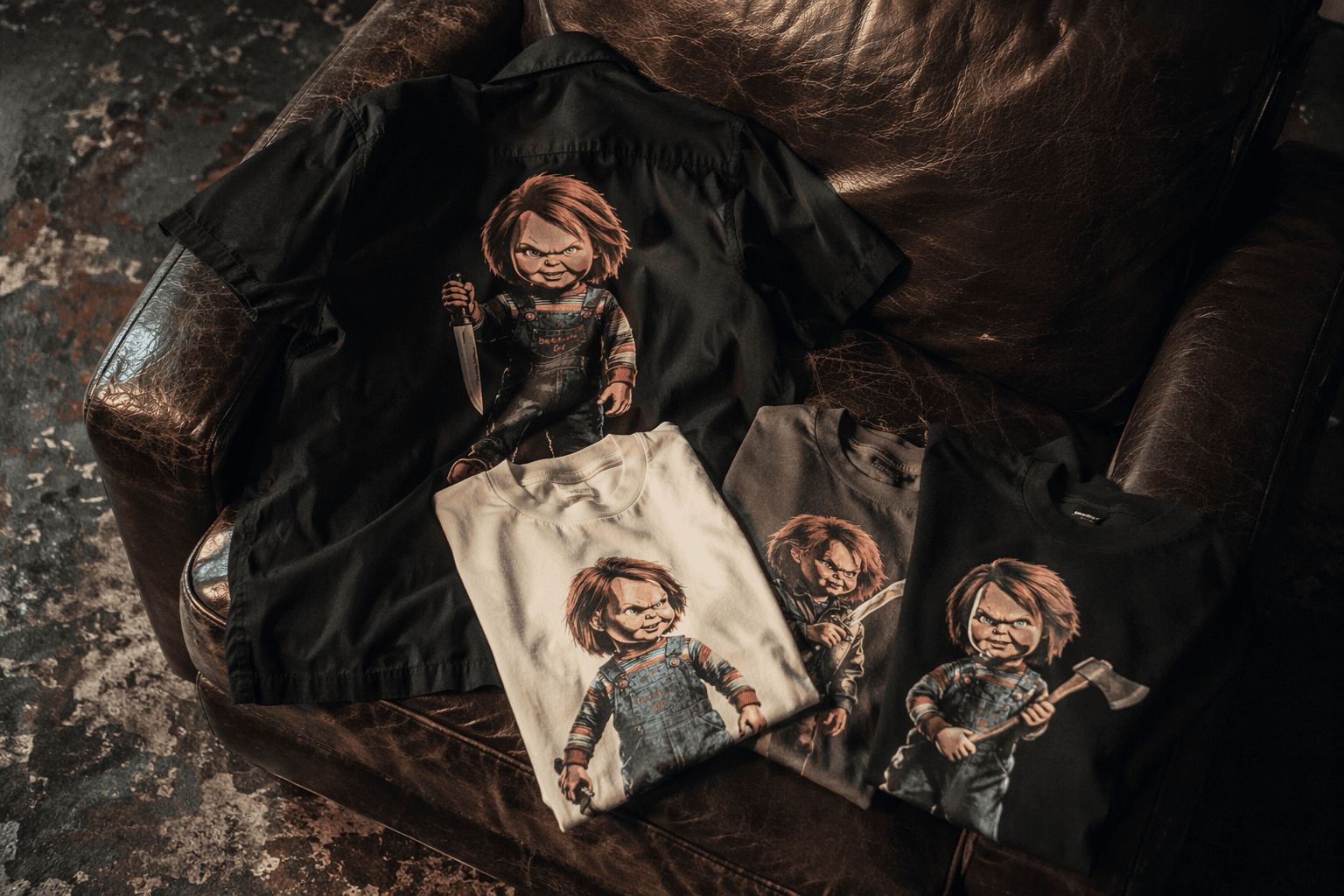
Schott NYC turns Chucky into a limited capsule of a ¥27,500 rayon shirt and three ¥13,200 tees. The twist is the brand’s workwear gravity, not gore.
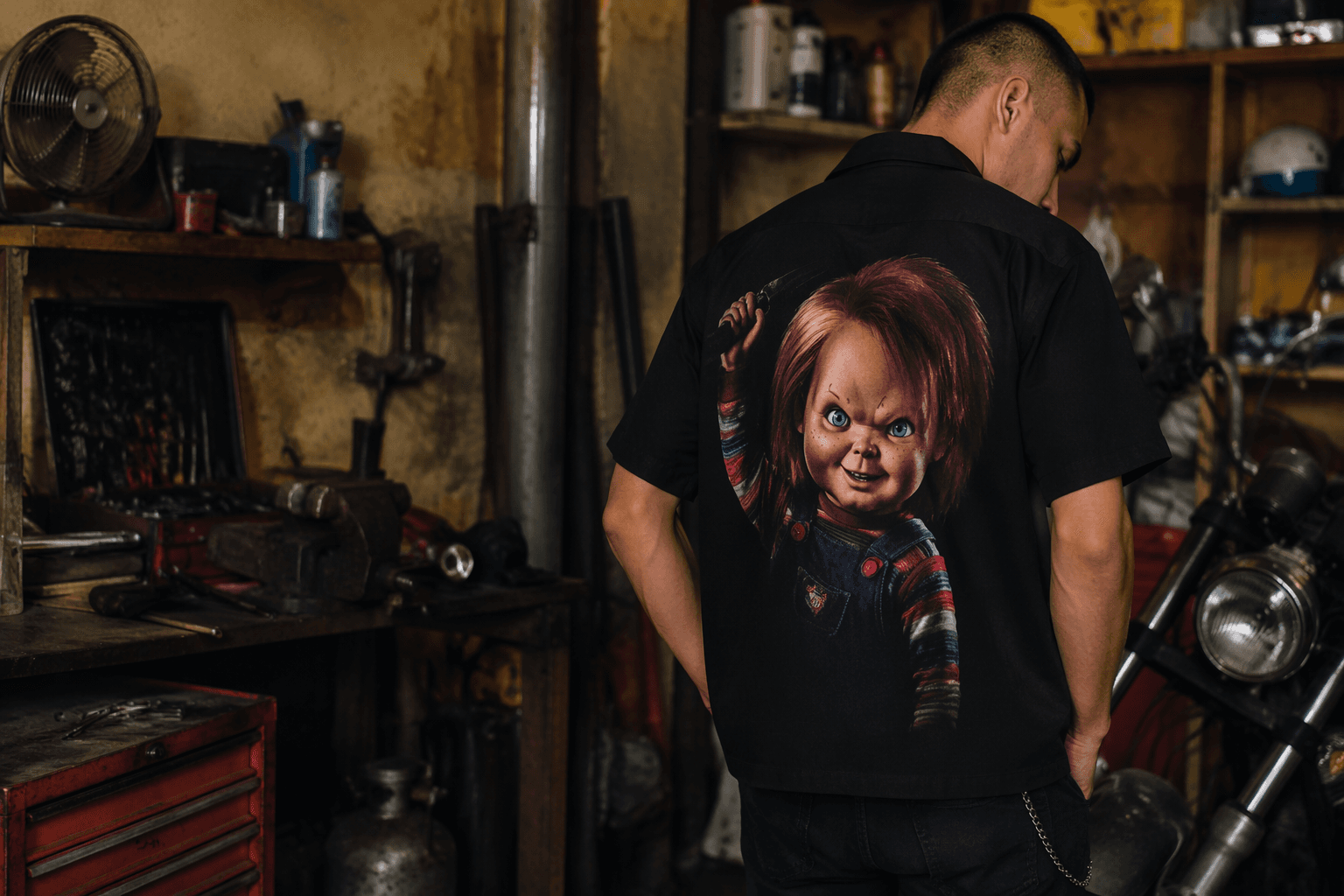
Chucky has always worked best when the joke lands first and the menace sneaks in after. Schott NYC understands that balance and, with its new CHUCKY Collection, gives the killer doll something rarer than a novelty crossover: street credibility built on the language of real workwear. The result is a limited capsule that feels less like costume merchandising and more like a brand letting horror wear its own uniform.
The lineup is tight, which is exactly why it works. There is one rayon shirt, priced at ¥27,500, and three T-shirts, each at ¥13,200: IT’S TIME TO PLAY, MONOCHROME, and THE KILLER DOLL. Sizes run from M through 2XL, and the collection launched June 19 through Schott direct stores and the official online store. That restraint matters. Instead of drowning Chucky in kitsch, Schott treats the character’s “cute exterior,” “dark humor,” and “unpredictability” as graphic cues that can sit on the surface of well-made basics.
Schott’s own history makes the pairing feel more grounded than gimmicky. Founded in New York in 1913 by Irving Schott and Jack Schott, the company later introduced what it describes as the first front-zip motorcycle jacket in 1928, a small but defining shift in how American outerwear functioned and looked. From there came the kind of cultural shorthand that fashion labels spend decades trying to buy: Marlon Brando in The Wild One in 1953, the One Star model’s rise in the 1950s, and eventual adoption by the Ramones and Sex Pistols. Chucky, in that context, is not a random pop icon pasted onto fabric. He is another outlaw image, translated through a house with actual leather-and-steel credentials.
That heritage is why the collaboration lands better than most horror tie-ins. Schott has also built a documented track record of high-profile collaborations, including multiple drops with Supreme, so the brand knows how to move between subculture and product without losing its center. Here, that discipline keeps the collection from tipping into Halloween territory. The graphics may nod to a cult villain, but the silhouette of the idea is pure Schott: durable, blunt, and just polished enough to make the joke feel serious.
This article was produced by Prism’s automated news system from verified source data, official records, and press releases, then run through automated quality and moderation checks before publishing. The system is built and supervised by the people who set the standards it runs under. Read our full AI policy.
Did this article answer your question?