COMME des GARÇONS and BAPE keep their Japan collab in motion
Japan’s quietest heavyweight collab keeps getting stronger. COMME des GARÇONS and BAPE are selling consistency, not noise, and that may be the point.
Why this collaboration still matters
COMME des GARÇONS and BAPE do not need to shout to feel important. Rei Kawakubo’s Tokyo-born house and Nigo’s Harajuku-born label sit at two different poles of Japanese fashion, one built on avant-garde disruption, the other on global streetwear heat, and that tension is exactly what gives their partnership weight. In a market crowded with one-night collabs and logo stunts, this one keeps moving with unnerving calm.

That calm is the surprise. Highsnobiety has noted that the pairing remains oddly under-discussed for a link-up between two of Japan’s biggest names, but the product tells a different story: this is not a novelty drop, it is a long-running system. Since June 2020, BAPE says the brands have continued announcing collaborations every season, which makes the relationship feel less like a marketing spike and more like an established lane.
A collaboration built on restraint, not theater
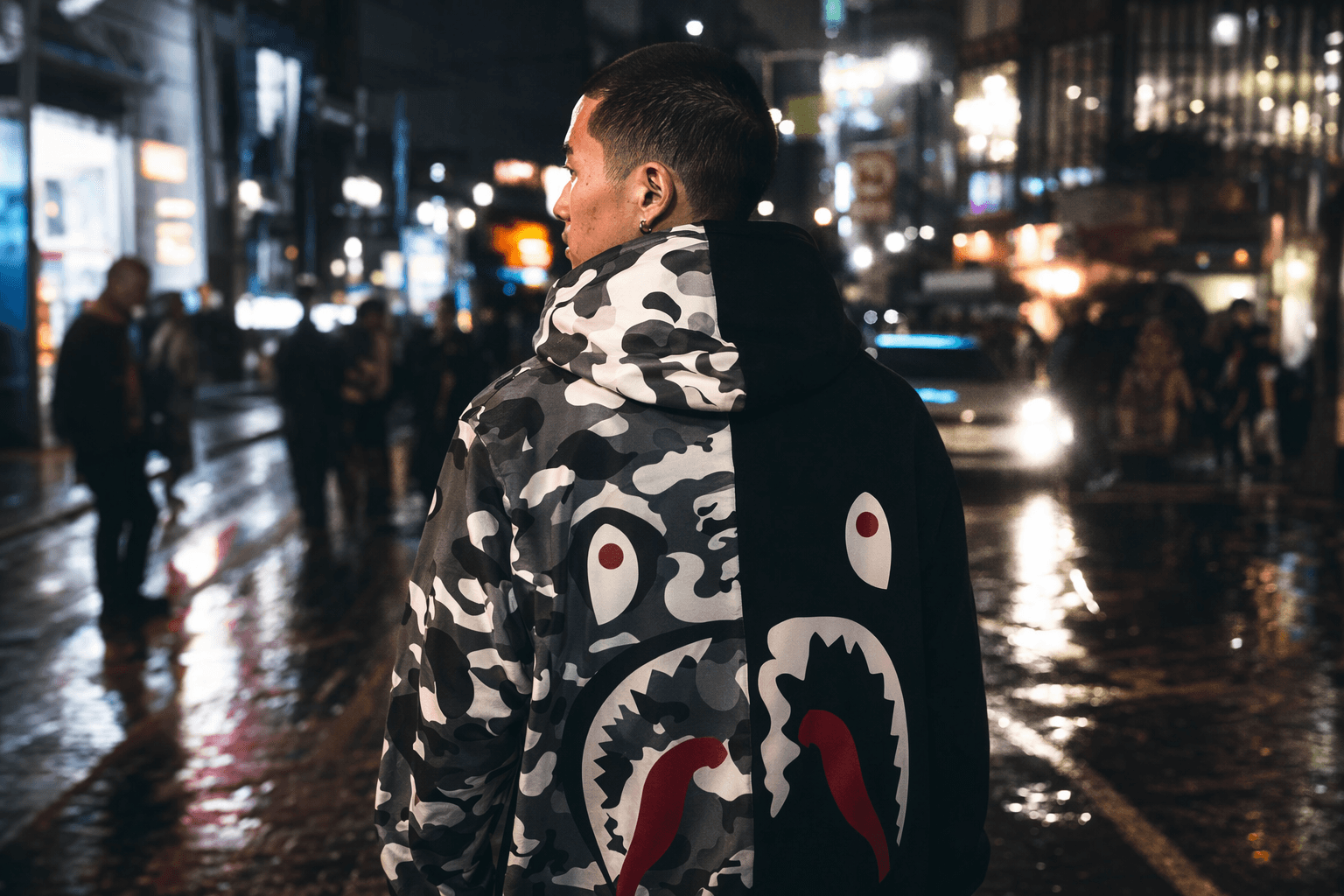
The smartest thing about COMME des GARÇONS x BAPE is how little it tries to reinvent the wheel. The partnership keeps returning to street staples such as hoodies, striped shirts and logo-heavy basics, then filters them through COMME des GARÇONS’ CDG Good Design Shop lens. The result leans more street-friendly than avant-tailored, which is part of the appeal: it is recognizable without becoming repetitive.
That restraint matters because the current collab economy is built on overstatement. Too many pairings chase the instant headline with bizarre silhouettes, inflated pricing or a single gimmick designed to flood social feeds for 48 hours. This one is quieter, but the consistency is the flex. It shows a real design conversation between two brands that already know their codes, so the clothes do not have to scream to prove they are special.
For anyone deciding what deserves attention, the answer is simple: look for the pieces that feel like wardrobe items first and trophies second. The collaboration works best when it turns familiar uniforms into collector objects without destroying their wearability. That is why the product feels credible, and why the partnership has outlasted so many louder, shorter-lived fashion friendships.
The Osaka shop-in-shop made the relationship tangible
The collaboration stopped being abstract the moment BAPE STORE® COMME des GARÇONS OSAKA opened on April 3, 2020 in Shinsaibashi, Osaka. Set inside COMME des GARÇONS Osaka as a shop-in-shop, it gave the partnership a physical home, which is rare in a culture where many collaborations exist only as a digital announcement and a quick sell-through. A recurring retail space changes the meaning of the drop: it makes the partnership feel lived-in rather than opportunistic.
BAPE says the Osaka shop-in-shop has been operating since April 2020 and that the brands have continued to release collaborative collections each season. In its 2025 anniversary materials, the company also said the unique products combining both aesthetics had drawn strong support from fans in Japan and overseas. That international pull is part of the story, but the more interesting detail is the staying power. A collaboration can generate hype once; maintaining a shop and a seasonal rhythm for years is harder, and far more convincing.
What the collections have actually looked like
The Spring/Summer 2024 collection gave the partnership a more grounded uniform. Hickory stripes, chambray fabrics and neon accent colors pushed the line toward workwear rather than runway drama, which fit the project’s practical streak. There is a reason those materials land: hickory stripe and chambray carry the visual language of utility, then BAPE’s color instincts kick in just enough to keep the clothes from going flat.
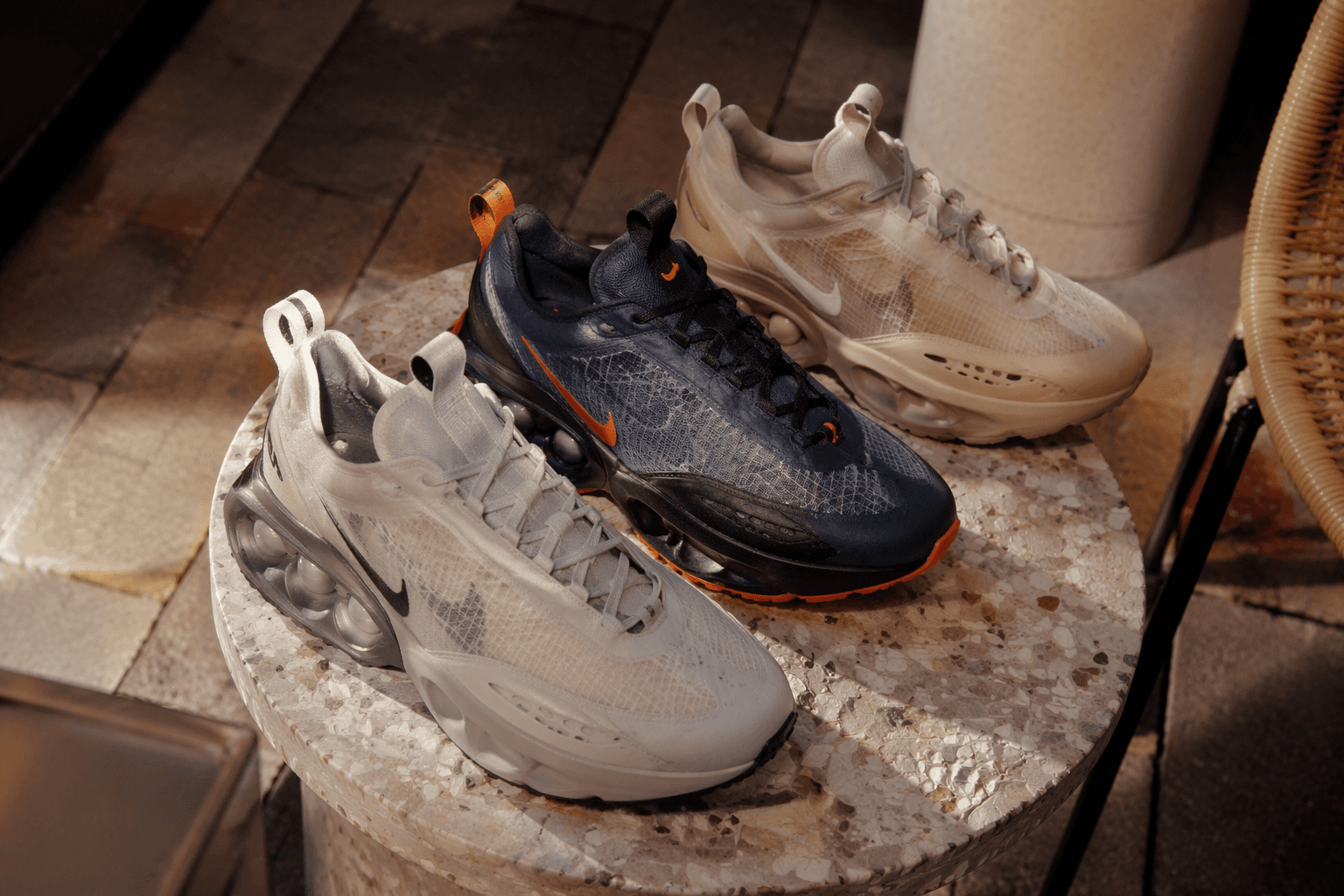
Fall/Winter 2024 broadened the palette without abandoning the formula. The capsule included T-shirts, long-sleeve tees, hoodies, crewneck sweatshirts, denim pants, stuffed animals, Cowichan knits and knitted caps. That mix says a lot about the collaboration’s reach. It can move from easy layering pieces to collectible accessories and knitwear without losing its identity, and the stuffed animals add just enough oddness to remind you that COMME des GARÇONS still likes a wink inside the wardrobe logic.
The 2025 anniversary drop raised the stakes
The fifth-anniversary collection, released on April 29, 2025, was exclusive to COMME des GARÇONS Osaka. That local exclusivity gave the project a sharper sense of place, which is a useful antidote to the endless sameness of global sneaker and streetwear releases. It was not just another capsule floating through the internet; it belonged to a specific store, a specific city and a specific anniversary.
The headline item was the BAPE STA, priced at ¥36,300. Related apparel and accessories ranged from ¥3,850 to ¥37,400, which places the collection in the broad middle of today’s premium streetwear market rather than in the wildly inflated territory some hype collabs occupy. The price spread also matters because it shows the collaboration is built for different entry points, from relatively accessible accessories to a sneaker that signals the anniversary without turning absurdly expensive.
If you are reading this as a buyer, the BAPE STA is the clearest collector play, while the apparel is where the collaboration’s everyday value shows up. The shoe carries the status, but the clothing tells you more about the design relationship: repeatable graphics, wearable shapes and a steady preference for pieces that can enter a closet instead of just a display shelf. That balance is why the drop feels sharper than many more expensive collaborations that rely entirely on novelty.
Why the relative quiet makes it more credible
The collaboration’s lower profile is not a weakness. It is evidence that COMME des GARÇONS and BAPE are not depending on constant noise to keep the relationship alive. In an era when many fashion partnerships are designed to dominate a single news cycle, this one has done the rarer thing: it has built continuity, from the Osaka shop-in-shop in April 2020 to seasonal releases through 2024 and into a fifth-anniversary moment in 2025.
That is why the collab deserves more attention now, not less. It proves that credibility in streetwear does not have to come from volume; it can come from repetition, clarity and a design language that refuses to panic for attention. When two Japanese giants keep a collaboration in motion this steadily, the quiet stops looking accidental and starts looking like confidence.
This article was produced by Prism’s automated news system from verified source data, official records, and press releases, then run through automated quality and moderation checks before publishing. The system is built and supervised by the people who set the standards it runs under. Read our full AI policy.
Did this article answer your question?