Has the sneaker-mule trend finally peaked?
The sneaker-mule has escaped novelty and entered the mainstream. Nike, Dries Van Noten, and adidas now treat it like a category, not a stunt.

The sneaker-mule was once the sort of silhouette that made sense only in fashion’s more playful corners: a half-step between recovery wear and runway irony, easy to dismiss until it started showing up everywhere. Now Nike, Dries Van Noten, and adidas have all given the format real product weight, which is exactly when a clever hybrid starts to test its limits. The question is no longer whether it works. It is whether there is still enough design tension left to keep it interesting.
The hybrid moves from joke to system
What makes the sneaker-mule feel different right now is that it is no longer being treated like a quirky one-off. It has become a repeatable shape, a language brands can use across price points and audiences, from performance to luxury to heritage sportswear. That shift matters, because once a trend can be translated across Nike, Dries Van Noten, and adidas, it stops reading like a fashion interruption and starts reading like product strategy.
The appeal is easy to understand. A sneaker-mule gives you the comfort cues of athletic footwear, but strips away the back so the shoe slips on with the ease of a slide. It is the kind of silhouette that looks slightly undone even when it is carefully engineered, which is part of the charm. But that same tension can turn stale fast, because the gimmick is built into the shape itself. Once the novelty of the open heel wears off, the shoe has to earn its place through construction, proportion, or styling intelligence.
Nike made it feel technical, not merely trendy
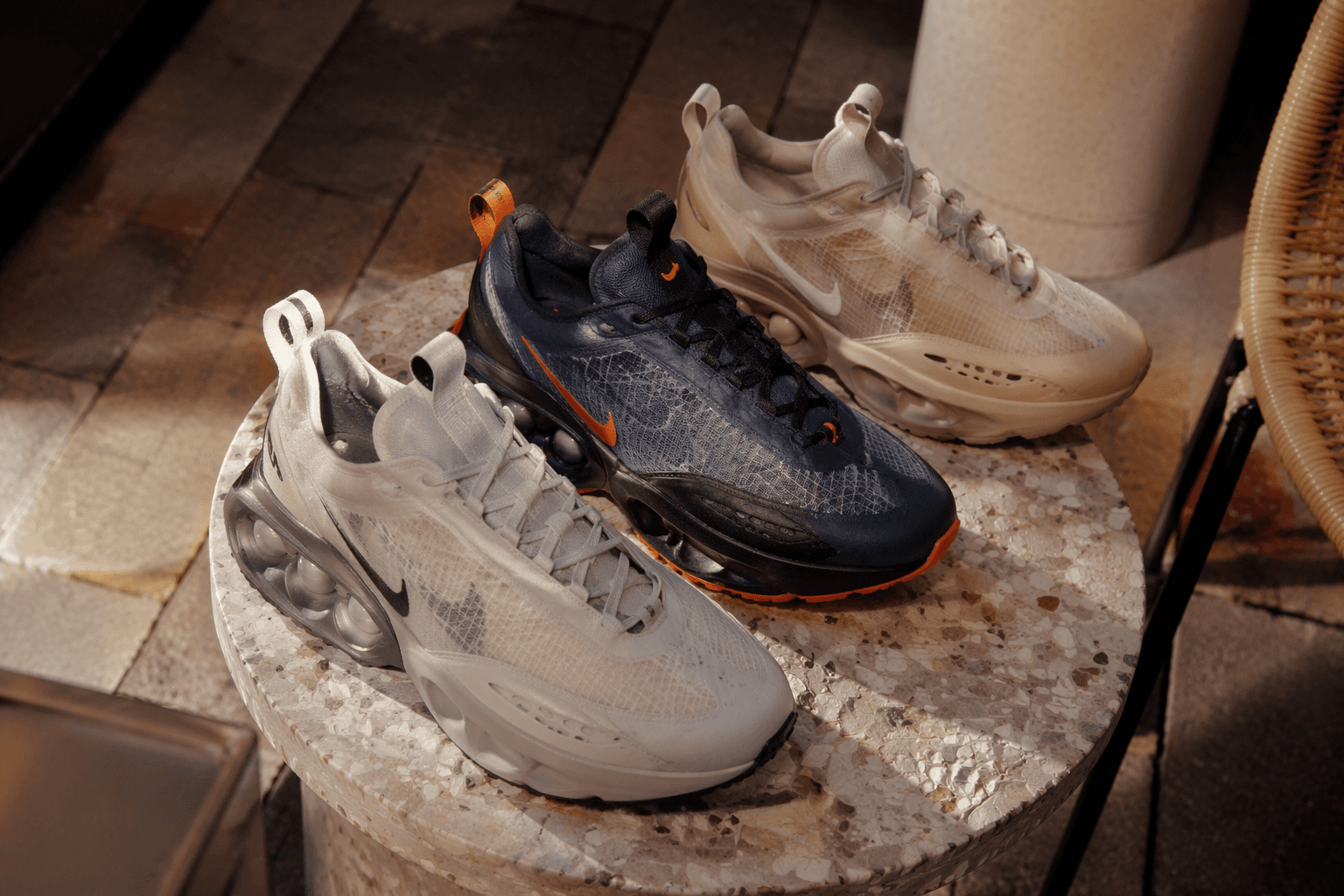
Nike’s Mind line is the cleanest example of how a hybrid can be elevated from fashion curiosity to product concept. The Mind 001 is the mule, the Mind 002 is the sneaker, and both are built around the same Mind system with 22 anatomically mapped foam nodes on the sole. That detail matters because it gives the silhouette a reason to exist beyond aesthetics: this is not just a sneaker with the heel chopped off, but a format tied to underfoot engineering.
The brand framed the line as a new performance concept from its Mind Science Department, and the launch timing reinforces that seriousness. Nike said both styles would release in stores and online in January 2026, with the Mind 001 priced at $95 and the Mind 002 at $145. That price gap is telling. The mule lands as the more accessible, slightly more experimental option, while the sneaker asks more of the consumer and presents itself as the fuller expression of the same technology.
Coverage has described the Mind 001 as a recovery-oriented slip-on, and that framing is where the sneaker-mule gets its strongest case. It works best when it can live in the soft space between pre-game and post-game, between movement and rest, between actual sport and the aesthetic of sport. Nike understands that a silhouette like this is at its most persuasive when it feels functional first and fashionable second.
Dries Van Noten gives the format luxury polish
If Nike supplies the engineering logic, Dries Van Noten supplies the fashion logic. The brand’s official store lists sneaker mules in its women’s Autumn-Winter ’25-’26 collection, then follows with suede sneaker mules in Spring-Summer 2026. That is not a one-season experiment. It is a sustained position, which says the house sees the shape as something more than a passing runway joke.
The material story is what keeps Dries Van Noten’s version from feeling generic. The brand describes the shoes as slip-on mules in leather or suede with sneaker construction, and the suede version is inspired by 70s marathon spirit with a signature thin sole. That combination of backless ease, plush texture, and lean sole gives the shoe a distinctly fashion-house finish. It looks less like gym gear and more like a private atelier’s idea of sportswear, with a softer hand and more deliberate silhouette.

Then there is the price. A current men’s shoes listing shows Dries Van Noten sneaker mules at $560, which places the style firmly in luxury territory. At that level, the sneaker-mule has to justify itself as an object, not just a trend. The premium is not for performance alone, but for interpretation: the way suede dulls the shine, the way the open back changes the line of the foot, the way the sneaker sole is recast as something urbane.
adidas is turning the idea into a franchise
adidas may be the most revealing case of all, because the brand’s Samba Mule suggests the sneaker-mule has moved beyond fashion circles and into the broader release cycle. The Samba itself is described by House of Heat as adidas’ oldest silhouette in continuous production, at 77 years old, which gives the mule treatment a very different kind of authority. This is not a brand chasing a novelty shape. It is a brand extending one of its most durable icons into a new category.
Release trackers are already following the Samba Mule for Summer 2026, with colorways including Navy, Beige, and Off White/Preloved Brown. That variety says a lot. Once a silhouette starts appearing in multiple colorways before it has even fully landed, it is no longer just a styling exercise. It is a franchise in motion, one that can be dressed up, muted down, or made to feel archival without changing the basic form.
The adidas version also shows how the sneaker-mule has escaped the niche luxury lane. Dries Van Noten can make the silhouette feel rarefied, but adidas can make it feel inevitable. That is what happens when a once-clever hybrid enters a mass sportswear system: the shape gets normalized, then multiplied, then treated as a standard release rather than a special idea.
So has the trend peaked?
In novelty terms, yes, the sneaker-mule has probably already reached the point where the joke is understood. The first time you see the heel gone, the shape feels fresh. By the time Nike, Dries Van Noten, and adidas have each staked a claim, the silhouette no longer surprises. It has become legible, and once a trend becomes legible to everyone, the fashion charge starts to fade.
But commercial peak is not the same as creative peak. There is still room left if brands push the format in genuinely different directions: smarter uppers, better proportions, stronger material choices, or a real performance argument that goes beyond easy on, easy off. Nike is already doing the most convincing work there, because the Mind system gives the mule an actual technical rationale. Dries Van Noten keeps it desirable by making it feel refined. adidas makes it scalable by plugging it into an icon with decades of cultural memory.
The danger is not that the sneaker-mule disappears. It is that it settles in too comfortably and becomes another interchangeable category, one more slip-on variation in a market that loves easy wearables. Right now, the silhouette still has enough elasticity to survive, but not enough mystery to keep feeling new for long. The next phase will decide whether the sneaker-mule becomes a lasting format or just the most stylish compromise of the season.
This article was produced by Prism’s automated news system from verified source data, official records, and press releases, then run through automated quality and moderation checks before publishing. The system is built and supervised by the people who set the standards it runs under. Read our full AI policy.
Did this article answer your question?