Hiroshi Fujiwara turns Bang & Olufsen love into limited-edition headphones
Fujiwara’s Bang & Olufsen collaboration treats headphones like streetwear icons, dressing the H100 in glossy black Fragment codes and extending the idea across a four-piece sound system.
Hiroshi Fujiwara turns Bang & Olufsen love into limited-edition headphones
Hiroshi Fujiwara has done more than stamp a logo on a luxury headphone. He has turned a 35-year listening habit into a complete design language, one that makes Bang & Olufsen feel less like a technology brand and more like part of a cultivated wardrobe. The Fragment Edition Beoplay H100 sits at the center of that idea, but the collaboration’s real force is the way it stretches across four products, from headphones to a portable speaker, a wall system, and a made-to-order sound setup.
A collaboration built like a lifestyle system
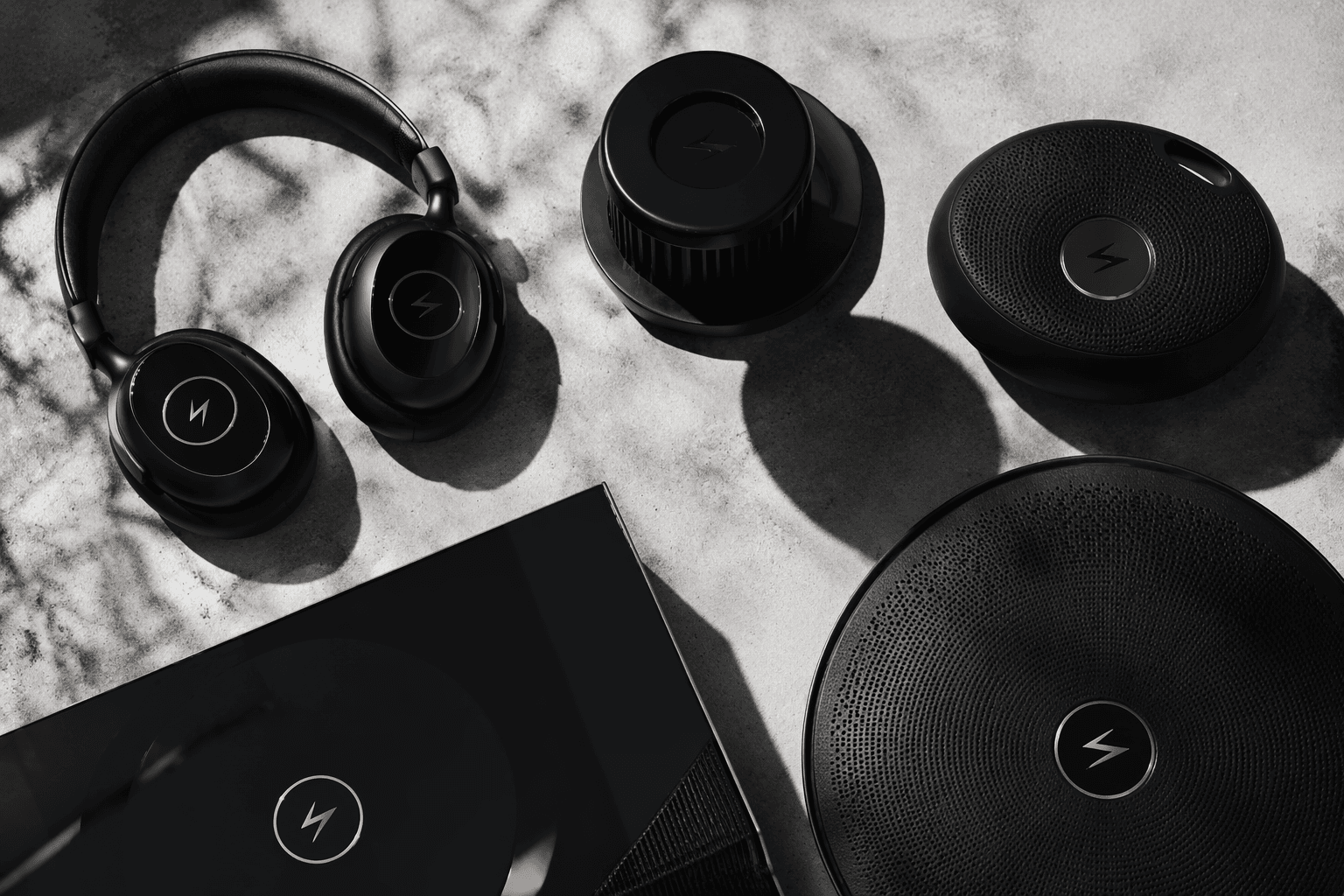
This is not a one-off product drop dressed up as a moment. Bang & Olufsen and Fragment have created a four-piece collaboration around the Beoplay H100, Beosound A1, Beosound Shape, and Beosystem 9000c, and that breadth matters. It suggests a designer thinking in rooms, routines, and identity, not just in individual objects.
That ecosystem approach is exactly what makes Fujiwara such a powerful collaborator. Fragment’s “monochromatic, considered, unmistakable” aesthetic translates naturally to audio gear, because the products are already meant to disappear into a space and then reassert themselves through finish, proportion, and sound. In Fujiwara’s hands, the objects become part of a broader lifestyle code, the same way a sneaker, jacket, or tee does when it carries the right cultural signal.
Why the Beoplay H100 reads like streetwear, not merch
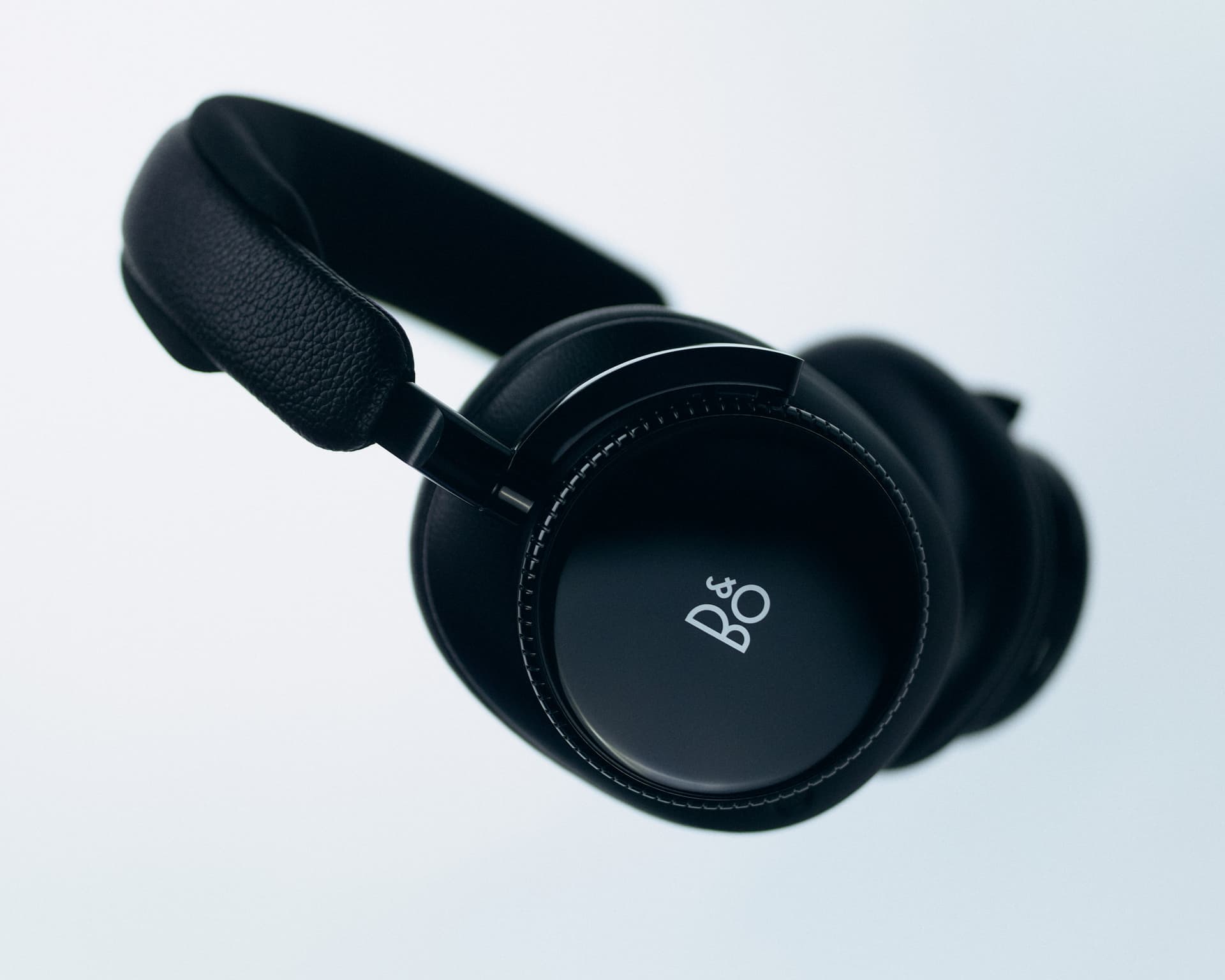
The Beoplay H100 Fragment Edition succeeds because it looks deliberate rather than promotional. The headphones are rendered in high-gloss black anodised surfaces, black leather on the headband and cushions, and sharp white logos that break the darkness like a label on a perfectly cut garment. The effect is severe, clean, and a little ceremonial, which is exactly why it feels credible in a streetwear context.
Bang & Olufsen says the black finish comes from a specialised anodisation process followed by hand-polishing, and that detail does the heavy lifting here. The result is a liquid-like shine that pushes the headphones away from the flat, plastic look of typical branded tech. With titanium drivers and next-level noise cancellation in the mix, the H100 already belongs in premium territory; Fragment’s visual intervention gives it a sharper silhouette and a far stronger point of view.
At $2,400, the Fragment Edition sits in the highest tier of consumer audio, where design, materials, and prestige matter as much as performance. Bang & Olufsen’s own Japan site lists the standard Beoplay H100 at ¥259,000, which underlines how closely the collaboration is tied to the brand’s luxury positioning rather than a mass-market fashion crossover. This is not merch masquerading as headphones. It is an object built to justify its price through finish, engineering, and restraint.
Fujiwara’s long relationship with Bang & Olufsen
Fujiwara’s role in this story goes well beyond celebrity proximity. Bang & Olufsen says he has been listening with the brand for 35 years, and Fujiwara has described the project as a dream that goes back to building his home around Bang & Olufsen’s integrated sound system in the 1990s. That kind of memory gives the collaboration emotional weight. It is not rooted in a trend cycle, but in domestic ritual, in the experience of living with sound as part of the architecture.
Wallpaper adds useful context to that legacy. Fujiwara founded Fragment Design in 2004, but before that he worked as a DJ and producer, then moved into graphics, streetwear, and fashion. He was also instrumental in bringing Bang & Olufsen products to a wider audience in Japan in the 1990s, which makes the collaboration feel less like a first meeting and more like a culmination. His first B&O system, the Beocenter 2300, launched in 1991, and that kind of early attachment helps explain why the brand still feels so personal in his orbit.
The other three pieces deepen the story
The collaboration becomes even more interesting when you look beyond the headphones. The Beosound A1 brings the Fragment language into the portable speaker category, while the Beosound Shape pushes it onto the wall, where B&O’s modular design already behaves like an installation piece. The Beosystem 9000c, meanwhile, is the most collector-focused object in the set, and its Japan-exclusive, made-to-order status gives the whole project a sharper sense of rarity.
One of the neatest details in the collaboration is the way the Beosound Shape came together. Bang & Olufsen says Fujiwara’s visit to the company’s headquarters in Struer inspired him to sketch the wall speaker’s seven-tile flower configuration himself. That matters because it shows the design is not just borrowed from Fragment’s visual code. It is shaped through direct contact with Bang & Olufsen’s own spatial language, then filtered through Fujiwara’s instinct for arrangement and balance.
Release timing, exclusivity, and why it matters now
The Fragment Edition Beoplay H100, Beosound A1, and Beosound Shape are set for global release on June 3, 2026, while the Beosystem 9000c Fragment setup is exclusive to Japan. Bang & Olufsen frames the collaboration as a limited-time offering, which only strengthens the sense that this is aimed at collectors who understand both the aesthetic and the cultural shorthand.
What makes this collaboration land is its discipline. Fujiwara does not overwhelm Bang & Olufsen’s identity; he sharpens it. The black-on-black palette, the glossy metal, the white logos, and the careful focus on a few objects all say the same thing: streetwear does not need to be loud to be recognizable. In Fujiwara’s world, credibility comes from consistency, and this Bang & Olufsen project extends Fragment’s influence exactly where it belongs, into the spaces people live in, listen in, and build their taste around.
Know something we missed? Have a correction or additional information?
Submit a Tip