How hip-hop made streetwear's biggest rules, from adidas to oversized silhouettes
Hip-hop didn't just inspire streetwear; it taught it how to sell. From Run-DMC’s adidas deal to Supreme’s box logo, music made visibility into value.
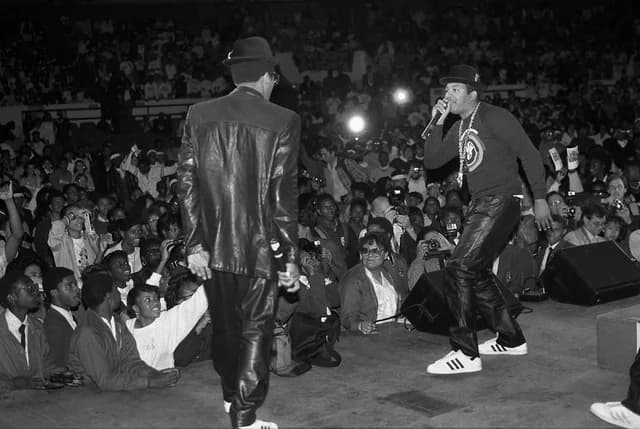
Hip-hop gave streetwear its first real business model by turning clothes into proof of belonging. A shell-toe sneaker, a tracksuit, a fitted cap, a logo worn loud enough to read from the back row: those were never just style choices, they were signals, and brands learned quickly that signals could be monetized.
The Run-DMC turning point
The clearest early flashpoint is Run-DMC and adidas. In May 1986, the group released “My Adidas” on Raising Hell, a tribute to the Superstar shell-toe that made their personal style part of the song itself. Their 1986 performance of the track at Madison Square Garden is widely treated as the moment the relationship crossed from fan loyalty into a branded partnership, leading to what Guinness World Records identifies as the first non-sporting sneaker endorsement deal.
That deal is widely reported at $1 million or $1.6 million, depending on the account, and the number matters less than the precedent. adidas was no longer selling to athletes alone; it was buying cultural authority from hip-hop, and Run-DMC understood that a sneaker could function like a signature. The group’s look made athletic wear feel aspirational, not merely functional, and it gave the industry a template it still follows: if an artist can make a product feel identity-defining, the brand can turn that feeling into revenue.
How hip-hop rewrote streetwear’s silhouette
Streetwear’s origins are commonly traced to late-1970s and early-1980s New York hip-hop culture, when comfort-casual basics like sweats and sneakers became a visible uniform on the street and on stage. The appeal was practical at first, because these pieces moved easily and photographed clearly, but the visual effect was larger than utility. The clothing read instantly as part of a scene, which is exactly what later streetwear would learn to do on purpose.
By the 1990s and 2000s, the silhouette loosened further. Baggy denim, oversized jerseys, fitted caps, and oversized outerwear pushed the look away from tailoring and toward volume, giving hip-hop fashion its unmistakable read-from-a-distance shape. That shift mattered commercially because it made garments into performance objects: bigger shapes, stronger logos, and more exaggerated proportions all carried more visual force in music videos, on album covers, and under stage lights.
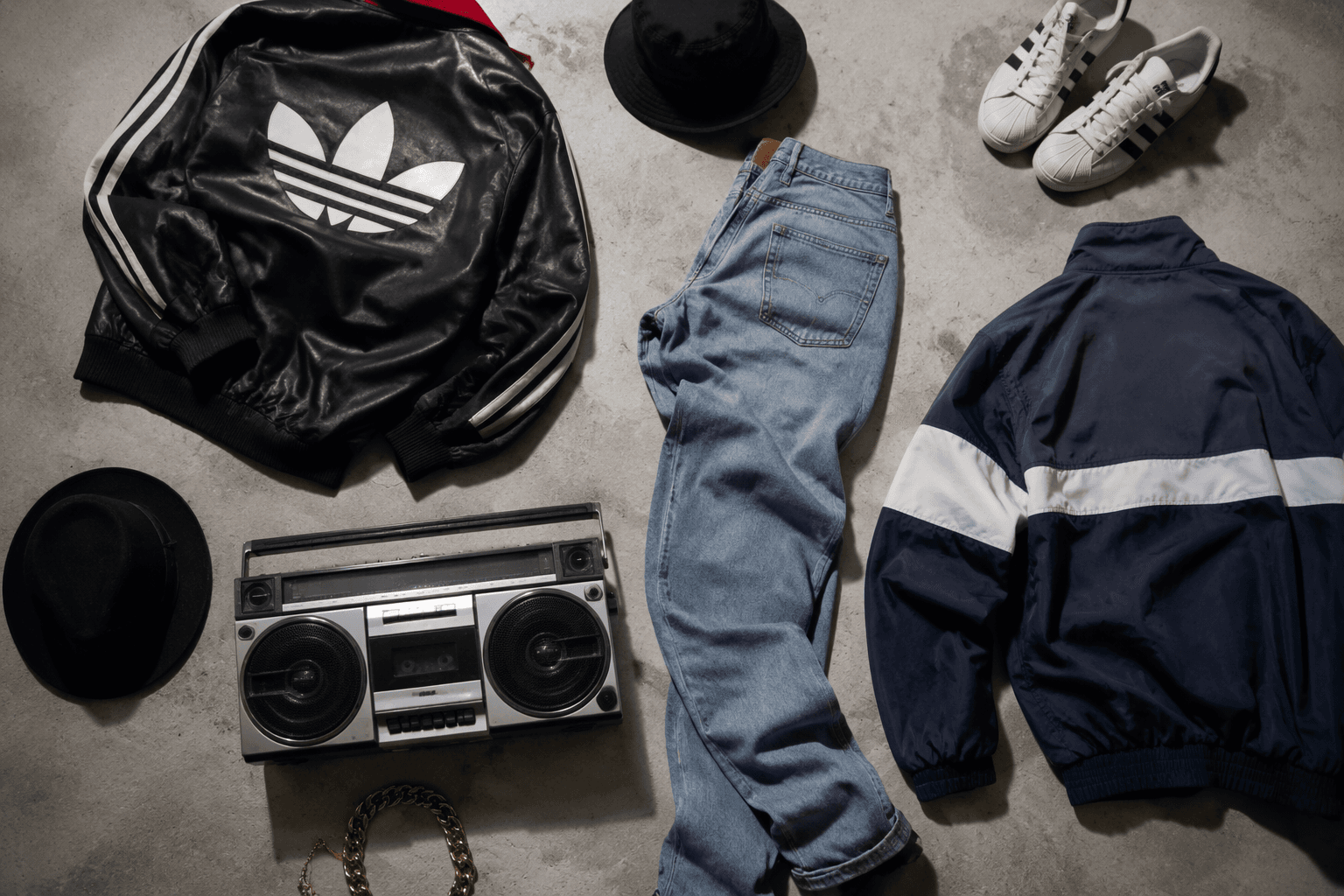
This is where streetwear’s rules began to harden. A garment did not just need to fit; it needed to broadcast. The best pieces were the ones that looked good from across a room, then even better in motion, which is why hip-hop’s influence so often shows up in clothes designed to be seen before they are touched.
Logos became status, and status became product
Hip-hop also changed what a logo meant. Before that shift, branding on sportswear was mostly informational. Afterward, visibility itself became the point, and a brand mark could signal access, taste, and affiliation in one glance. That is why the Supreme box logo became such a powerful object lesson: a simple graphic, repeated with discipline and limited availability, can become a status symbol when the culture agrees it is scarce enough to matter.
Scarcity is one of the cleanest business lessons hip-hop handed to streetwear. Limited drops, hard-to-get releases, and product that feels like a reward for being early all tap the same logic as a coveted guest list or a rare record pressing. When everyone can buy it, the signal weakens; when only a few people can, the garment starts to behave like a collector’s item.
That dynamic connects back to the way hip-hop has always treated style as proof of credibility. The more instantly recognizable the piece, the more power it can carry. In streetwear, that means the box logo, the shell-toe, the oversized jersey, and the fitted cap are not just design choices, they are forms of social shorthand.
From mixtape culture to luxury borrowing
Hip-hop did not stop at sneakers and sweats. Tour merch, mixtape graphics, and album-cover styling helped establish the image-heavy, text-heavy visual language that streetwear still uses, where a graphic can carry as much weight as a cut. That same logic later showed up in the way luxury fashion borrowed from the street, often taking the hip-hop version of streetwear first: oversized, logo-forward, and built to look powerful rather than precious.
The cultural bridge between fashion and music ran through figures who understood both markets. Russell Simmons and Rick Rubin helped make hip-hop not only a sound but a commercial universe, while Dapper Dan turned logo appetite into custom luxury by remaking the codes of elite fashion for Harlem clients. Tommy Hilfiger became part of that wider conversation when his name entered the hip-hop style orbit, and later Pharrell Williams extended the model into a new era where celebrity, design, and product collaborations merged into one business language.
That progression explains why streetwear has never really been separate from music marketing. Hip-hop taught the industry how to package aspiration in visual form, then showed brands how to sell it back at a premium. The clothes changed, the silhouettes widened, and the logos multiplied, but the core rule stayed the same: in streetwear, what people recognize at a glance is what they are willing to buy.
Why music still drives the market
Streetwear still runs on the same engine hip-hop built. Artists turn garments into symbols, symbols into demand, and demand into retail logic, whether the object is an adidas Superstar, a Supreme box logo, or a luxury collaboration shaped by oversized proportions and deliberate scarcity. The business works because the audience is buying more than fabric: it is buying affiliation, memory, and the feeling that the piece arrived from the center of culture.
That is why music remains streetwear’s most reliable business engine. It gives the clothes a story, gives the brand a face, and gives the customer a reason to care before the product even reaches the shelf.
This article was produced by Prism’s automated news system from verified source data, official records, and press releases, then run through automated quality and moderation checks before publishing. The system is built and supervised by the people who set the standards it runs under. Read our full AI policy.
Did this article answer your question?