Milan Fashion Week Fall 2026 Brings Fresh Starts, New Creative Directors, Bold Trends
Demna at Gucci, Maria Grazia Chiuri at Fendi, and Mark Zuckerberg crashing Prada with presidential security made Milan's Fall 2026 week impossible to ignore.
Three new creative directors, two supermodels, one tech billionaire flanked by security, and zero Prada-Meta smart glasses reveals. Milan Fashion Week's Fall/Winter 2026-2027 run, six days that closed out on March 1, packed enough industry disruption and celebrity chaos into its schedule to reset the conversation around Italian fashion for the season ahead.
The biggest structural story was the triple handoff: Demna stepping into Gucci, Maria Grazia Chiuri taking the reins at Fendi, and Meryll Rogge landing at Marni. Each brought a distinct point of view, and collectively they injected the kind of tension and uncertainty that makes a fashion week worth watching. WWD described the season as one that "celebrated craftsmanship, creativity, and a fresh wave of designer runway debuts," energized by "new perspectives and a strong sense of identity." Gucci's show carried its own asterisk: WWD flagged "the very controversial seduction at Gucci" without elaborating, leaving the industry to fill in the gaps.
Then there was Zuckerberg. The Meta CEO was ushered into the Prada runway show with what the AP called "presidential-style security," taking a seat next to Prada heir Lorenzo Bertelli. The long-rumored Prada-Meta smart glasses collaboration that had the industry buzzing? Not revealed. Madonna and Kate Moss also made appearances across the front rows, but honestly, none of them generated the same surreal energy as watching Silicon Valley collide with a Milanese runway.
On the clothes: outerwear ran the show. Plush shearling and teddy coats dominated at Fendi and Bottega Veneta while Gucci and Tod's pushed sculptural silhouettes that read more architecture than apparel. WWD put it plainly: "Coats are not a layer, they are the look." The AP framed the outerwear moment differently, calling it "brutalist outerwear as an investment in uncertain times," which tracks with the broader mood of the week.
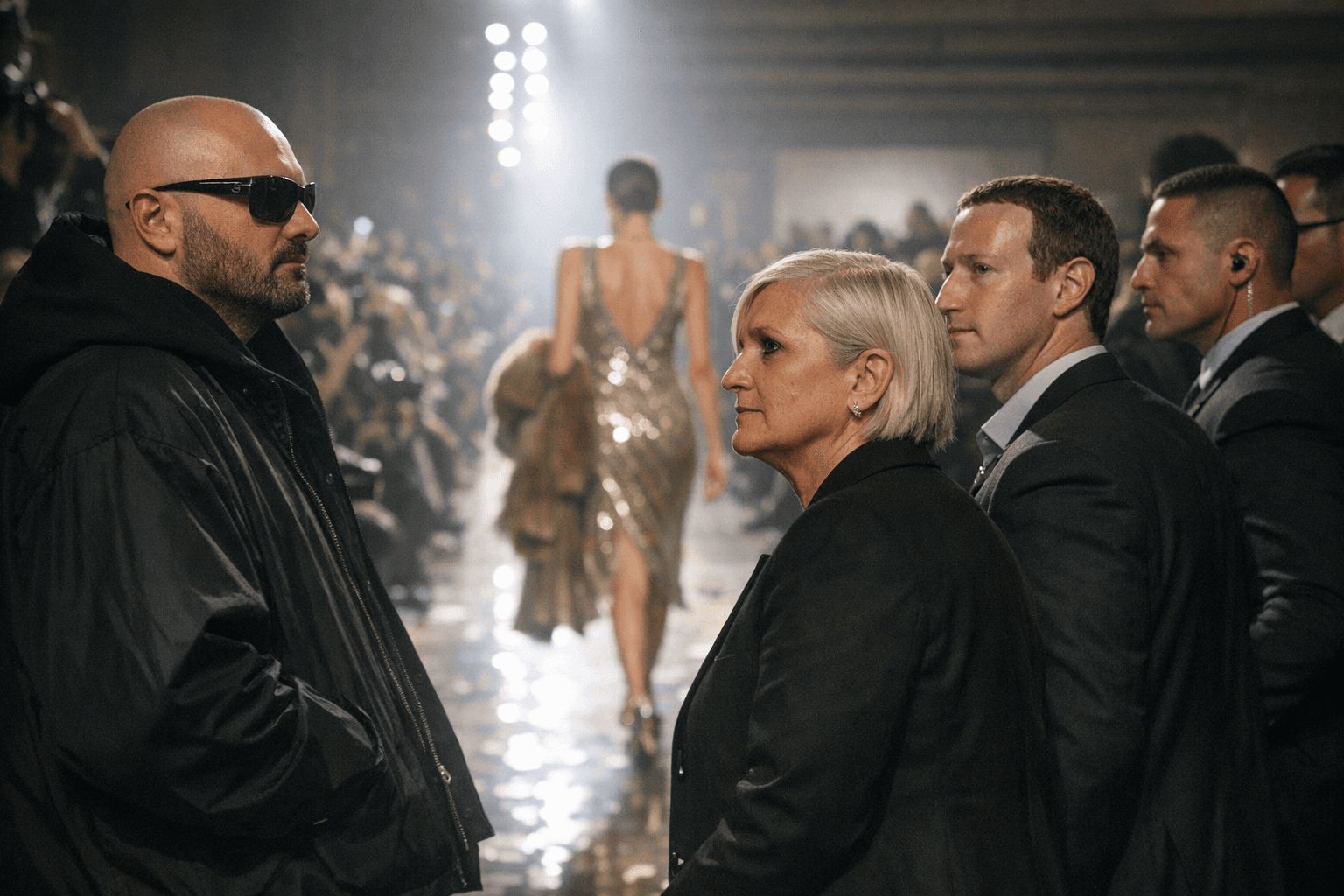
Sheer and lace emerged as the counter-movement to all that structure. Translucent layers drifted over tailored shapes across multiple houses, with lace, embroidery, and sequins functioning as a collective argument for Italian artisanal craft. Monochromatic black ran underneath all of it, with sculpted coats and layered skirts turning a single color into a study in texture and silhouette. The AP also called out suits built for women navigating back-to-work mandates alongside feathers, eco fur, and animal prints as the season's lighter punctuation marks.
WWD's overall read on the week: "Clothes felt thoughtful, wearable and confident, carrying messages of empowerment while honoring Italian tradition and skills." For a season defined by creative turnover at its biggest houses, that stability in the clothing itself was the quiet story running beneath all the new names and the tech-CEO security details.
Know something we missed? Have a correction or additional information?
Submit a Tip

