Nike ACG’s Zegama Hike Blends Trail Running Speed With Hiking Support
Nike’s Zegama Hike is the rare hiking boot that still thinks like a trail runner, with ZoomX, Vibram, and a mid-cut build made for real miles.
The point of the Zegama Hike
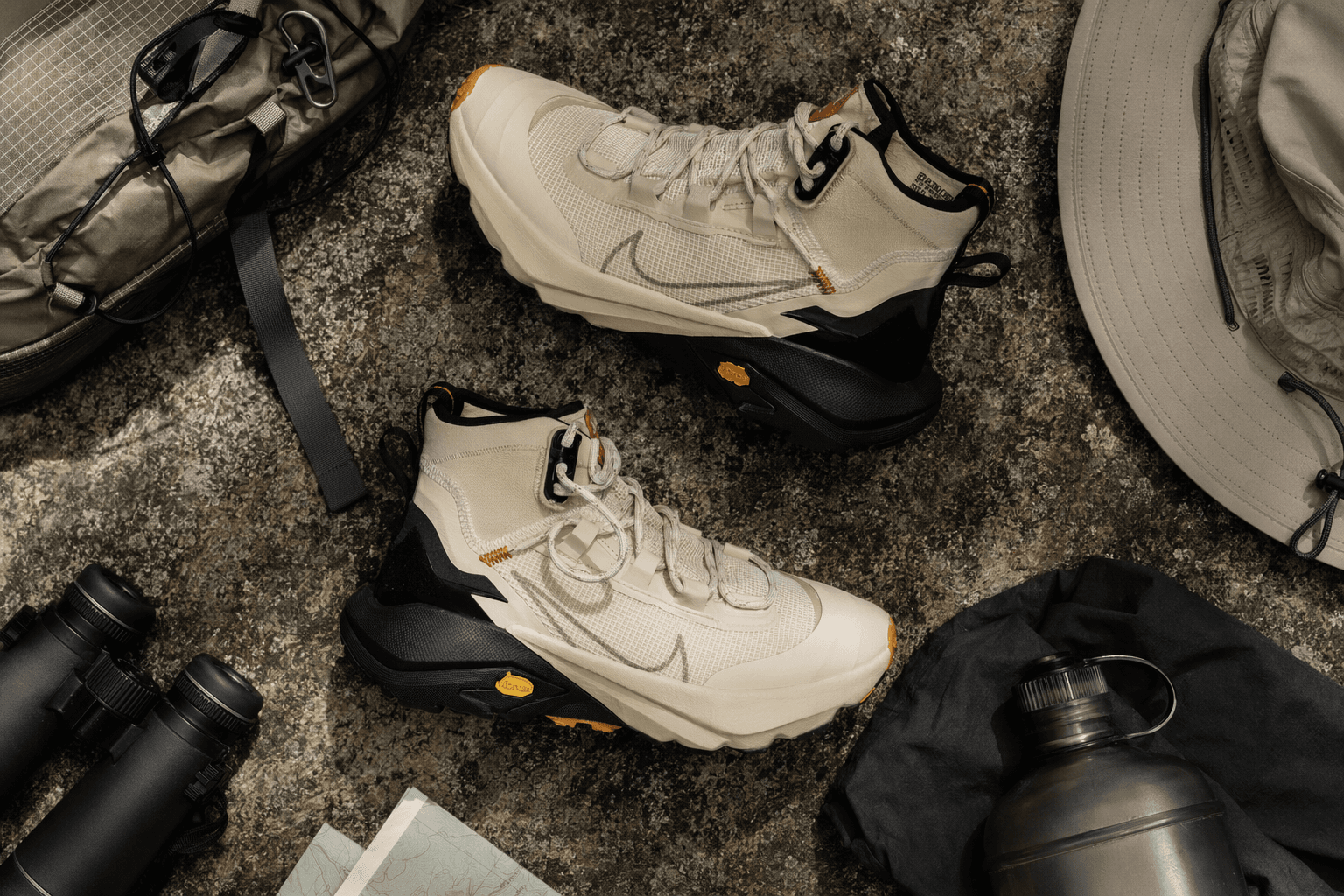
Nike ACG just did something smarter than slapping a boot shell on a sneaker and calling it “outdoor.” The Zegama Hike keeps the Zegama’s speed-first personality, then adds the kind of support that makes sense when the dirt gets steeper, wetter, and more annoying. This is not a fashion hiker built for moodboard energy. It is a hybrid meant to move, and that difference matters.
Nike says the Zegama Hike is the first hiking option in ACG’s performance footwear lineup since the brand’s February 2026 reintroduction, and that alone gives it weight inside the current outdoor reset. The label is clearly trying to turn ACG back into a real performance franchise, not just a logo people wear with cargos in the city. The July 2026 launch will land at allconditionsgear.com and select retail locations, which means this is being treated as a serious product, not a one-off experiment.
When a trail runner becomes a hiking boot
The answer is not one feature. It is the stack of them. Nike built the Zegama Hike on a trail-specific last with more room in the forefoot and toe box, then added a mid-cut upper, an ankle gaiter, rubberized overlays, reinforced toe and heel guards, and a more protective rigid foam layer under the trail-tuned ZoomX. That combination is what pushes it past “trail shoe with a taller collar” and into actual hiking territory.
The mid-cut shape is the biggest tell. Nike says it is there to stabilize the heel and ankle on steep climbs and downhill treks, which is exactly where a trail runner starts to feel underdressed. Add the gaiter, and you are not just getting a cleaner silhouette, you are getting debris control, the small thing that makes a big difference when you are picking your way through loose rock, mud, or dry dust that keeps sneaking into low-cut shoes. This is the kind of upgrade you notice after three hours, not three minutes.
Why ZoomX still makes sense here
ZoomX is the wildcard in the mix, because it is the foam people usually associate with fast running shoes, not hiking boots. That is exactly why this matters. Nike is trying to preserve the Zegama platform’s cushioned, responsive feel while adding enough structure to make the shoe feel secure under load. The result should be a boot that feels lighter and livelier than a traditional hiker, but more controlled than a sneaker dressed up for the trail.
That is the core appeal for people who hate the dead, blocky feel of a heavy boot. If your hikes are long, fast, and constant, a full-on leather tank is overkill. The Zegama Hike looks built for the person who wants all-day comfort and protection without sacrificing the rolling sensation that makes modern trail shoes feel so good underfoot. It is a real attempt to blur running and hiking footwear, not just borrow the styling cues.
Vibram traction is doing real work here
The outsole matters as much as the upper, and Nike knows it. The Zegama Hike uses a Vibram Megagrip outsole, which Nike says is designed for traction on wet and dry surfaces. That is the kind of spec that separates a legit trail boot from a lifestyle shoe with lugged cosplay. If you are heading into spring mud, slick granite, rain-soaked dirt, or dry, dusty paths where grip still matters on loose descents, that outsole is doing the heavy lifting.
This also connects the shoe back to the Zegama running model that came first. Nike introduced that shoe on December 2, 2025 and positioned it as the most rugged model in the All Conditions running footwear lineup. It used ZoomX and Cushlon 3.0 foam, plus an improved Vibram Megagrip outsole, a wider toe box, a forefoot rock plate, a modified heel bump, and athlete-informed updates. Nike even said the exposed ZoomX foam delivered 85 percent energy return, which tells you the platform was already built for hard use, not just retail theater.
What changed from the runner, and what did not
The Zegama Hike is not a total reinvention. It is an evolution of a silhouette that already had a serious trail pedigree. Nike says the running version was built for ultramarathons and long days in the mountains, and it cited feedback from Caleb Olson, who won the 2025 Western States Endurance Run. That is a strong sign that the base model was never meant to be casual. The hiking boot simply takes that mountain-ready energy and adds more structure for slower, more technical, more awkward terrain.
What stayed the same is the idea that cushioning and protection can coexist without making the shoe feel like a slab. What changed is the level of containment. The mid-cut build, gaiter, guards, and roomier last are the parts that move it from race-day trail shoe into something you can actually wear when the route includes scree, switchbacks, and a pack on your back. If you are looking for a sneaker substitute, this is probably too much shoe. If you want a lighter boot that still feels athletic, this is the lane.

Why Nike ACG is pushing this now
The timing is the story too. Nike’s ACG reintroduction in February 2026 was framed as a broader outdoor-performance reset, with trail running, hiking, and exploration at the center. The Zegama Hike is the first hiking option to follow that relaunch, which makes it feel like a proof point: ACG is not just being revived as nostalgia bait, it is being rebuilt as a performance category.
The heritage angle gives the move more depth. Nike ties ACG’s outdoor lineage back to a 1978 K2 basecamp expedition image featuring Rick Ridgeway and John Roskelley, a reminder that this line has always had a real wilderness story behind it. Brenden McAleese, Nike ACG footwear director, called the Zegama Hike “disruptive for all the right reasons,” and that sounds right. It is disruptive because it refuses the old split between runners and hikers. It is practical because it acknowledges that a lot of people actually want one shoe that can do both.
Who should buy it, and who should pass
This is for the buyer who likes moving fast, hates dead weight, and wants a boot that can handle mixed terrain without feeling like a medieval object strapped to the foot. It makes sense if your hiking leans athletic, if you care about cushioning on long descents, or if you want something more protective than a low trail shoe but less cumbersome than a heavy boot. It also makes sense if you already wear trail runners and keep wishing they had just a little more structure.
If you mostly walk groomed paths, a sneaker probably covers it. If you are carrying heavy loads, working in brutal conditions, or need maximum ankle rigidity, a traditional boot still wins. But if your idea of hiking is a fast, all-day push across uneven ground, the Zegama Hike looks like the rare Nike outdoor shoe that understands the assignment: keep the speed, add the support, and do not make it look clunky while you are at it.
This article was produced by Prism’s automated news system from verified source data, official records, and press releases, then run through automated quality and moderation checks before publishing. The system is built and supervised by the people who set the standards it runs under. Read our full AI policy.
Did this article answer your question?