PUMA's PROJECT PUMA PLUS Brings Quiet Luxury to Technical Streetwear
PROJECT PUMA PLUS launches Japan-first as PUMA's quiet luxury sub-line, swapping brash branding for earthy tones, balloon pants, and windCELL tech that earns its elevated price point.
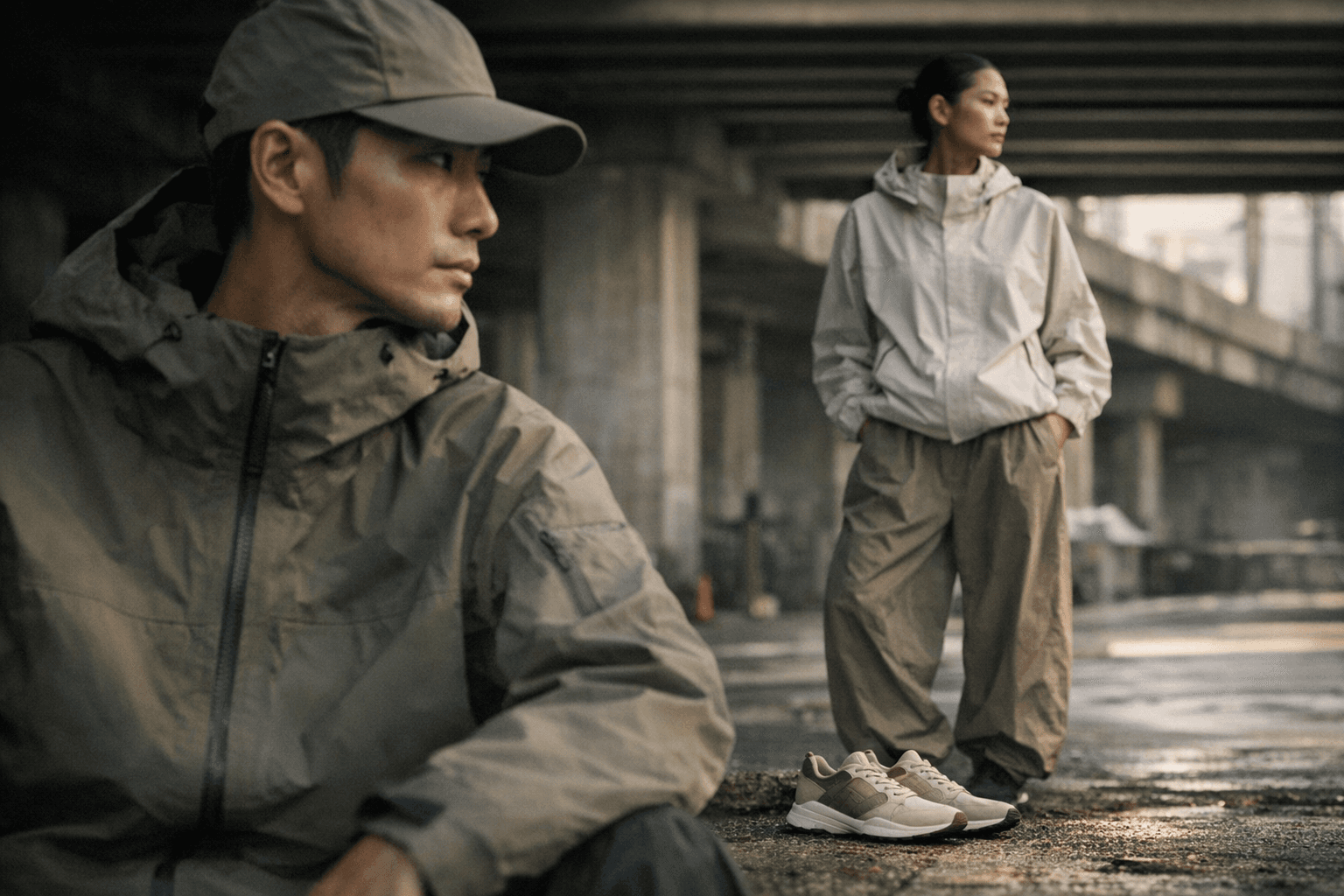
PROJECT PUMA PLUS is PUMA's newest sub-line and its most ambitious bid to dress up without dressing out. Launching Japan-first, the collection builds its identity around what the brand calls "functional beauty" — a tightly edited proposition that quietly dismantles the assumption that a German sportswear label should look like one.
PROJECT PUMA PLUS only barely looks sporty. This newly established line focused around "functional beauty" is PUMA gone quiet luxury. That framing matters because it isn't marketing language dressed up as design philosophy — the clothes actually deliver on it. While the German label's footwear has long established a taste for the finer things, PUMA's clothing has always leaned sporty, as one would expect. PROJECT PUMA PLUS is the exception to that rule.
The Fabrication Flex
The quiet luxury comparison is most convincing at the fabric level, which is exactly where it should be. PROJECT PUMA PLUS is not lacking in functionality. The collection includes the brand's windproof yet breathable windCELL technology and quick-drying performance fabrics engineered for casual workouts or the jog from the parking deck to the office. What separates this from the standard sportswear offer is that none of that infrastructure announces itself from the outside. Clean shirts carry only the smallest hit of PUMA branding; outwardly they feel formal but internally they are built from moisture-wicking technical materials. That inside-out tension, performance concealed within a refined shell, is precisely the move that makes Loro Piana's technical outerwear aspirational. PUMA is applying the same logic at a sportswear price point.
The Palette and Silhouettes
A muted color palette of earthy browns and khaki greens gives the clothing a tasteful elegance, as does the flowing cut of the balloon pants and drop-shoulder tees. This is not the monochromatic grey of cold Scandi minimalism; it reads warmer, more intentional, closer to the muted naturals that have dominated elevated fashion since quiet luxury hit its cultural peak. The silhouettes do real work here. Balloon pants with that generous, tapered volume are the trickiest fit in technical sportswear to get right, because a stiff, performance-weight fabric will betray the drape immediately. The fact that PUMA is attempting them in this context signals genuine investment in cut and fabrication, not just colorway editing.
The 4 Hero Pieces Worth Moving On First
Given the Japan-first rollout and the attention the line has already earned in the editorial world, demand will almost certainly outpace supply on the opening silhouettes. These are the four to prioritize:
- The balloon pants. The collection's most photographable piece and the one most likely to circulate on style feeds. The flowing cut reads fashion-forward but the quick-dry fabric means they double as a training trouser.
- Drop-shoulder tees. Minimal PUMA branding combined with a relaxed shoulder drop gives these an ease that maps directly onto the "barely branded" luxury of Brunello Cucinelli's sport pieces. Moisture-wicking internally; zero effort outwardly.
- Clean technical shirts. The formal silhouette with performance innards is the most versatile proposition in the line. Wear one tucked with the balloon pants for a full set, or break it open over a fitted inner layer.
- windCELL outerwear. Windproof and breathable, the layer that anchors the performance credentials and keeps the whole system seasonally relevant across temperate weather.
How to Build the Look
The strongest outfit pairings in this collection lean into contrast. A minimal runner, something low-profile and tonal in the same earthy register, grounds the balloon pants without competing with their volume. Keep the footwear understated; a chunky sole or a maximalist silhouette breaks the quiet luxury spell immediately. For the technical shirt set, the drop-shoulder tee worn beneath with the shirt left open creates a clean layering hierarchy. Accessories should be near-zero: a plain canvas bag or nothing at all. The logic of the collection is reduction, and every addition needs to justify its presence against that standard.
What This Says About PUMA — and the Market
From Nike ACG to adidas TERREX, sportswear brands have long found audience in the elevated outdoors aesthetic. Both lines flex technical DNA through visible utility: buckles, webbing, trail-specific outsoles, graphic tape details. PROJECT PUMA PLUS takes the opposite approach, stripping utility to its barest essentials and letting fabrication carry the weight. It is less Nike ACG's utilitarian pragmatism and less adidas TERREX's outdoor provenance and more like what would happen if either label asked a Japanese design director to take everything away and keep only what earns its place.
In January 2026, Anta Sports agreed to acquire a 29.06% stake in Puma SE for approximately €1.5 billion, making the Chinese sports equipment multinational PUMA's largest shareholder. That corporate shift adds context to where PUMA is positioning itself: the brand needs a credible answer for the fashion-forward consumer who currently shops Acronym, Stone Island Shadow Project, or Nike x Undercover, and PROJECT PUMA PLUS is the clearest signal yet that PUMA knows it. Across the industry, the emphasis is on quiet luxury: designs that are simplified, refined, and meant to read as rich and elevated, often with subtle details hidden in plain sight. PUMA is arriving to that conversation later than some competitors, but it is arriving with genuine technical credibility, and that may be the more durable position.
The Japan-first launch is also a deliberate signal. Japan has long functioned as a proving ground for elevated sportswear aesthetics, a market where the fit hierarchy and fabric quality expected from a fashion-credible release are non-negotiable. If PROJECT PUMA PLUS performs there, the rest of the world will follow on PUMA's terms.
This article was produced by Prism’s automated news system from verified source data, official records, and press releases, then run through automated quality and moderation checks before publishing. The system is built and supervised by the people who set the standards it runs under. Read our full AI policy.
Did this article answer your question?