Rack-Lo’s Polo Experience revives Lo-Lifes legacy in East Williamsburg
Rack-Lo turned Polo into lived mythology, and Polo Experience 3 showed how Lo-Lifes built Ralph Lauren’s street cred from the ground up.
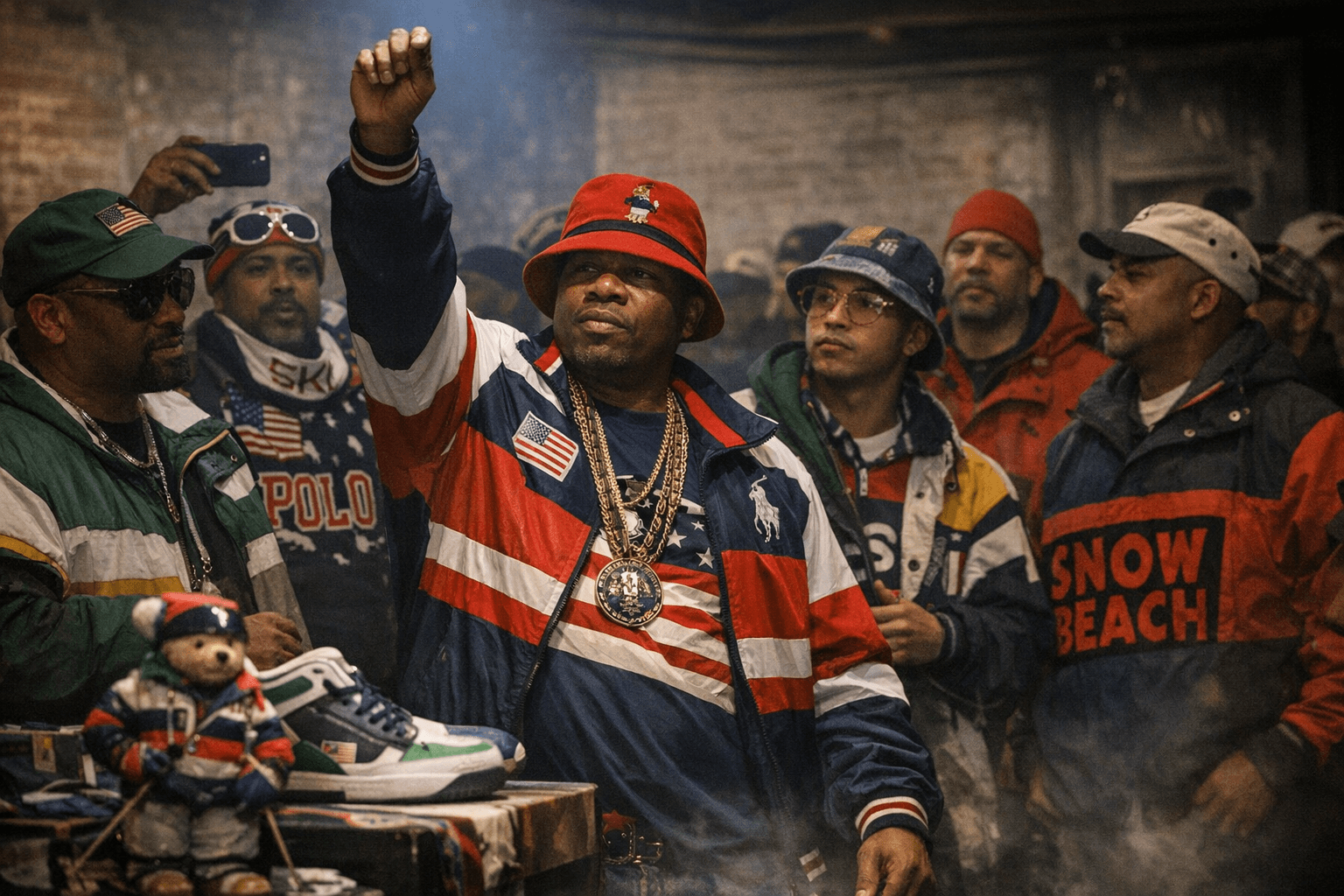
On a brisk Saturday evening in East Williamsburg, Ralph Lauren did not look like a heritage brand polished by Madison Avenue. It looked lived-in, argued over, collected, and remixed, with every era visible at once. That is the power of Rack-Lo’s Polo Experience 3: it reframes Ralph not as a boardroom invention, but as a language written by Brooklyn kids who turned theft, fandom, and neighborhood pride into style doctrine.
The architect behind the mythology
Rack-Lo, also known as George Billips, stands at the center of that story because he did more than wear Polo. He helped build the cultural code around it. The Lo-Lifes emerged in 1988 from the union of Ralphie’s Kids in Crown Heights and Polo U.S.A., also known as the United Shoplifters Association, in Brownsville, and their whole world was organized around the tension between aspiration and survival. They stole, wore, and reworked Polo Ralph Lauren until the brand became, in effect, a Brooklyn uniform with its own rules.
At the event, Rack-Lo told the crowd he had survived gunshot wounds and inner-city struggles before bringing Brownsville and Crown Heights kids together to form the Lo-Lifes. That detail matters because it places the crew’s relationship to fashion in the realm of necessity, not hobby. Boosting Ralph was not just admiration. It was, as he put it, “survival.”
How Polo Experience 3 staged the archive
Polo Experience 3 felt less like a party than a working archive with music. Multiple Ralph Lauren eras were on display, from Polo Country and RRL to Polo Sport, Lauren Ralph Lauren, obscure Polo Sportsman pieces, and Polo kicks. Framed Polaroids, rare rugby shirts, sweaters, and a Ralph-clad DJ turned the room into a living mood board, but Rack-Lo’s bespoke “Ralph Lauren” designs were the centerpiece. They made the night feel authored, not merely curated.
That distinction is crucial. Plenty of brands can stage nostalgia; fewer can claim a culture that rewrote the terms of their own desirability. The Lo-Lifes did exactly that. They became, in the now-familiar phrase, “walking billboards,” but the phrase undersells the invention. They were not passive consumers. They were stylists, modifiers, and cultural engineers who showed that a logo could carry neighborhood identity as much as class fantasy.
Why Ralph Lauren was the perfect canvas
Ralph Lauren, founded in 1967, had already built a myth around American polish by the time the Polo shirt entered the brand timeline in 1972. But the Lo-Lifes understood something the luxury market often learns late: a brand becomes truly powerful when people outside its intended audience adopt it and give it new meaning. Polo’s crisp knits, rugby stripes, and athletic references offered the perfect material for that transformation, because they could move between prep, sports, and street without losing shape.
That elasticity is part of why Ralph Lauren still resonates in streetwear today. The brand has recently leaned into collector culture with limited reissues, including Snow Beach pieces tied to the Fall 1993 Snowboarding collection, which Ralph Lauren itself says helped define the era’s athletic-inspired aesthetic. That move reads less like reinvention than recognition. The company is chasing a value that fans, especially Lo-Lifes and their descendants, identified decades earlier: scarcity, memory, and the thrill of wearing something that carries a story.
The survivalist logic of bootleg culture
The Lo-Lifes’ appeal has never been only about clothes. It is about the logic behind the clothes. Their 2LLs motto, “love and loyalty,” gives the culture its emotional center, while their bootleg logic gives it its edge. They understood that if you could not afford the fantasy straight from the rack, you could still participate by hunting, swapping, lifting, and styling your way into it.
That is why the crew’s legacy stretches far beyond one borough. PowerHouse Books traces Rack-Lo’s path from gun violence and police run-ins to becoming the founder of a global fashion movement with chapters on four continents. Another account describes his journey from criminal to career counselor, an arc that captures how fashion history often gets flattened when it should be read as social history too. The Lo-Lifes were born in Brooklyn, but their afterlife is international because the core idea is portable: identity can be assembled from what you reclaim.
The Brooklyn ritual that keeps it alive
The annual Lo-Lifes BBQ in East New York has become one of the culture’s most durable rituals. The Source reported a 10th annual gathering there in 2015, and the lineup underscored how deep the network runs, with guests including VJ Ralph McDaniels and Brand Nubian’s Sadat X. That kind of continuity matters because it proves the crew is not a museum piece. It is a community with recurring rites, shared memory, and a public vocabulary for style.
Polo Experience 3 belongs to that same continuum. It connected East Williamsburg to Crown Heights, Brownsville, and the broader Brooklyn lineage that made Lo-Lifes more than a nickname. It also placed Rack-Lo in his rightful role as custodian, not mascot. He is preserving an authorship story that the fashion industry is only now learning to tell correctly: Ralph Lauren’s street credibility was not bestowed from above. It was built from below, by kids who knew exactly how to turn a prep uniform into streetwear mythology.
This article was produced by Prism’s automated news system from verified source data, official records, and press releases, then run through automated quality and moderation checks before publishing. The system is built and supervised by the people who set the standards it runs under. Read our full AI policy.
Did this article answer your question?