Salehe Bembury’s PUMA turns World Cup kits into streetwear
Salehe Bembury's PUMA push turns World Cup kits into streetwear, pairing oversized football shapes with TRVL WEAR and country-coded fan gear.
The kit is the point
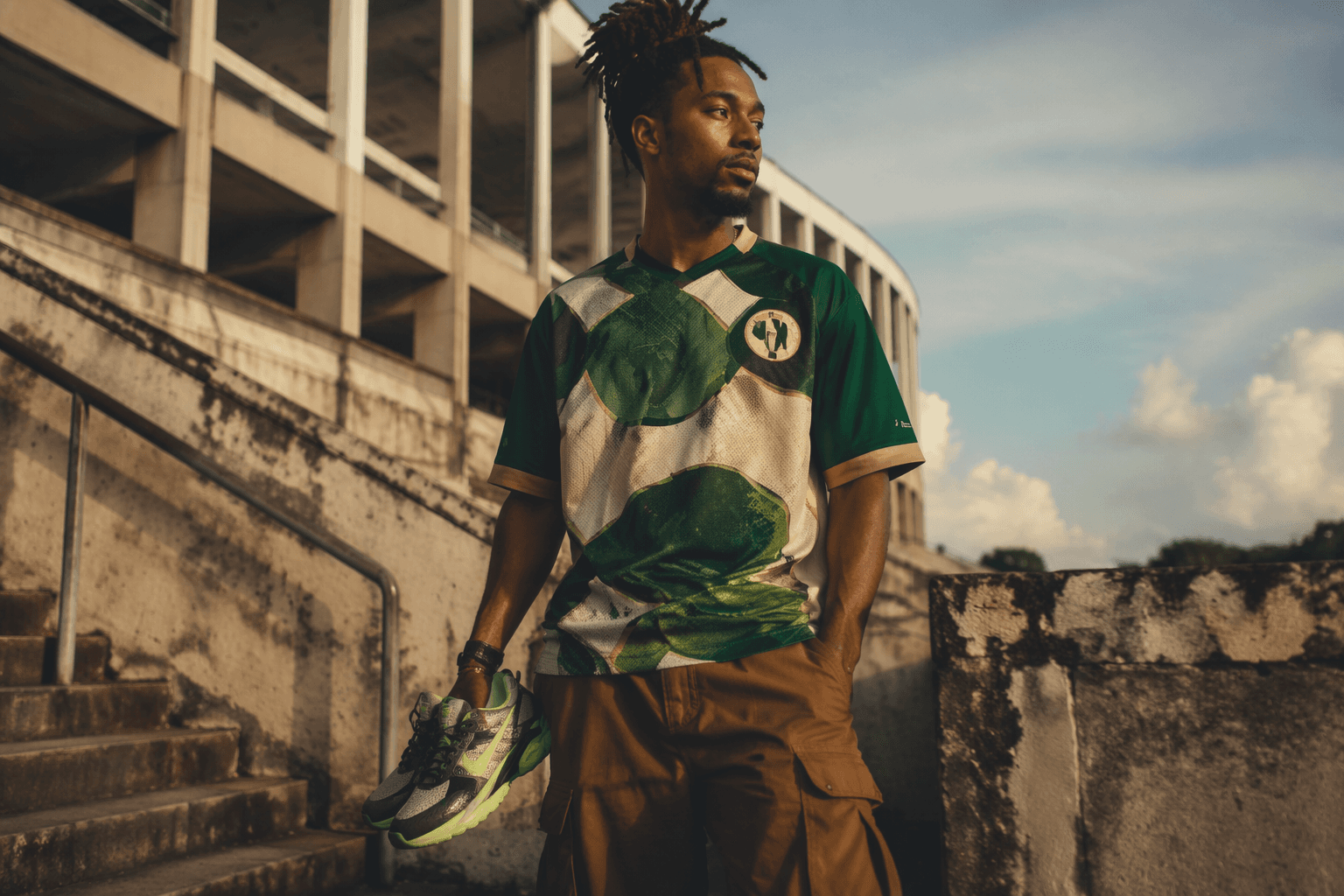
PUMA’s newest World Cup move is not just a uniform reveal, it is a wardrobe. Salehe Bembury has pushed the brand’s football language into oversized kits, TRVL WEAR, goalkeeper pieces, jerseys, tees, shorts, and a revived KING tracksuit that reads less like sideline kit and more like something built for the airport, the street, and the group chat photo dump.
That shift matters because PUMA did not frame this as a stadium-only moment. The brand first unveiled its 11 national team kits on March 19, 2026, at Domino Square in New York City, then followed with Bembury’s second football chapter ahead of the tournament. The setting was as important as the product: this was football presented at street level, with music, food, and culture doing as much work as the badges.
Why Bembury is the right designer for this job
Bembury has already shown he understands how to make performance gear feel like culture. At PUMA Hoops, he helped shape the brand’s basketball story, helped select Tyrese Haliburton as a signature athlete, and designed the Hali 1, with the Hali 2 now finished. He has also built a recognizable design language elsewhere, a whimsical mix of squiggly lines and bright color that has already appeared on Crocs and New Balance.
That matters here because football apparel is no longer being treated as a closed category. Bembury said he studied the history of the World Cup, football culture, and PUMA’s archive before designing the range, and he said the project let him “exist in multiple spaces.” That is the right instinct for this moment: the best football product now has to move between sport, fashion, travel, and social media without losing its identity.
A World Cup built for bigger merchandising
PUMA’s roster for the collection includes Portugal, Morocco, Ghana, Paraguay, Senegal, Côte d’Ivoire, the Czech Republic, Switzerland, New Zealand, Austria, and Egypt. Those are the federations that anchor the project, and they also tell you how much broader football merchandising has become. This is not a single-club drop or a narrow match kit exercise. It is a multi-country rollout designed to travel.
The timing makes the bet even clearer. FIFA says the 2026 World Cup will be the first tournament with 48 teams, co-hosted by Canada, Mexico, and the United States. The opening match is set for June 11, 2026, and the final lands on July 19, 2026, in New York New Jersey. In other words, the stage is huge, the audience is global, and the merchandising opportunity is built for crossover product, not just technical uniforms.
What makes the collection feel new
The most interesting part of Bembury’s PUMA work is how deliberately it stretches football silhouettes. The collection reimagines familiar pieces like the KING tracksuit, along with jerseys, tees, and shorts, but it does not leave them in their traditional, game-day lane. The shape language is oversized. The palette is bright. The attitude is off-field first.
Look for these details
• Roomier proportions, especially in the tracksuit and jersey cuts, give the collection a looser, more streetwear-minded feel.
- TRVL WEAR as a category, not an afterthought, pushes the line toward airport dressing and everyday layering.
- Country-specific visual codes turn each piece into a kind of wearable postcard, built from heritage, geography, architecture, and culture.
- Goalkeeper kits bring Bembury’s industrial, shape-driven thinking into the most visible position on the pitch.
That is the key style shift: the collection is not trying to disguise football. It is making football look like lifestyle product. The graphics and proportions are built to be shared, not just worn for 90 minutes.
PUMA’s street-level playbook is widening
Dominique Gathier, PUMA’s vice president of Teamsport, said football is about “culture, personal identity, and regional pride.” That is the right vocabulary for a market where the shirt on your back is as much a statement of taste as allegiance. Nadia Kokni, PUMA’s vice president of global brand marketing, said the brand wanted to connect with fan communities by showing the kits in the streets rather than in a stadium setting. That choice is doing real work here: it tells you exactly who this product is for and where it wants to live.
The larger takeaway is that PUMA is expanding the way it tells stories around football. The brand’s playbook no longer ends at the sneaker wall. With Bembury, it reaches into fan gear that can sit beside fashion capsules, travel collections, and any drop designed to be seen outside the pitch. For streetwear, that is the real shift. World Cup apparel is no longer just a uniform for supporters. It is becoming one more way to dress like the moment, and PUMA has made itself part of that language.
This article was produced by Prism’s automated news system from verified source data, official records, and press releases, then run through automated quality and moderation checks before publishing. The system is built and supervised by the people who set the standards it runs under. Read our full AI policy.
Did this article answer your question?