Streetwear Buyers Guide: Decoding Prices, Style Codes, and Smarter Purchases
Style codes like IM9113-300 are your secret weapon: one alphanumeric string unlocks price history, regional gaps, and authenticity checks before you spend a dollar.
Every streetwear product listing contains a set of numbers and letters that most buyers scroll past without a second glance. That string of characters, the style code or SKU, is actually the most powerful piece of information in the listing. Learn to read it, and a $200 decision becomes a much more confident one.
What MSRP Actually Means (and What It Doesn't)
MSRP, the manufacturer's suggested retail price, is the brand's stated launch price. It is not the price you will necessarily pay, and understanding the gap between that number and what the market actually charges is the first skill any serious streetwear buyer needs. A pair of Jordans can retail for $200 only to resell for $700 the next day. That delta is not random. It is a function of supply, cultural timing, and collaboration pedigree.
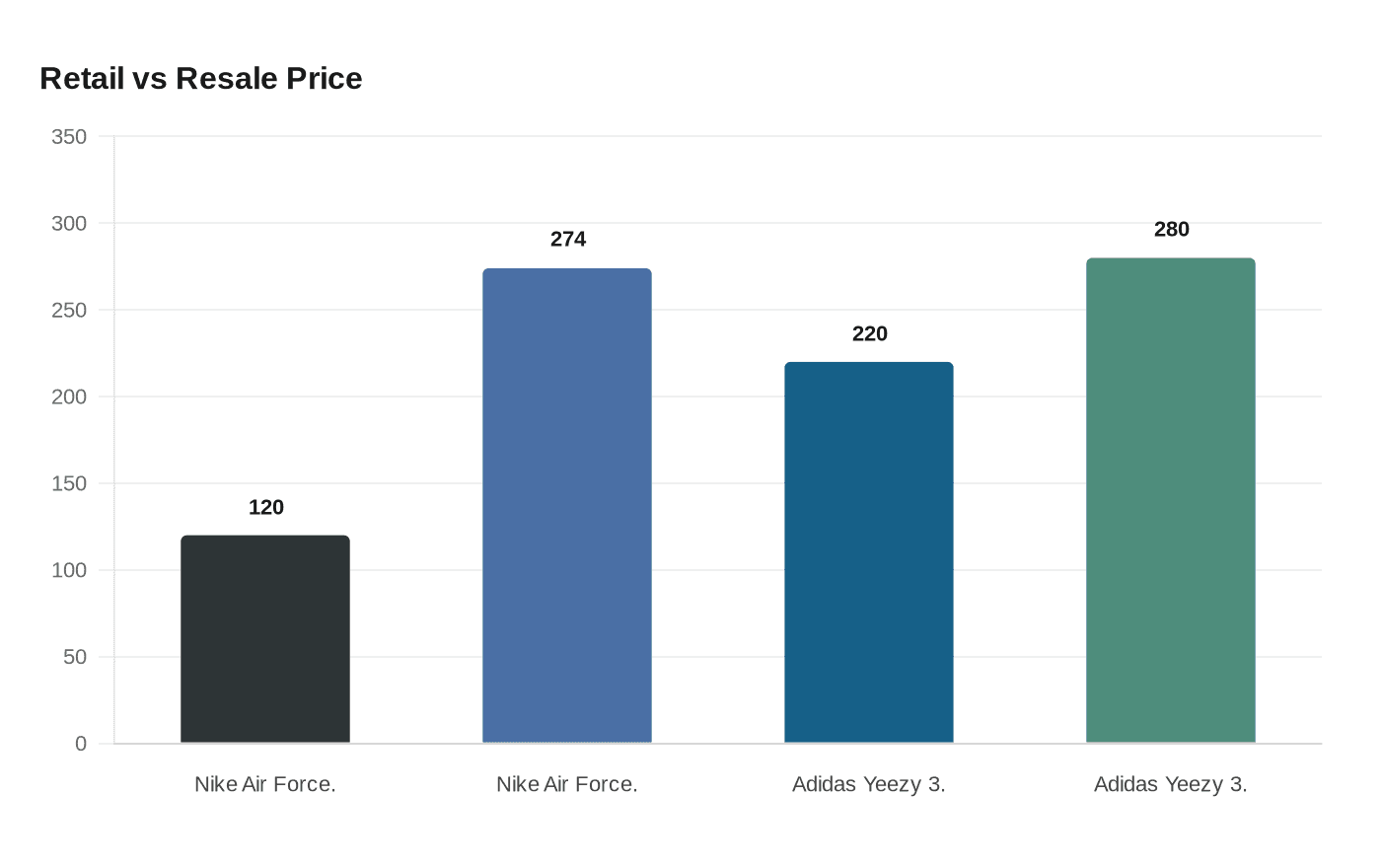
The distance between MSRP and street price varies dramatically by brand. The Nike Air Force 1 holds a 6% cut of the entire sneaker resale market, averaging $274 in resale value. Compared to its $120 retail price, that represents a 128.3% premium on average. Meanwhile, the Adidas Yeezy 350 has accumulated an 18% share of the entire resale market and, when resold, costs 27.3% more than its mean retail price of $220.
The practical implication: before evaluating any listing price as fair or inflated, check what the MSRP was, then check what the same SKU has historically sold for on a secondary platform. Those are two different numbers, and both matter.
Regional Pricing: The Geography of the Same Shoe
The same sneaker can cost meaningfully different amounts depending on where it is sold. Currency fluctuations, import taxes, and regionally exclusive distribution all create pricing arbitrage that informed buyers can use. The Nike Air Force 1 appears slightly cheaper in Japan at around ¥10,000 (approximately US$81) compared to the UK's £75 (approximately US$90) after conversion.
Japan's market carries particular weight for buyers hunting value. Certain models cost only ¥13,000 to ¥16,000 domestically, which can be up to 40% cheaper than equivalent Western retail pricing. Tourists can also shop tax-free, adding an extra 10% discount on top.
Europe's resale geography is equally significant. According to StockX data, six of the ten fastest-growing sneaker resale markets globally are in Europe: France, Italy, the United Kingdom, Spain, Germany, and the Netherlands. Fees and duties add meaningfully to cross-border purchases. One practical example: a pair of Yeezy Slides sold on European platform Klekt for €120, while on StockX, after duties, the buyer would have paid €160. The lower-priced listing sold faster.
The lesson is straightforward: a shoe's price is not a fixed number. It shifts by geography, by platform, and by whether you are buying new or used.
Decoding Style Codes and SKUs
This is where buyers consistently leave money on the table. A SKU, or Stock Keeping Unit, is a unique model/style/colorway/size marking. For Nike specifically, the first six digits refer to the model number and the last three digits refer to the color. So a code like IM9113-300 tells you exactly which model and which colorway you are looking at, regardless of what name any listing gives it.
Why does this matter for buying? Because product names are inconsistent across platforms. Retailers, resellers, and aggregator sites all use slightly different naming conventions for the same shoe. The SKU, by contrast, is universal. For a Nike shoe with a given SKU, entering that code directly into a search bar returns the model name, color version, year of release, and often photos from official and third-party sources alike.
Model IDs and style codes are not just for verification. They are a powerful tool for research. Using the code on resale platforms like StockX lets you analyze historical pricing and demand trends for that exact colorway, not just the silhouette in general. A Jordan 1 High in one colorway might be trading well above MSRP while a different colorway of the same shoe sits below it. The style code is the only reliable way to isolate that data.
One critical distinction worth knowing: style codes, SKU numbers, and color codes are not the same thing. They are all different, and confusing them leads to misidentified listings and bad buys. Always cross-reference the code on the box with the code printed inside the shoe itself, since boxes can be swapped or altered, making it essential to verify the model ID internally.
Where to Buy: Platforms and What Each One Does Best
Platforms like StockX and GOAT have professionalized sneaker reselling, making authentication and price tracking more transparent for buyers. But they work differently, and choosing the wrong one for a specific purchase can mean overpaying.
StockX operates on a bid-ask model modeled after financial markets. This setup makes pricing transparent and helps buyers avoid overpaying. Placing lower bids, then waiting, can result in paying less than the listed asking price. The tradeoff: StockX only deals with new, unworn items, ensuring buyers receive products in pristine condition straight from the box. Box condition is enforced strictly.
GOAT offers more flexibility. GOAT blends expert human inspection with machine-learning technology, analyzing stitching, materials, smell, UV patterns, and microscopic details, making it highly trusted for authenticity. It also accepts used pairs, where StockX will not. A new pair listed at $210 on GOAT becomes $220 with shipping, while a used "like new" pair at $180 lands at $190. Instant Ship delivers in three to seven days, and returns are allowed within three days.
eBay has evolved meaningfully as well. Any sneaker sold for over $75 in the US goes to a physical warehouse in New York or Las Vegas first, where it is inspected and tagged with an NFC chip before shipping to the buyer. For sneakers over $150, eBay's fee is 8%, which is lower than almost everyone else.
The practical approach is to use multiple platforms for the same SKU search. For popular deadstock sneakers like Jordans, Dunks, and New Balances, checking current pricing on both platforms is worthwhile. A $5 to $10 difference in payout is common, and the winning platform shifts regularly based on supply and demand.
Buying Smarter: A Practical Framework
The mechanics of smarter streetwear buying come down to a few habits applied consistently:
- Always start with the SKU. Before comparing prices, confirm you are looking at the exact same model and colorway across every platform.
- Check price history, not just current listings. Resources like StockX provide transparent pricing data, displaying both historical prices and current trends for specific shoe models. This helps you understand both retail and resale values.
- Factor in fees before committing. A $200 ask on StockX becomes roughly $232 once you add the 9% processing fee and shipping. What looks like an equivalent listing on GOAT at $210 may ultimately cost less.
- Understand what drives the premium. When Nike teams up with artists like Travis Scott or designers like Virgil Abloh, the cultural hype drives prices up. These collaborations come with unique colorways, custom packaging, and serious cultural weight that justify higher resale prices.
- Watch for regional stock. Some colorways are regional exclusives or see limited distribution in specific markets, which can make them scarcer and more expensive in certain geographies than their MSRP would suggest.
The global streetwear market reached approximately $210 billion in 2025 and is projected to grow to $218 billion in 2026. At that scale, navigating it without decoding the basic language of product listings is like reading a menu in a language you don't speak. A style code like IM9113-300 or JS3886 is not administrative filler. It is the key to price history, authenticity verification, and cross-platform comparison — the three pillars of every smart streetwear buy.
This article was produced by Prism’s automated news system from verified source data, official records, and press releases, then run through automated quality and moderation checks before publishing. The system is built and supervised by the people who set the standards it runs under. Read our full AI policy.
Did this article answer your question?