Allbirds’ sustainability pivot exposes the pressure on venture-backed fashion
Allbirds went from climate-minded darling to AI pivot, showing how quickly venture-backed fashion can trade purpose for survival.

The promise that made Allbirds expensive
Allbirds has become the cautionary tale every mission-led label dreads: a brand built on sustainability language, a public-benefit identity, and investor enthusiasm now chasing AI compute capital. Lucianne Tonti reads that turn as more than a corporate reset; it is what happens when profitability pressure starts rewriting the definition of what a sustainable fashion brand is allowed to be.
The company was founded in 2015 by Tim Brown and Joey Zwillinger, then vaulted into the market as one of the rare fashion names that could speak fluent climate and still sound like a growth story. When Allbirds went public on November 3, 2021, it priced shares at $15, opened at $21.21, and reached a first-day valuation of about $4.1 billion. In its IPO materials, it described itself as a Delaware public benefit corporation, a legal structure that signaled environmental and stakeholder obligations alongside profit.
That structure mattered because Allbirds was never just selling shoes. It was selling the idea that a sneaker brand could be minimal, modern, and measurably lighter on the planet without giving up scale or public-market ambition. For a while, that pitch looked like the future. Now it looks like a stress test.
The sustainability scoreboard
By 2024, Allbirds said it had a 2025 sustainability strategy with ten targets due by the end of 2025, a reminder that the brand was still trying to turn ambition into a timetable. On October 14, 2024, it said it had cut per-product carbon emissions by 22 percent in 2023 to 5.54 kg CO2e, while aiming to halve its footprint by 2025. Those are real operational gains, and they matter because sustainable fashion lives or dies by proof, not poetry.
But sustainability metrics do not pay rent on their own. They can show progress, sharpen product development, and keep a brand honest, yet they do not automatically protect a company from weak sales, expensive stores, or a capital market that wants the next big thing. Allbirds had built a credible climate story, but the business underneath it was under severe strain.
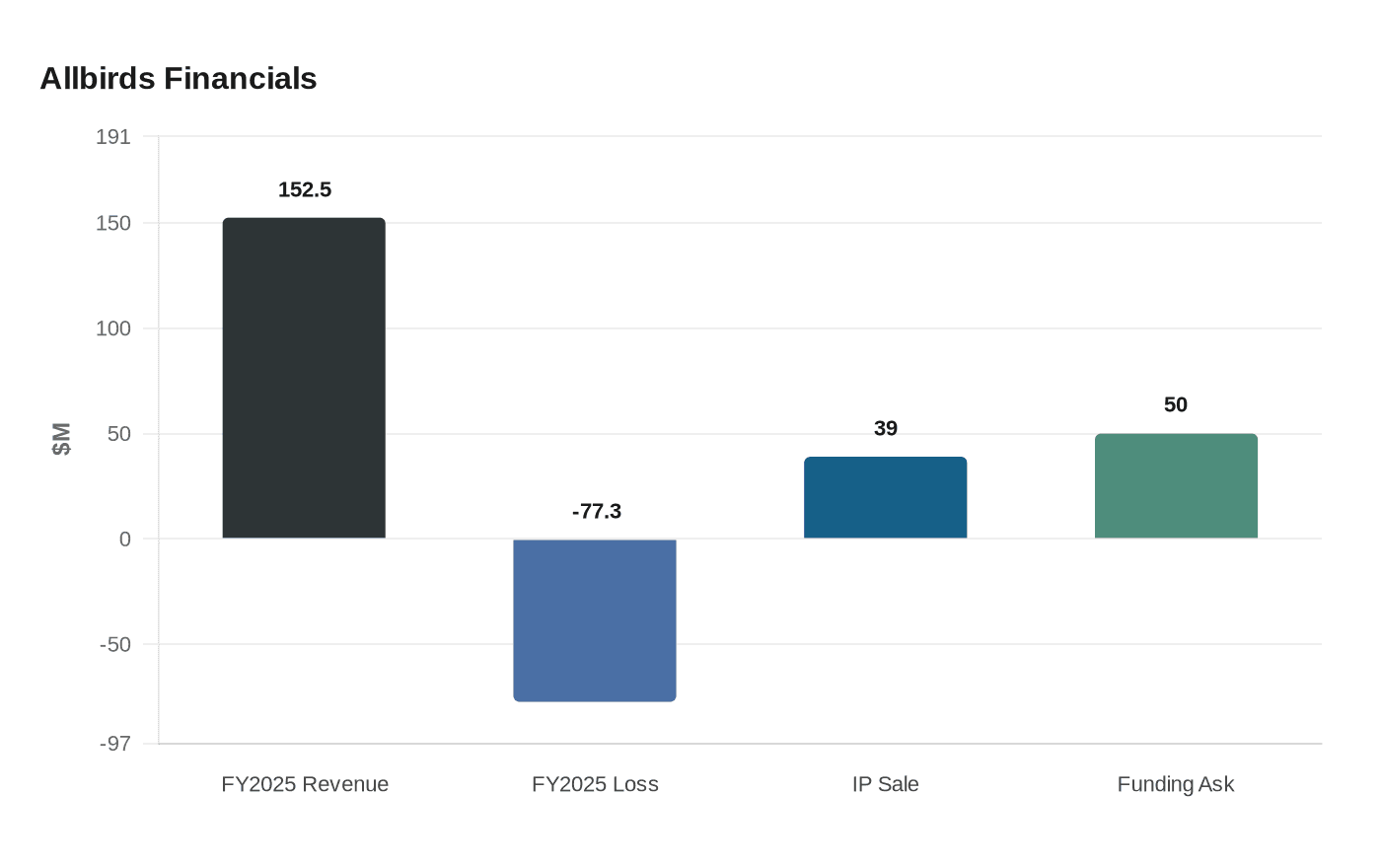
Its 2024 Form 10-K still showed the company trading as BIRD on Nasdaq, even as the pressure mounted. For fiscal 2025, Allbirds reported net revenue of $152.5 million and a net loss of $77.3 million. Those numbers are the hard edge of the story: the brand could talk about carbon intensity, but it still had to answer for cash burn, shrinking revenue, and an operating model that no longer looked as graceful as the product branding.
What gets cut when the story changes
The first cuts were physical. Allbirds closed 10 retail stores in 2025, then shut all remaining U.S. full-price stores in early 2026. That kind of retrenchment is more than a balance-sheet adjustment; it is a cultural signal that the glossy, touch-the-product retail experience can disappear quickly when growth cools. For a brand once positioned as a modern, feel-good staple, the empty storefront is the clearest sign that the old operating myth has broken.
In March 2026, the company announced a $39 million sale of its intellectual property and other assets to American Exchange Group. By April, the pivot became unmistakable: Allbirds said it was moving into AI compute infrastructure, rebranding as NewBird AI, and seeking up to $50 million in funding. The plan would involve acquiring high-performance AI compute hardware and leasing access to it, a striking change for a company that had once sold the beauty of lower-impact materials and cleaner supply chains.
Fast Company reported that shareholders were also being asked to approve a charter amendment removing references to the company being operated for the environmental conservation public benefit. That is the most revealing cut of all. It is one thing to close stores or sell assets; it is something else to strip out the language that defined the company’s moral promise in the first place.
Why this matters beyond one brand
The backlash around Allbirds reflects a wider skepticism about green claims in fashion, and not without reason. In 2021, the company faced a lawsuit alleging misleading sustainability and animal-welfare marketing claims, though the court dismissed the case. The legal challenge did not end the brand, but it did sharpen the scrutiny that follows any company claiming ethical authority while also courting scale.
For mission-led labels, the lesson is blunt. Venture-backed growth can make sustainability look mainstream, but it can also make it fragile, especially when capital gets impatient and the hottest industry of the moment changes from one cycle to the next. Allbirds now sits in a familiar pattern for distressed firms trying to ride the latest wave, from the crypto boom to the current AI frenzy.
The operational consequence is straightforward: what gets cut first is often the expensive, visible expression of the mission, whether that is stores, assets, or the public-benefit language itself. The cultural consequence is harder to fix. Once a brand teaches the market to think of sustainability as a premium story rather than a durable operating principle, profitability pressure can quietly redefine what sustainable fashion is allowed to mean.
That is the real warning in Allbirds’ reversal. A green brand can survive a difficult quarter or even a weak year. What it struggles to survive is the moment its investors decide that purpose is no longer the product.
Know something we missed? Have a correction or additional information?
Submit a Tip