H&M Foundation names 2026 Global Change Award winners for textile innovation
A seaweed stretch fibre, AI defect-detecting smart glasses and crop-waste cellulosic fibres are the 2026 Global Change Award names with the clearest path to market.

The sharpest thing about H&M Foundation’s 2026 Global Change Award is how little of it feels like fantasy. Ten winners were named on June 8 in Stockholm, each taking home a €200,000 grant and a year-long run in the GCA Changemaker Programme, and several of the ideas already look close to the places where fashion actually gets made: dyehouses, mills, finishing rooms and sorting lines.
That is the real test here. The competition drew more than 450 ideas from 81 countries across six continents, was cut to 20 finalists on March 4, and then distilled again into a cohort that points hard at the industry’s pain points, from materials to production to end of use. H&M Foundation launched GCA in 2015 with a blunt target: help the textile industry halve greenhouse-gas emissions every decade and get to net zero by 2050. This year’s shortlist made that mission feel less like a slogan and more like a supply-chain brief.
The most commercially legible ideas are the ones that solve existing problems without asking brands to rebuild everything from scratch. threadBridge feels especially near-term: it uses AI-powered smart glasses to spot fabric defects in real time and generate digital quality reports, the kind of tool that can cut waste before garments ever leave the factory floor. RheaCycle™, from Rhea’s Factory, is another obvious contender for scale because it attacks the polyester mess with AI-designed enzymes that break textile waste down into building blocks for new fibres. That is not runway romance. That is infrastructure.
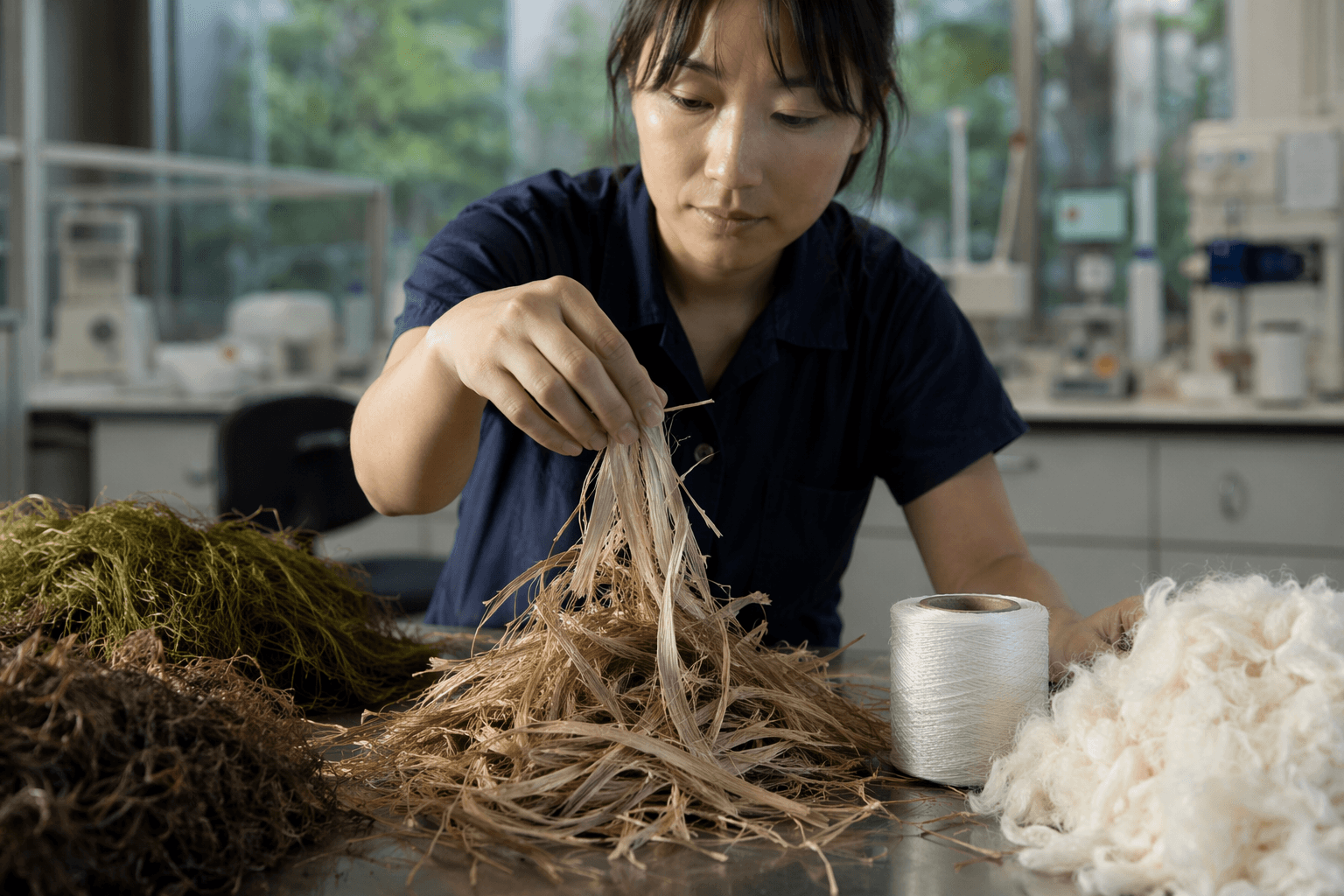
Agro-Lyocell by Canvaloop is just as promising, and maybe the cleanest fit for visible fashion categories. It turns agricultural waste into regenerated cellulosic fibres, offering a forest-free alternative to wood-based inputs. H&M Foundation says around 90 million tonnes of crop residue are burned every year in India, which gives the material a practical climate story and a manufacturing story at the same time. This is the sort of fibre development brands can actually build collections around if the hand feel and price land.
The more experimental names still matter, especially the ones that could change how clothes look and wear. The finalist pool included carbon-negative dye systems that turn atmospheric CO into bio-based colourants, plus seaweed-derived stretch fibres aimed at replacing fossil-based elastane. Those are the ideas with the most cultural upside because dyeing, stretch and drape are where sustainability finally becomes visible on-body. But they are also the most grant-friendly and the most distant, the kind of breakthroughs that still need testing, piloting and a lot of patient industrial buy-in.
That is what makes this GCA class strong: it does not just chase clean language, it maps onto actual factory behavior. Beatrice Oldenburg said the selected teams are tackling pain points across the whole textile value chain, and that is exactly why this cohort feels more scalable than dreamy. The winners with the clearest path forward are the ones that can move from concept to production line without asking fashion to stop being fashion first.
This article was produced by Prism’s automated news system from verified source data, official records, and press releases, then run through automated quality and moderation checks before publishing. The system is built and supervised by the people who set the standards it runs under. Read our full AI policy.
Know something we missed? Have a correction or additional information?
Submit a Tip