How fashion certifications help shoppers spot real sustainability
The right logo can expose a lie, but only if you know what it actually covers. From GOTS to OEKO-TEX, these labels separate proof from polish.
The logo is not the promise
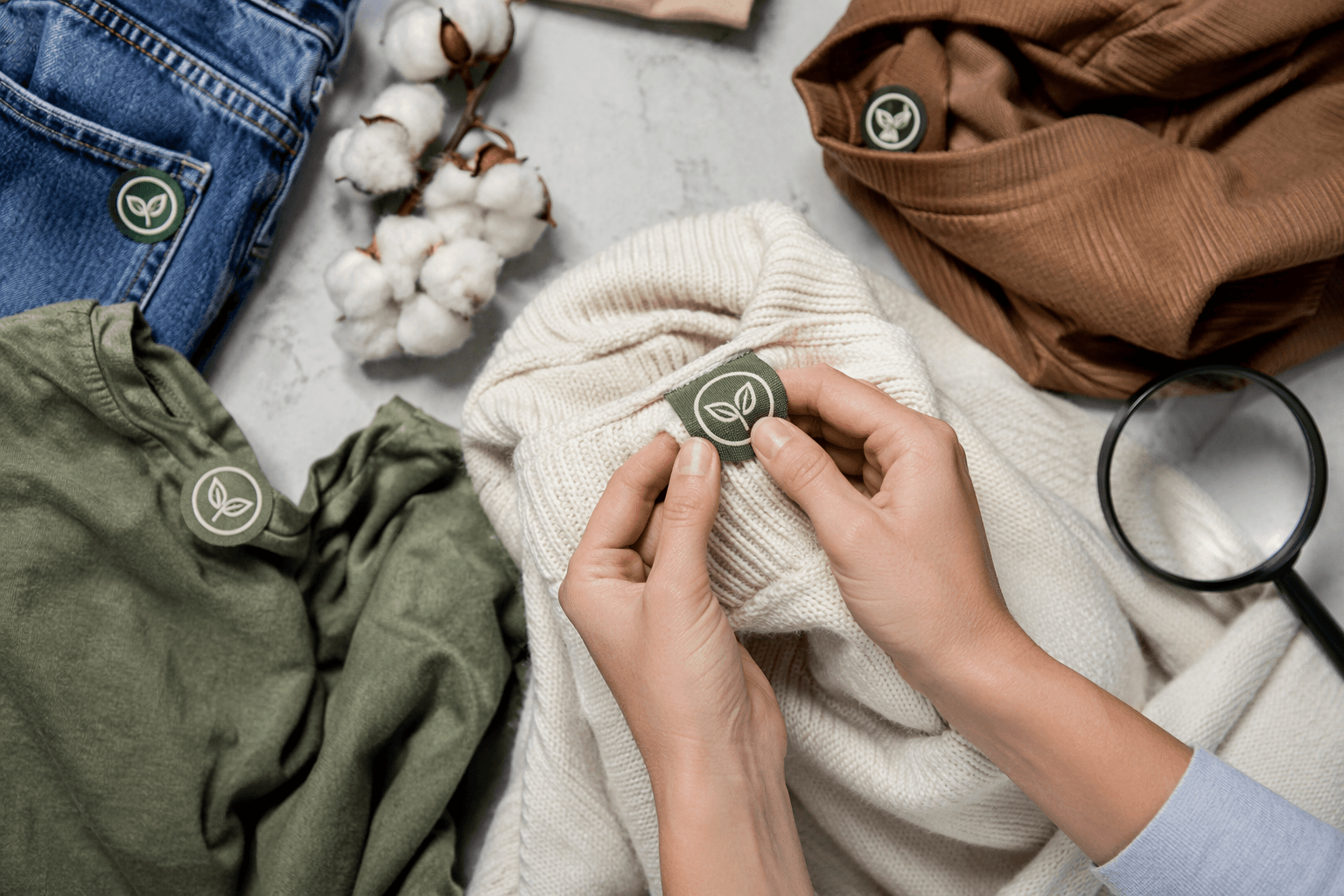
A certification can be the difference between a meaningful claim and a glossy one. Good On You’s central point is simple: these standards can hold a brand accountable because they are usually built on evidence and auditing, not marketing mood.
That matters because greenwashing is no longer just a style-world irritation. In the United States, the Federal Trade Commission’s Green Guides, first issued in 1992 and revised in 1996, 1998, and 2012, warn marketers not to toss around broad claims like “green” or “eco-friendly” without substantiation. In Europe, Directive EU 2024/825 was adopted on 28 February 2024 and published on 6 March 2024 to tighten consumer protection around misleading environmental claims and non-transparent sustainability labels, while the European Commission has also proposed a Green Claims law to curb label proliferation.
For shoppers, the message is blunt: one badge does not mean a garment is clean, fair, circular, or harmless. It means one thing, and only if you know what that thing is.
What different labels actually prove
GOTS, the organic textile standard
GOTS, the Global Organic Textile Standard, is the label to watch when a brand is selling organic fiber as a virtue signal. It was established in 2006 after four years of negotiation, and its public label was presented in 2008. The framework was created to define worldwide requirements for organic textiles, so its strength is in materials and chain of custody, not vague lifestyle branding.
If a cotton shirt carries GOTS, the useful question is not whether it looks sustainable, but how much of the product is certified organic and how the supply chain is tracked. GOTS is strongest when a brand wants to prove the textile itself is built from organic content, rather than simply dressed up in earthy language.
OEKO-TEX, the chemical and safety lens
OEKO-TEX was founded in March 1992 with a clear purpose: using laboratory tests to make sure textile products are harmless to human health. Today the organization says it includes 17 independent textile and leather testing institutes, which gives the label a heavily technical flavor that shoppers can actually use.
This is the badge for people who care about chemicals, residue, and product safety. OEKO-TEX STANDARD 100, in particular, is about limits and testing, not about whether a piece was made from organic fiber or whether the workers were paid fairly. That distinction matters. A sweater can be tested for harmful substances and still tell you almost nothing about labor conditions, sourcing ethics, or the size of the brand’s overall environmental footprint.
Textile Exchange standards, recycled content and traceability
Textile Exchange says its system of material-specific standards has guided the fashion, textile, and apparel industry for more than 20 years, and in 2024 it reported a record 90,000 certified sites worldwide. That scale alone explains why its standards show up so often in brands’ sustainability copy.
The two labels shoppers encounter most often are the Recycled Claim Standard and the Global Recycled Standard. RCS is about recycled content and traceability. GRS goes further, requiring at least 50 percent recycled content and adding social and environmental criteria. That extra layer is where the promise becomes more useful, because recycled material alone does not guarantee responsible production.
The catch is easy to miss. A brand can say a product contains recycled fiber and still leave you guessing about whether the rest of the garment was made with cleaner chemistry, better labor conditions, or meaningful oversight. Recycled content is not the same thing as low impact.
Fairtrade and the labor question
Fairtrade expanded from cotton into textiles in 2016 with the Fairtrade Textile Standard and Programme, and this is where the conversation shifts from materials to people. Fairtrade covers workers at every stage, from seed cotton to finished garments, and requires wages to rise to living wages within six years of certification.
That makes it one of the clearest labels for labor conditions and fair contracting. If a brand is leaning on social responsibility language, this is the kind of standard that gives that language actual weight. Still, even a strong labor standard has boundaries. It addresses wages and working conditions, but it does not magically solve the industry’s appetite for more and more clothes.
bluesign and the chemistry of making clothes
bluesign was founded in 2000 and focuses on safer chemistry and responsible textile production. That puts it in the same conversation as OEKO-TEX, but from a production-side angle rather than a finished-product testing angle.
For shoppers, that difference matters because a label tied to chemistry can tell you a lot about what was kept out of the process, while saying less about the garment’s fiber story or labor profile. If you care about the feel of a piece as much as the footprint, think of bluesign as a cleaner-making standard, not a total sustainability pass.
Where greenwashing still sneaks in
This is where the industry gets slippery. The Changing Markets Foundation argued in 2022 that major fashion certification schemes and voluntary initiatives can enable greenwashing and act as “sustainability decoys,” because some schemes do not set standards high enough, do not create enough accountability, and fail to confront overproduction or fashion’s reliance on fossil fuels.
That critique lands because it names the real blind spot. A certification can improve one part of the chain and still leave the business model untouched. A brand can source certified fibers, certify a factory, or test for safer chemicals and still churn out too much product at too frantic a pace. The label may be accurate; the story around it may still be inflated.
The European Commission’s push against the proliferation of labels makes sense in that context. So does the FTC’s warning against broad claims that cannot be backed up. Regulators are moving toward a more skeptical, evidence-driven language, and shoppers should do the same.
How to read a sustainability label like a pro
The smartest move is to stop asking whether a certification sounds good and start asking what exactly it governs. A logo should answer a narrow question, not sell you a moral halo.
- Does this standard speak to materials, labor, chemicals, or product safety?
- Is it focused on a single fiber, a finished product, a factory, or the supply chain?
- Does it require third-party auditing, or is it self-declared branding?
- Does the claim mention recycled content, and if so, is there a minimum threshold like GRS’s 50 percent rule?
- Does the label say anything about wages, or only about sourcing?
- Is the brand using certification language loosely, as if one badge covers the whole wardrobe?
Animal welfare is another area that deserves the same scrutiny. If a brand is selling wool, leather, or down, do not assume a generic sustainability label has answered that question for you. Ask whether the certification specifically addresses the animal side of the supply chain, because many do not.
The new standard for a smart shopper
The real value of certifications is not that they make fashion pure. It is that they make claims testable. In a market where global fiber production reached 124 million tonnes in 2023 and Textile Exchange recorded 90,000 certified sites worldwide, the scale of the industry is too large for vibes to count as evidence.
That is why the best labels are narrow, specific, and auditable. They help you separate an organic textile from a chemically cautious one, a labor standard from a recycled-content claim, and a serious certification from a marketing gloss. In sustainable fashion, that difference is everything.
Know something we missed? Have a correction or additional information?
Submit a Tip