Italy readies textile EPR rules as industry calls for clarity
Italy moved early on textile collection, but brands and recyclers now want rules that are clear enough to punish free riders and fund real change.
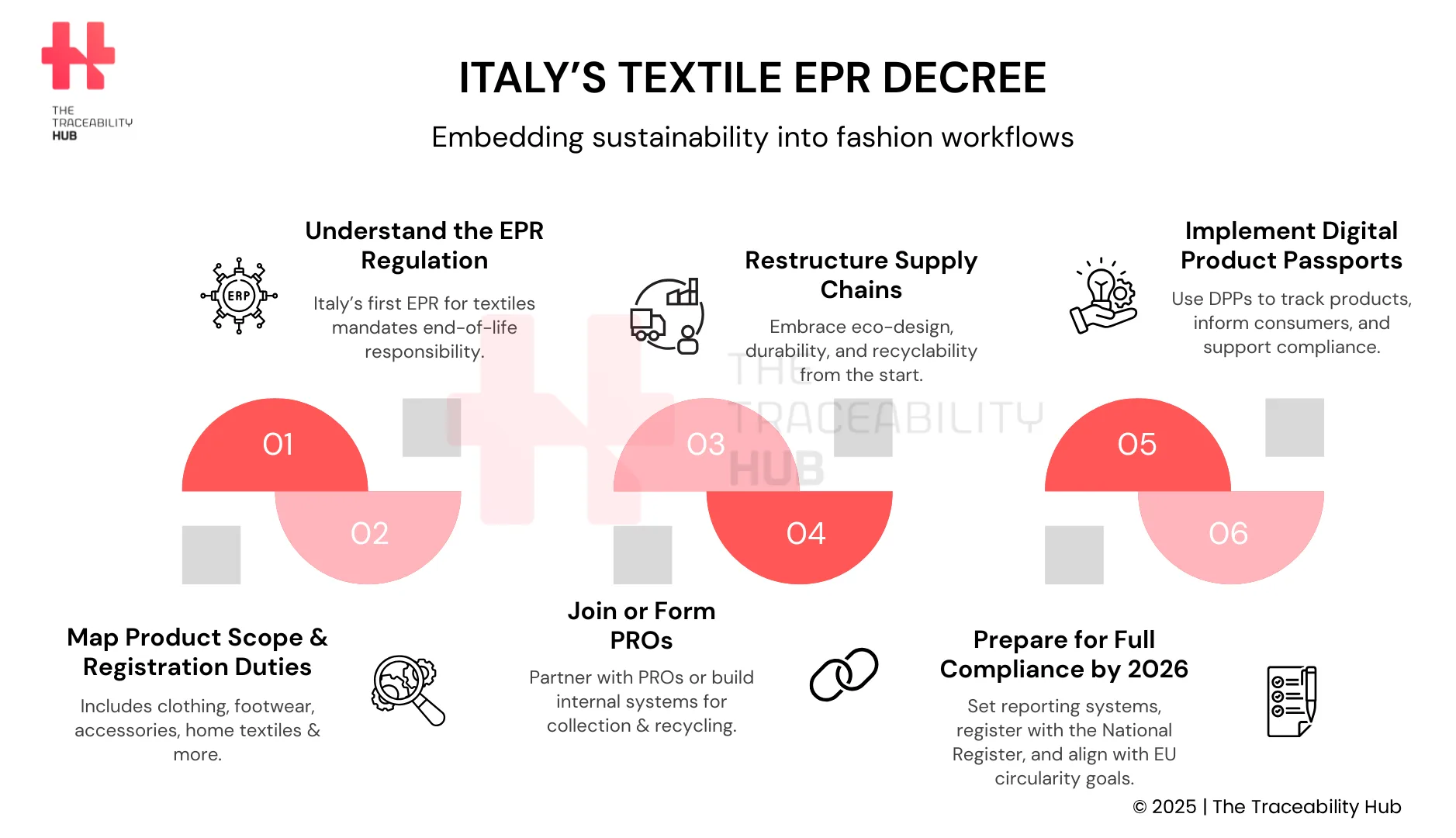
Italy may have the head start on textile collection, but the real test is whether its new EPR regime can force everyone to pay their share. Without clear fees, eco-modulation, collection responsibility and penalties, compliant brands and recyclers risk carrying the cost while weaker players slip through the cracks.
The country was already ahead of the EU timetable when it made separate textile waste collection mandatory from 1 January 2022, three years before the bloc’s wider separate-collection obligation took effect in 2025. Now Brussels has raised the stakes again: the revised Waste Framework Directive entered into force on 16 October 2025 and brought common rules for textile extended producer responsibility across the European Union, a market the European Commission says generated €170 billion in turnover in 2023 and supported 1.3 million jobs across 197,000 companies.
Rome has been moving in parallel. Italy’s Ministry of Environment and Energy Security opened a public consultation on a draft textile EPR decree on 3 April 2025, with the exercise reported to have closed on 5 May 2025. The draft covers apparel, footwear, accessories, leather goods and home textiles, a scope wide enough to reshape how fashion, shoes and accessories move from store floor to sorting line. The ministry later signaled a target for national textile EPR by the first quarter of 2026, putting pressure on the sector to settle the mechanics before the policy hardens into law.

Erion Textiles has become one of the most visible industry vehicles for that transition. The consortium says its members include H&M Group, Kiabi, OVS, Amazon, Artsana, Decathlon Italia, Gruppo Teddy, Miroglio Fashion, Pompea, Prenatal, Save The Duck, Seven and Twinset, a lineup that spans mass market, sportswear and premium labels. Fulvio Matteoni, formerly chief executive of Decathlon Italia and now president of Erion Textiles, has pushed for a “robust and effective” system and said the consortium wants to take part in the consultation.
The numbers show why enforcement matters. Post-consumer textile waste collected in Italy rose from 133,000 tonnes in 2017 to 160,000 tonnes in 2022, yet textiles still accounted for only 0.8% of total separately collected waste that year. Research on textile-waste management in Italy points to weak public awareness, limited logistics infrastructure and a lack of automation as major bottlenecks. That leaves the next phase of EPR with a simple but unforgiving task: turn a policy on paper into a system that actually changes design, collection and waste flows.
Know something we missed? Have a correction or additional information?
Submit a Tip