Plasma-assisted chitosan finish cuts polyester microfibre release at source
A plasma-assisted chitosan finish sharply cut polyester microfibre shedding, with the strongest mitigation at 0.6%. The stakes are huge: synthetic textiles feed 16% to 35% of ocean microplastics globally.
The cleanest fix for polyester pollution may be the least visible one: a plasma-assisted chitosan finish that cuts microfibre release before a garment ever meets the wash. On 100% polyester, the treatment significantly reduced shedding during laundering, a practical shift in a sector where the European Environment Agency says wearing and washing synthetic fibres are already a recognised source of microplastics in the environment.
That is what makes this work feel more like an industrial intervention than a sustainability slogan. The EEA estimates that synthetic textiles account for about 8% of European microplastics released to oceans, while the global share is estimated at 16% to 35%. It also says 200,000 to 500,000 tonnes of textile microplastics enter the global marine environment every year, with most released in the first few washes. In other words, the problem starts at the garment stage, not in the recycling bin.
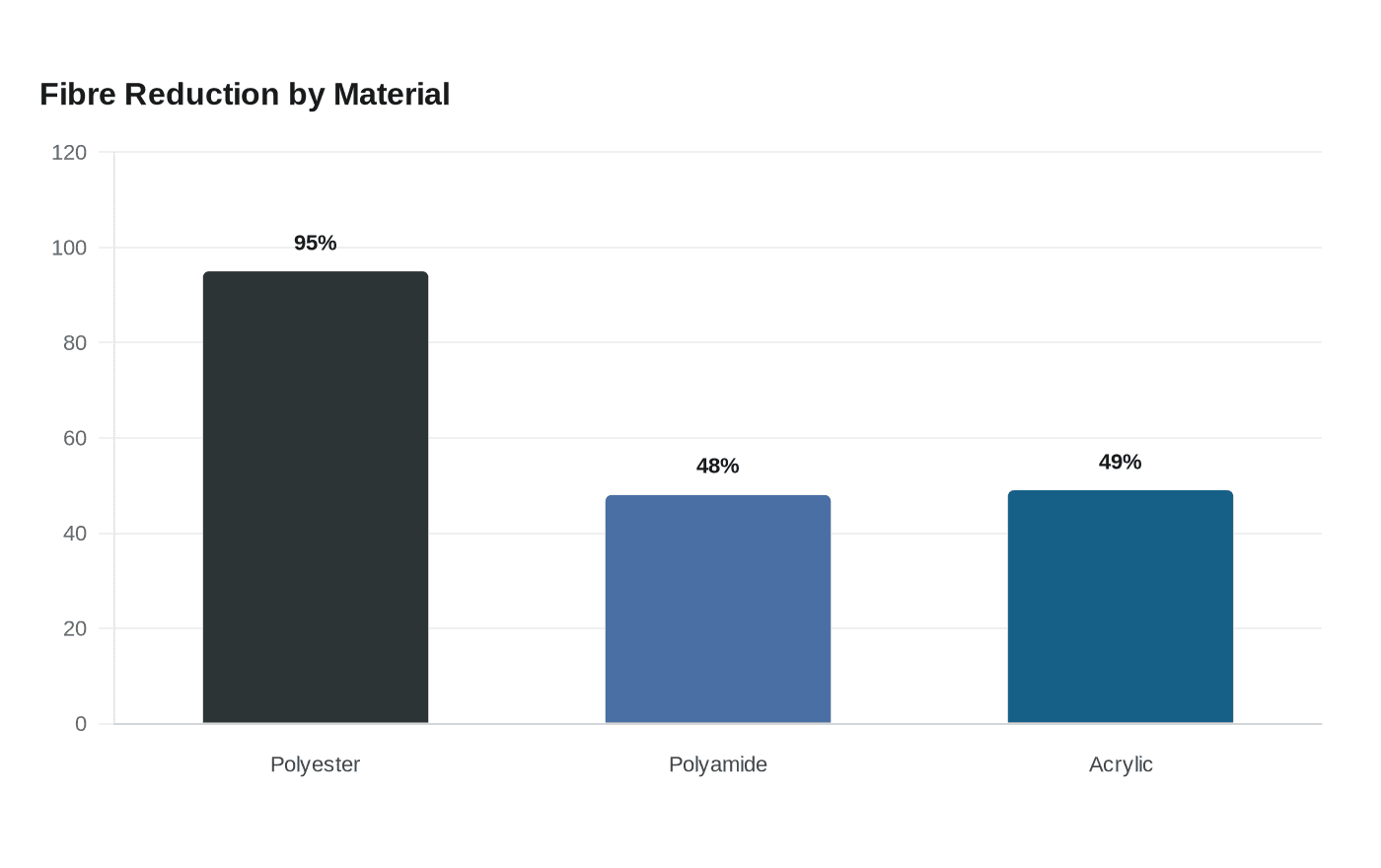
The new finish builds on an earlier chitosan approach that already hinted at the scale of the opportunity. A 2021 Water study from the Korea Institute of Civil Engineering and Building Technology found that untreated polyester released 148 microfibres per litre in laundering tests. A 0.7% chitosan pretreatment reduced those fibres by 95%, while reductions for polyamide and acrylic were 48% and 49%. The newer plasma-assisted version went further, with the strongest mitigation seen at 0.6%, suggesting that plasma plus chemistry may be a more effective route than a coating alone.
That distinction matters for mills and brands because it points to an upstream fix that does not depend on consumer behaviour changing overnight. If the finish can survive repeated washes, stay cost-effective at scale and slot into existing production lines, it could be most relevant first in high-volume polyester categories such as linings, athleisure layers and workwear, where the fibre is already doing the heavy lifting. The question is no longer whether polyester sheds, but how much of that shedding can be designed out before the fabric leaves the factory.
The timing also fits a more formal moment in microfibre regulation. ISO 4484-1:2023 now sets a method for determining material loss from fabrics during washing, giving researchers and manufacturers a more consistent way to compare results. At the policy level, the OECD has made textile products one of its two major microplastics priorities, alongside vehicle tyres, while the European Union continues to push design, manufacturing and filtration as the core levers. For fashion, the message is blunt: the next meaningful sustainability advance may be a finish you cannot see, but whose effect is measured in the drain.
This article was produced by Prism’s automated news system from verified source data, official records, and press releases, then run through automated quality and moderation checks before publishing. The system is built and supervised by the people who set the standards it runs under. Read our full AI policy.
Know something we missed? Have a correction or additional information?
Submit a Tip